Fruit & Nut Trees
Ackee
Blighia sapida
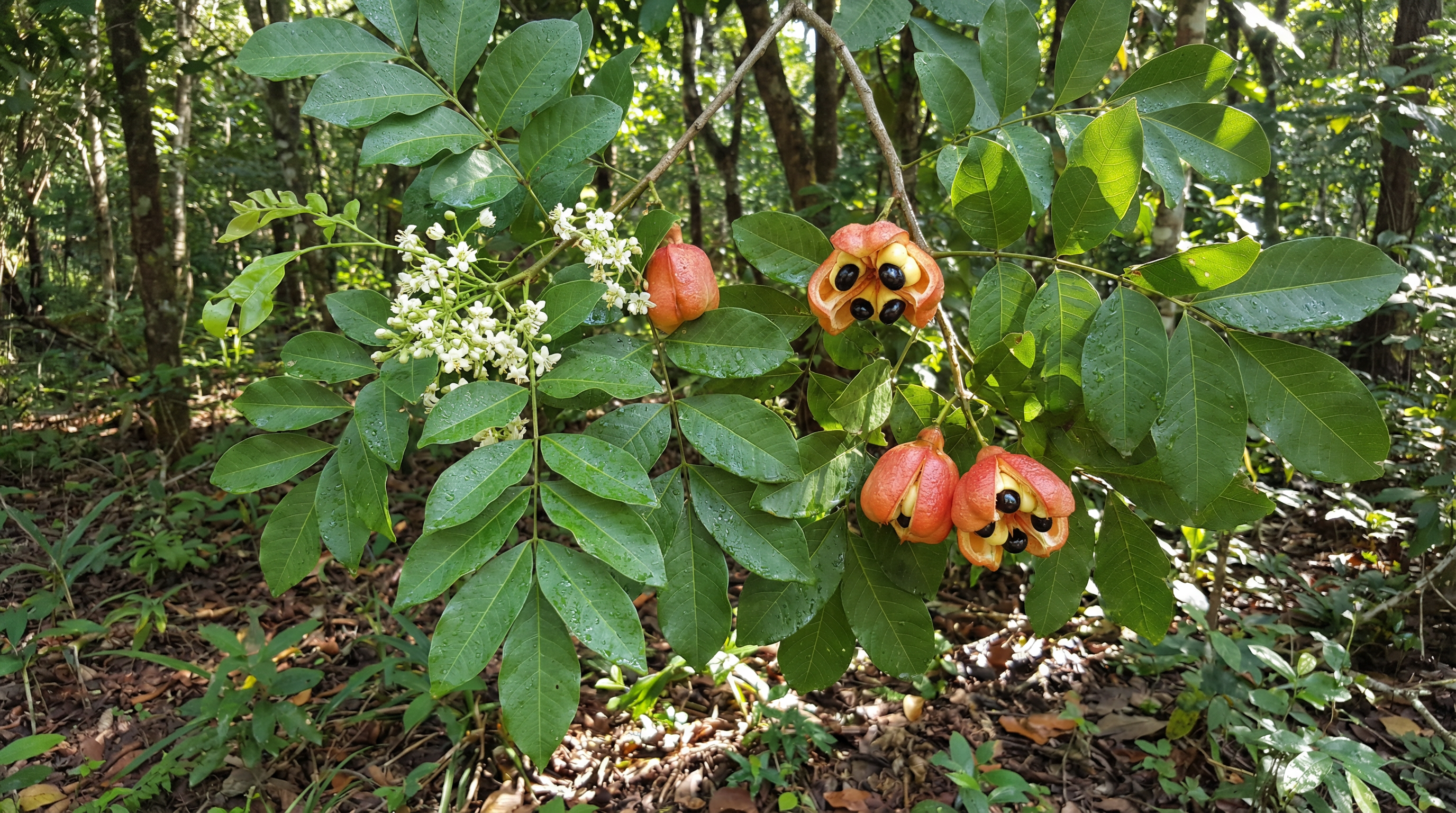
Ackee, scientifically known as Blighia sapida, is a tropical fruit tree belonging to the soapberry family, Sapindaceae, which also includes fruits like lychee and longan. Native to the tropical regions of West Africa, the ackee has been introduced to and is now widely cultivated in tropical and subtropical regions worldwide, most notably in the Caribbean, particularly Jamaica, where it holds the prestigious title of the national fruit. The genus name, Blighia, honors Captain William Bligh of "Mutiny on the Bounty" fame, who transported the fruit from Jamaica to the Royal Botanic Gardens in Kew, England, in 1793. While the fruit is a culinary delicacy, it is also infamous for the potential toxicity of its unripe arils and seeds, which contain the toxin hypoglycin A. The ackee tree is a medium-sized, evergreen tree that can grow up to 10-12 meters in height. It has a dense crown of glossy, leathery, compound leaves. The tree produces fragrant, greenish-white flowers that give way to the distinctive pear-shaped fruit. The fruit transitions from green to a bright red or orange-yellow as it ripens. A unique characteristic of the ackee fruit is that it splits open when fully mature, revealing three large, shiny black seeds, each partially covered by a soft, creamy-white or yellow, fleshy aril. This natural splitting is a crucial indicator that the fruit is ready for consumption, as only the arils of a naturally opened fruit are edible. The primary use of ackee is culinary. The arils, when properly harvested and prepared, have a delicate, slightly nutty flavor and a texture often compared to scrambled eggs. The most famous dish featuring this fruit is "ackee and saltfish," the national dish of Jamaica. The arils are typically boiled and then sautéed with salted cod, onions, tomatoes, and spices. Beyond its culinary significance, various parts of the ackee plant have been used in traditional West African and Jamaican medicine. These uses range from treating fevers and colds to use as a poultice for skin infections and wounds. However, it is crucial to emphasize that only the ripe, properly prepared arils are safe for consumption, as other parts of the fruit can cause "Jamaican Vomiting Sickness" due to the presence of hypoglycin. Cultivating the ackee tree requires a tropical or subtropical climate with warm temperatures and moderate rainfall. It thrives in well-drained soil and prefers a sunny location. The tree is relatively hardy and can tolerate short periods of drought once established. Propagation is most commonly done through seeds, which should be planted fresh for the best germination rates. While the tree is resilient to many pests and diseases, it can be susceptible to issues like anthracnose and root rot in overly wet conditions. Due to its toxicity when unripe, careful harvesting and preparation are paramount for anyone growing or consuming ackee. ## Sources - https://en.wikipedia.org/wiki/Ackee - https://pfaf.org/user/Plant.aspx?LatinName=Blighia - https://www.gardenia.net/plant/blighia-sapida-ackeeRead more
1 of 1 nursery carries this plant
- Pine Island Nursery
Miami, FL1005 mi away
- 7 galIn stock$54.99
Distances are approximate, based on your network location.
Plant facts
- Sun
- Full SunPartial Sun
- Water
- RegularDrought Tolerant
- USDA zones
- 10-11
- Lifecycle
- Perennial