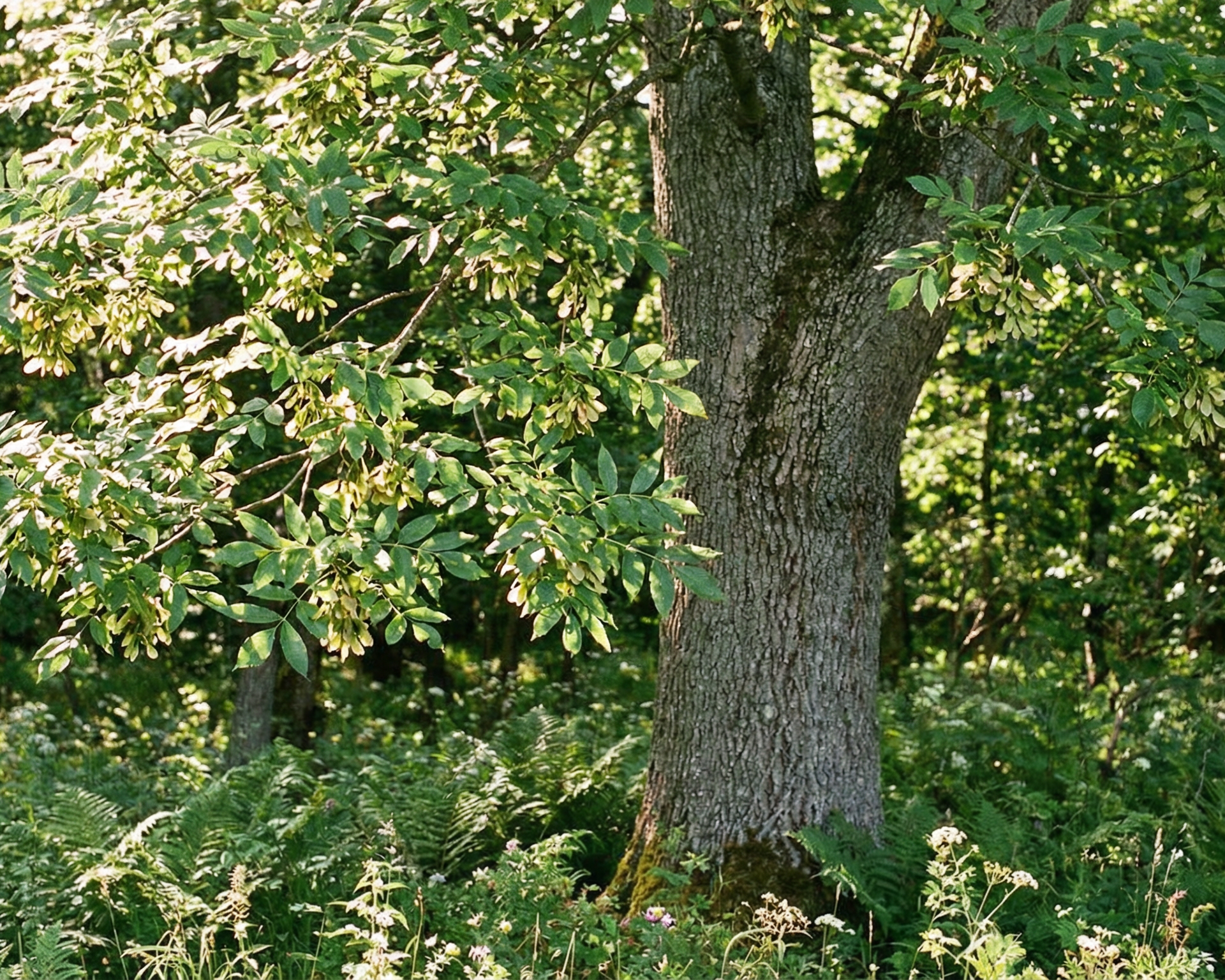
Ash
Fraxinus spp.
15 nurseries listed
Compare nurseries
15 nurseries · 43 matching options
15 locations on the map. Select a marker or a nursery to compare.
Preparing the map…
Your location isn’t saved. Confirm availability and visiting hours with the nursery.
About Ash
Fraxinus (Ash)\n\nFraxinus, commonly known as Ash, is a genus of flowering plants in the olive and lilac family, Oleaceae. This genus comprises 45 to 65 species of medium to large trees, most of which are deciduous. Ash trees are widespread throughout much of Europe, Asia, and North America, inhabiting a variety of temperate and subtropical regions.\n\n## Key Characteristics\n\nAsh trees are characterized by their opposite, pinnately compound leaves, which are composed of multiple leaflets arranged on either side of a central stem. The fruit of the ash tree is a distinctive single-winged samara, often referred to as a "key" or "helicopter," which is designed for wind dispersal. Many species within the Fraxinus genus are dioecious, meaning that male and female flowers are borne on separate individual trees.\n\n## Uses and Significance\n\nThe wood of ash trees is highly valued for its strength, durability, and elasticity. It is a traditional material for making tool handles, baseball bats, and fine furniture. The wood's flexibility and resonance also make it a choice material for crafting musical instruments, including electric guitars and drum shells. Beyond its use in woodworking, various species of ash have a long history of use in traditional medicine. The bark of the white ash (Fraxinus americana) has been employed for its diuretic and anti-rheumatic properties, while the bark of the Japanese ash (Fraxinus japonica) has been used in traditional Japanese medicine as a diuretic and antipyretic.\n\n## Threats\n\nA significant threat to ash trees in North America is the emerald ash borer (Agrilus planipennis), an invasive beetle native to Asia. The larvae of the emerald ash borer feed on the inner bark of ash trees, which disrupts the transport of water and nutrients, ultimately leading to the tree's death. This invasive pest has caused widespread devastation to ash populations across the continent.
Plant facts
- Sun
- Full Sun, Partial Sun, Partial Shade
- Water
- Regular, Likes Wet Feet
- USDA zones
- 3-8
- Lifecycle
- Perennial