Ashwagandha
Withania somnifera
1 nursery nationwide
Compare nurseries
Nurseries with recorded shipping, across all locations. Confirm delivery to your address and availability on the nursery website.
No nursery options match these filters
Try another size or variety, or broaden your location. Options with unconfirmed variety names are included when All varieties is selected.
About Ashwagandha
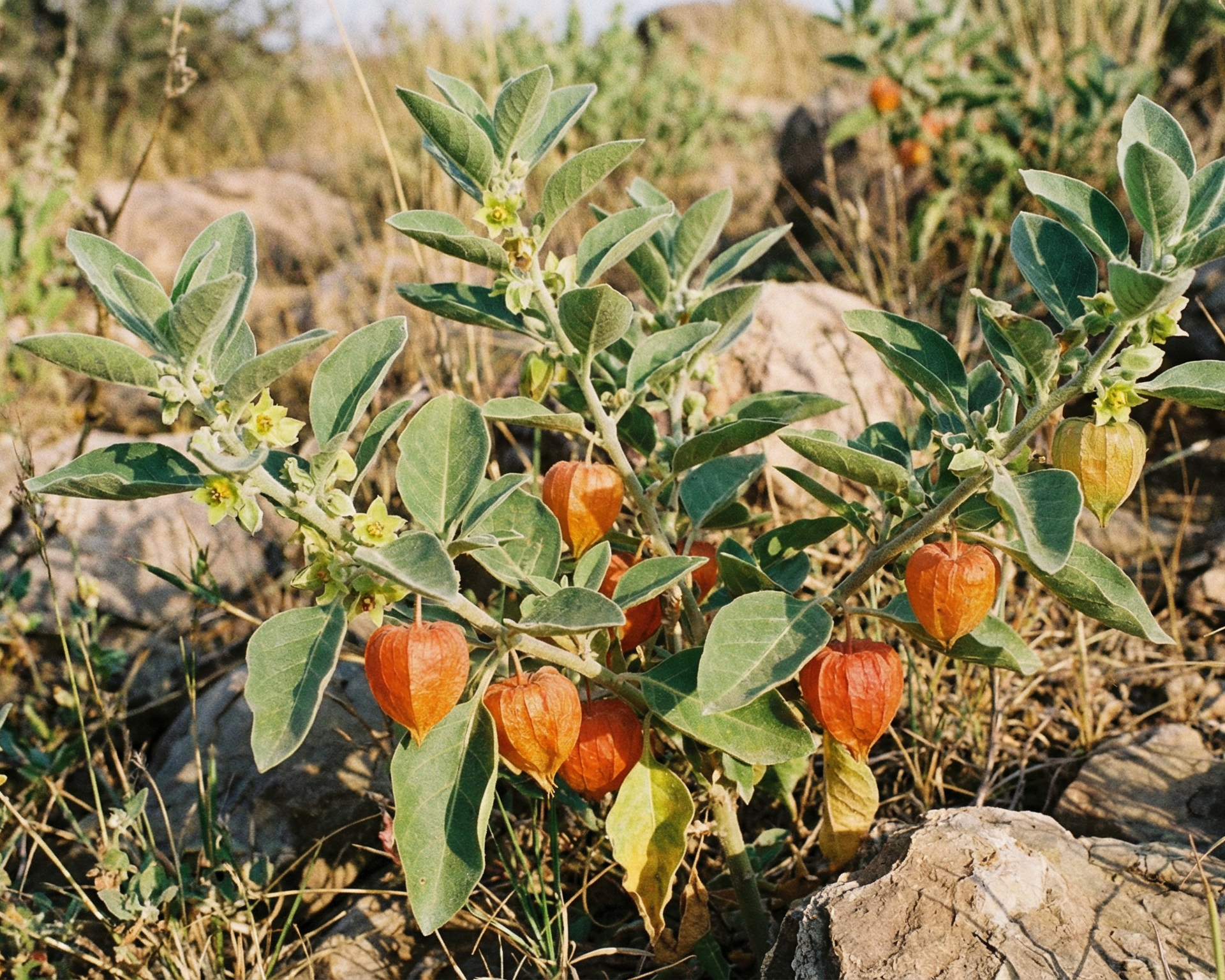
Withania somnifera, most famously known as Ashwagandha, is an important medicinal herb within the Solanaceae, or nightshade, family. Native to the drier regions of India, the Middle East, and parts of Africa, this plant has been a cornerstone of traditional Ayurvedic medicine for centuries. Its name, Ashwagandha, is derived from Sanskrit, combining "ashva" (horse) and "gandha" (smell), alluding to the root's distinctive horse-like aroma and the traditional belief that consuming it imparts the strength and vitality of a horse. It is also commonly referred to as Indian Ginseng or Winter Cherry, reflecting its therapeutic parallels to ginseng and the appearance of its fruit. Ashwagandha is a small, woody shrub that typically grows to a height of 35 to 75 centimeters. The plant is characterized by its central stem from which tomentose, or fuzzy, branches extend radially. It features dull green, elliptic leaves that are simple and arranged alternately along the stem. The flowers are small, inconspicuous, and greenish-yellow with a bell shape, appearing at the leaf nodes. Following flowering, the plant produces a bright orange-red berry, about the size of a pea, which is enclosed within a papery, lantern-like calyx that shrivels as the fruit ripens. For millennia, Ashwagandha has been revered for its medicinal properties. In Ayurvedic medicine, it is classified as a Rasayana, a rejuvenative tonic that helps the body resist physiological and psychological stress, and it is considered an adaptogen. The roots and, to a lesser extent, the leaves are used to create powders, extracts, and supplements. These preparations are traditionally used to alleviate stress and anxiety, improve sleep, and boost cognitive function. The primary active compounds responsible for these effects are a group of steroidal lactones called withanolides. While widely used, it is important to note that the clinical evidence for its efficacy and safety is still under investigation, and it has been linked to rare cases of liver injury. In terms of cultivation, Ashwagandha is a hardy plant that thrives in dry, stony soil with good drainage and a slightly alkaline pH. It prefers full sun to partial shade and is well-suited for arid climates. The plant is typically grown from seed, which can be sown in the early spring, or propagated from greenwood cuttings. It is relatively low-maintenance and drought-tolerant, requiring watering only when the soil becomes dry. While resilient, it can be susceptible to pests like spider mites and diseases such as leaf spot, particularly in more humid conditions.
Plant facts
- Sun
- Full Sun
- Water
- Drought Tolerant, Regular
- USDA zones
- 8-11
- Lifecycle
- Annual, Perennial