Avocado
Persea americana
Fruit & Nut Trees
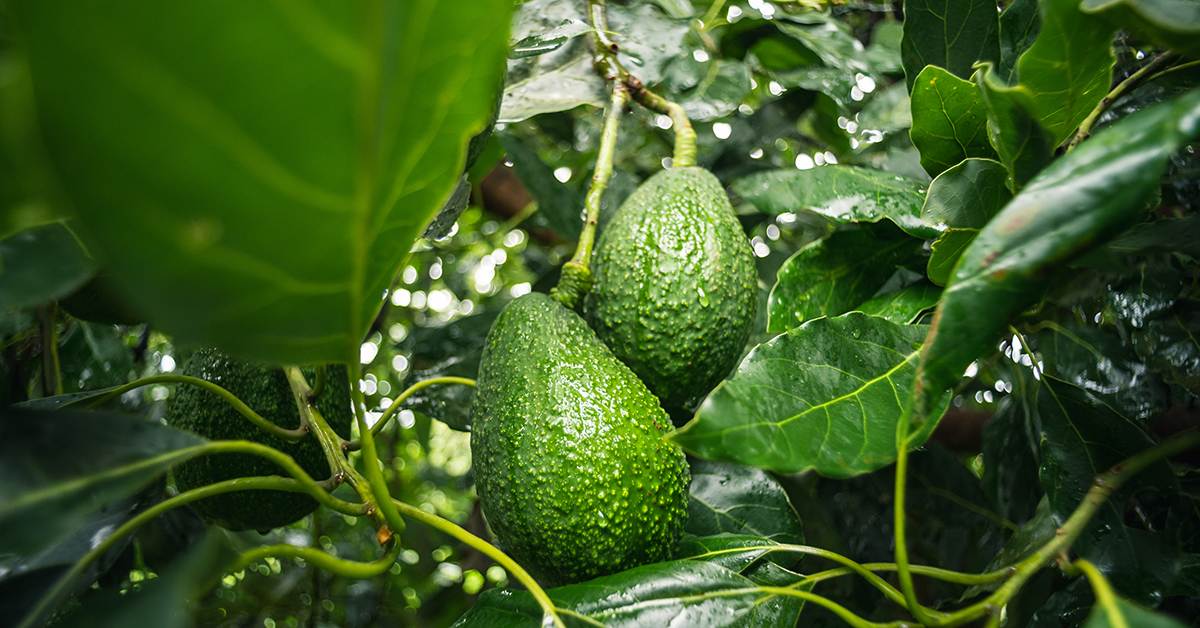
The genus *Persea* encompasses a diverse group of evergreen trees belonging to the laurel family, Lauraceae. While the genus includes over 100 species, it is most famously represented by the avocado (*Persea americana*), a fruit of global culinary and economic significance. Originating from south-central Mexico, the avocado is now cultivated in tropical and Mediterranean climates worldwide. The trees are fast-growing, reaching heights of up to 20 meters (65 feet), with a dense canopy of large, dark green leaves. The avocado tree produces a unique fruit that is botanically classified as a large berry. The fruit's size, shape, and skin texture vary between cultivars, ranging from pear-shaped to round and from green to black. The flesh of the avocado is characteristically creamy and rich in healthy fats, a trait that distinguishes it from most other fruits. The tree's flowers are small, greenish-yellow, and exhibit a remarkable flowering behavior known as protogynous, diurnally synchronous dichogamy, where the flower functions as a female on its first day and a male on its second, a mechanism that promotes cross-pollination. Beyond its culinary popularity, the avocado holds significant nutritional and cultural value. It is a nutrient-dense food, rich in monounsaturated fats, fiber, potassium, and various vitamins. The fruit is consumed in a wide array of dishes, from salads and sandwiches to the iconic guacamole. In its native regions, the avocado has been a staple food for thousands of years, holding a place in the diets and traditions of ancient civilizations like the Aztecs and Mayans. The cultivation of avocados is a major agricultural industry in many countries, contributing significantly to their economies.
Plant facts
- Sun
- Full SunPartial Sun
- Water
- RegularDrought Tolerant
- USDA zones
- 9-11
- Lifecycle
- Perennial
2 of 4 nurseries carry this plant
- Just Fruits and ExoticsShips
Crawfordville, FL681 mi away
- 7 galIn stock$59.99View
- Top TropicalsShips
Fort Myers, FL918 mi away
- 7 galIn stock$54.99View
Distances are approximate, based on your network location.