Fruit & Nut Trees
Banana
Musa
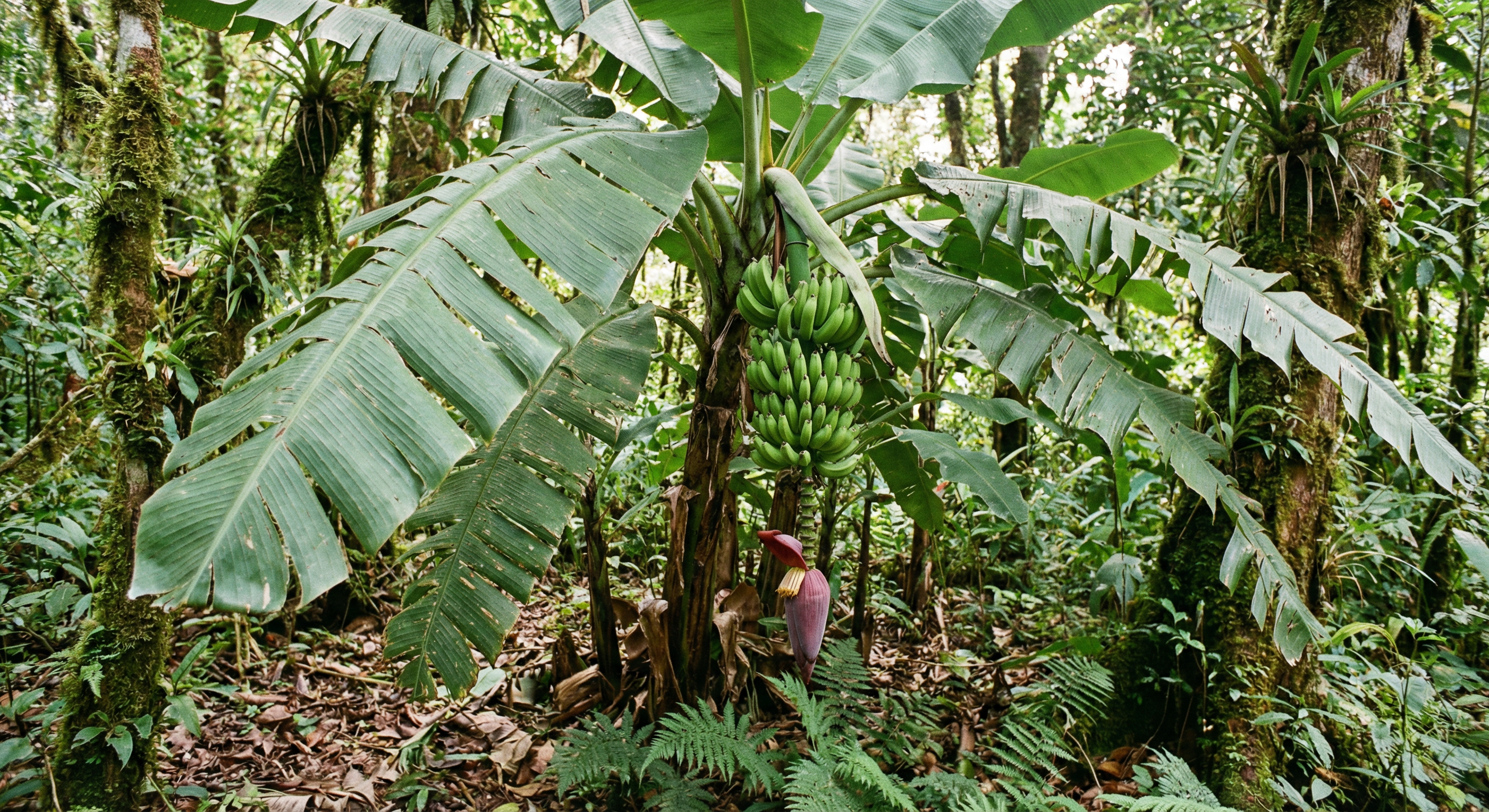
The genus Musa is a group of tropical and subtropical flowering plants, most commonly known as bananas and plantains. This genus belongs to the Musaceae family and encompasses over 70 species. While often referred to as trees, they are technically large herbaceous perennials, as they do not develop woody trunks. Instead, they form a sturdy pseudostem from tightly overlapping leaf sheaths. Musa species are native to the tropical regions of Indomalaya and Australia and are cultivated extensively across the tropics for their fruit, fiber, and as ornamental plants. The most prominent characteristic of the Musa genus is its production of fruit in a large, hanging cluster, or "bunch". The individual fruits, or "fingers", are botanically classified as berries. The plants themselves are among the largest of all herbaceous plants, with some species reaching heights of up to 9 meters. Their leaves are large, oblong, and spirally arranged, and can grow to be several meters long. The plant reproduces through underground rhizomes, which give rise to new shoots or "suckers", allowing the plant to propagate vegetatively. Musa holds immense economic and cultural significance worldwide. The fruit is a staple food for millions of people, providing a rich source of carbohydrates, potassium, and vitamins. Dessert bananas are eaten raw when ripe, while starchy plantains are a key ingredient in many cuisines and are typically cooked before consumption. Beyond food, some species like Musa textilis (Abacá) are cultivated for their strong fibers, which are used to make ropes, textiles, and paper. The large leaves are also widely used as natural, disposable food containers and plates, and for wrapping food for cooking or storage.Read more
1 of 2 nurseries carry this plant
- Top TropicalsShips
Fort Myers, FL918 mi away
- 7 galIn stock$39.99
Distances are approximate, based on your network location.
Plant facts
- Sun
- Full SunPartial Sun
- Water
- RegularHigh
- USDA zones
- 9-11
- Lifecycle
- Perennial