Basil
Ocimum basilicum
15 nurseries nationwide · 2 named varieties
Compare nurseries
Nurseries with recorded shipping, across all locations. Confirm delivery to your address and availability on the nursery website.
1 nursery · 2 matching options
1 location on the map. Select a marker or a nursery to compare.
Preparing the map…
Your location isn’t saved. Confirm availability and delivery area with the nursery.
About Basil
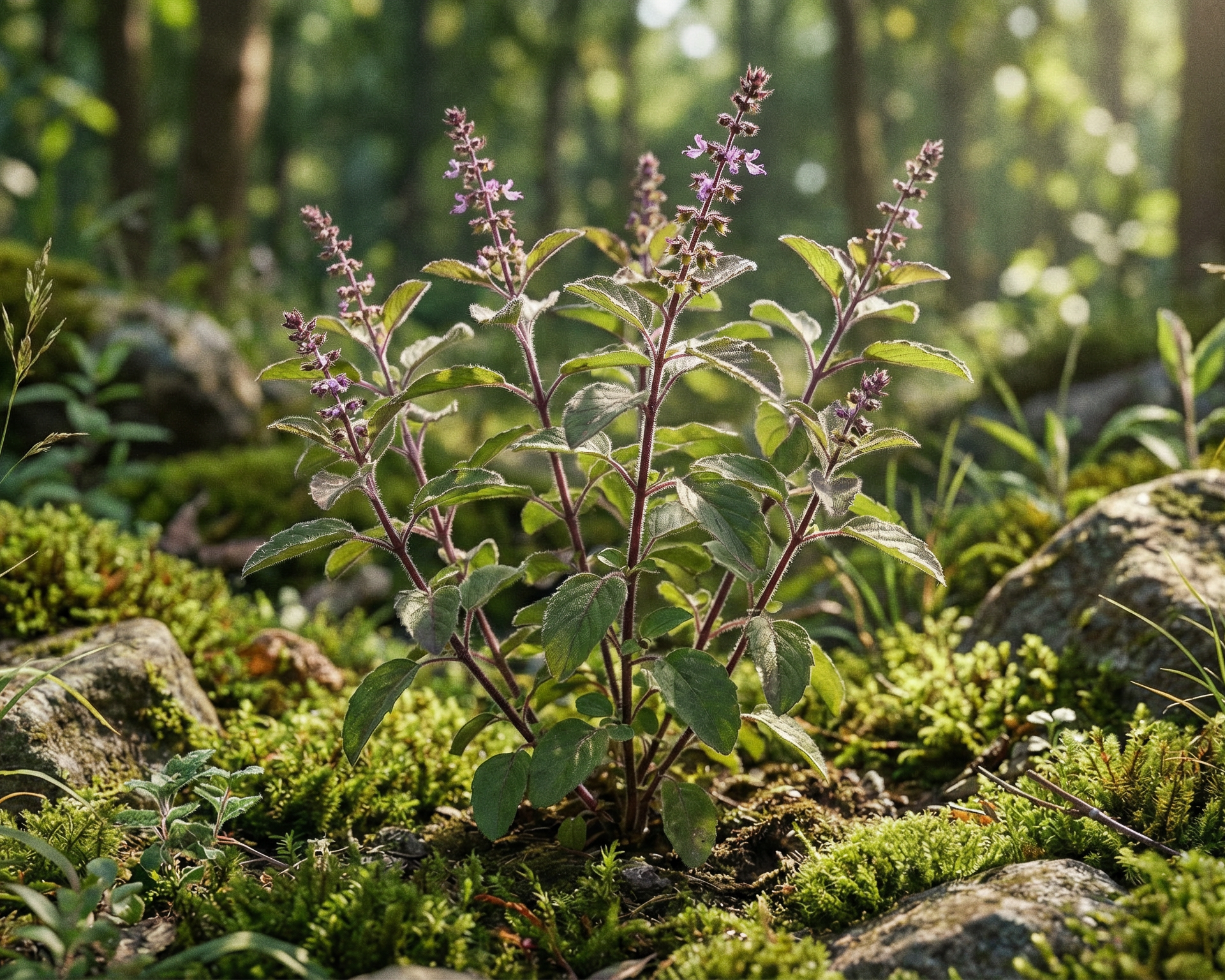
Ocimum, commonly known as basil, is a genus of aromatic annual and perennial herbs and shrubs in the mint family, Lamiaceae. Native to tropical and warm temperate regions of the Old World, the genus contains over 60 species, with the most well-known being sweet basil (Ocimum basilicum) and holy basil or tulsi (Ocimum tenuiflorum). Basil has been cultivated for thousands of years and is celebrated worldwide for its culinary and medicinal applications. Its rich history is intertwined with culinary traditions, religious ceremonies, and traditional medicine systems across various cultures. The plants in the Ocimum genus are characterized by their square stems and simple, oppositely arranged leaves. The leaves are typically ovate and can range from lush green to deep purple, often with a glossy or slightly hairy texture. The flowers are small, usually white, pink, or purplish, and are borne in terminal racemes. The aroma of basil is its most defining feature, with different species and cultivars offering a wide spectrum of scents, from the sweet, clove-like fragrance of sweet basil to the peppery and minty notes of holy basil. Basil is a cornerstone of many cuisines, including Italian, Thai, and Vietnamese. Sweet basil is a key ingredient in pesto and is widely used in salads, pasta sauces, and as a fresh garnish. Other varieties, like Thai basil, have a more anise-like flavor and are essential in Southeast Asian cooking. Beyond its culinary uses, basil holds significant cultural and medicinal importance. Holy basil (tulsi) is revered in Hinduism and is a fundamental herb in Ayurvedic medicine, where it is used for its adaptogenic and anti-inflammatory properties. Modern research has also explored the potential health benefits of basil, including its antioxidant and antimicrobial effects.
Plant facts
- Sun
- Full Sun, Partial Sun
- Water
- Regular
- USDA zones
- 3-11
- Lifecycle
- Annual, Perennial
Variety guides
Explore the complete plant collection, including varieties with no nursery listings yet. Counts reflect your location and shopping filters.
- Italian Large Leaf0 nurseries listed
- Kirkuk0 nurseries listed
- Kondey Island0 nurseries listed
- Leaf Container Basil - Italian Cameo0 nurseries listed
- Lemon Basil0 nurseries listed
- Lettuce Leaf0 nurseries listed
- Mammoth0 nurseries listed
- Marseillaise Dwarf0 nurseries listed
- Mayo/Yoeme0 nurseries listed
- Mrihani0 nurseries listed
- Mrihani x Opal F40 nurseries listed
- Mrs Burns' Lemon0 nurseries listed
- Napoletano0 nurseries listed
- Napolitano Mammoth-Leafed0 nurseries listed
- Osmin0 nurseries listed
- Profumo0 nurseries listed
- Profumo di Genova0 nurseries listed
- Prospera0 nurseries listed
- purple opal basil0 nurseries listed
- Purple Opal Organic0 nurseries listed
- Purple Ruffle0 nurseries listed
- Purple Ruffles0 nurseries listed
- Queenette0 nurseries listed
- Red Rubin0 nurseries listed