Scenic Hill Farm Nursery
Albany, OR
11 options
Call for pricing
Catalog checked Oct 1, 2026. Confirm availability before visiting.
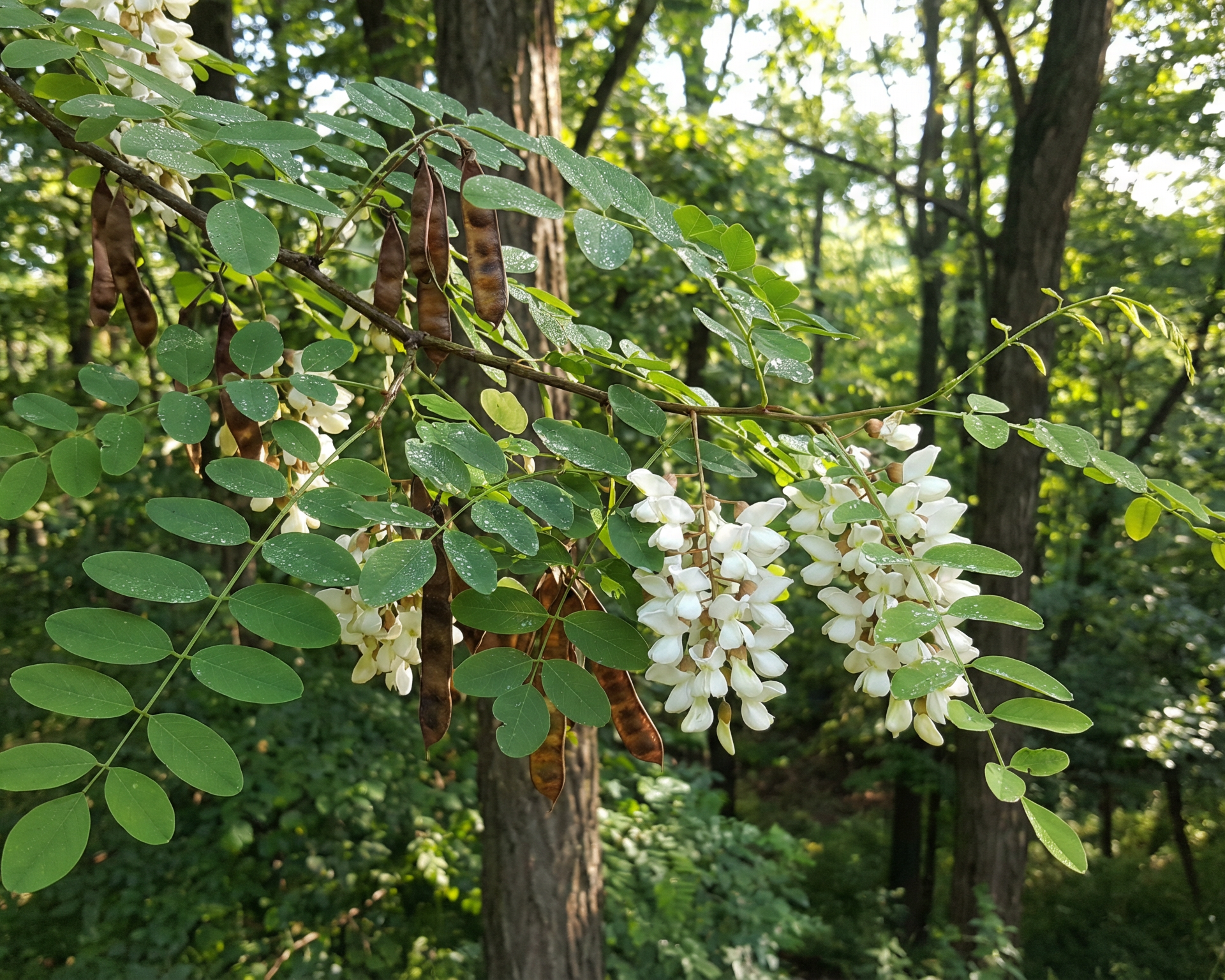
Robinia pseudoacacia
9 nurseries listed
9 nurseries · 33 matching options
Albany, OR
11 options
Call for pricing
Catalog checked Oct 1, 2026. Confirm availability before visiting.
Showing 9–9 of 9 nurseries
The genus Robinia, commonly known as locust, is a group of deciduous trees and shrubs belonging to the legume family, Fabaceae. Native to North America, this genus is best known for the species Robinia pseudoacacia, or black locust, a fast-growing hardwood tree that has been widely naturalized in temperate regions around the world. The trees are characterized by their pinnately compound leaves, which are made up of multiple smaller leaflets, and their often thorny branches. In late spring, they produce large, fragrant clusters of white or pink pea-like flowers, which are a significant source of nectar for honeybees, resulting in a sought-after honey variety. Black locust trees are highly valued for their durable, rot-resistant wood, which has been used for a variety of applications, including fence posts, furniture, and small watercraft. The wood is dense and hard, making it an excellent choice for firewood as well. The tree's ability to grow quickly and thrive in poor, disturbed soils has also made it a popular choice for land reclamation and erosion control projects. Its nitrogen-fixing capabilities, a common trait in the legume family, help to enrich the soil where it grows, benefiting surrounding plants. Despite its many uses, Robinia pseudoacacia is considered an invasive species in some regions outside of its native range. Its rapid growth, suckering habit, and ability to outcompete native vegetation can lead to the formation of dense, monotypic stands. Furthermore, it's important to note that while the flowers are edible and used in fritters and teas, other parts of the plant, including the leaves, bark, and seeds, are toxic to both humans and livestock due to the presence of the toxalbumin robin. Therefore, caution is advised when handling and planting this species. In a permaculture or garden setting, black locust can be a valuable addition if managed carefully. Its nitrogen-fixing properties make it an excellent companion plant in agroforestry systems, and its flowers provide a valuable resource for pollinators. The wood can be harvested for various on-site uses, from building materials to fuel. However, its potential for invasiveness requires diligent management, such as removing suckers and seedlings to prevent unwanted spread. When considering planting black locust, it is crucial to check local regulations and recommendations to ensure it is a suitable and responsible choice for the specific location.
Explore the complete plant collection, including varieties with no nursery listings yet.