Blueberry
Vaccinium spp.
27 nurseries nationwide · 24 named varieties
Compare nurseries
2 nurseries · 5 matching options
2 locations on the map. Select a marker or a nursery to compare.
Preparing the map…
Your location isn’t saved. Confirm availability and visiting hours with the nursery.
About Blueberry
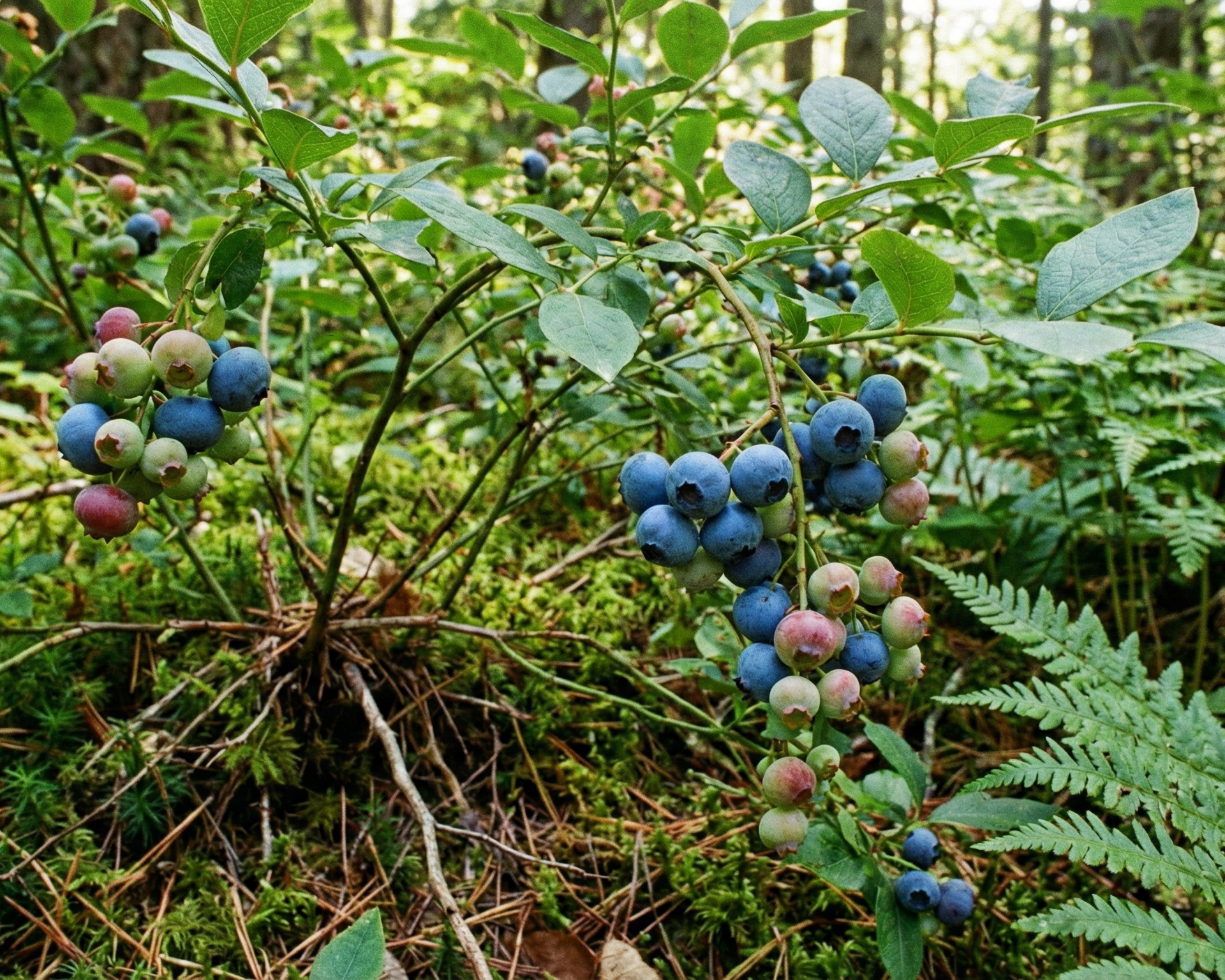
The genus Vaccinium is a diverse group of shrubs belonging to the heath family (Ericaceae), encompassing around 450 species. These plants are widespread throughout the Northern Hemisphere, with some species extending into southern regions. While the genus includes well-known fruits like cranberries and lingonberries, it is most famously represented by the blueberry, which has become the common name for the group due to its widespread cultivation and popularity. The name Vaccinium itself has classical Latin roots, possibly referring to the bilberry, a close relative of the blueberry. Blueberry plants are typically deciduous shrubs that vary in size from low-growing varieties to taller, highbush forms that can reach up to 12 feet in height. They are characterized by their small, urn-shaped flowers, which range in color from white to pale pink and grow in clusters. The fruit of the blueberry plant is a true berry, containing many small seeds. The leaves are typically glossy green, and many varieties offer vibrant fall foliage in shades of orange and maroon, adding to their ornamental value. The primary significance of blueberries lies in their culinary use. They are a popular fruit consumed fresh and are also a key ingredient in a wide array of products, including jams, jellies, pies, and muffins. Beyond their taste, blueberries are renowned for their nutritional benefits, being rich in antioxidants, vitamins, and fiber. In addition to their culinary and health value, blueberry plants are also used in landscaping for their attractive appearance and relatively low maintenance requirements. Cultivation of blueberries requires specific conditions for optimal growth. They thrive in acidic soils with good drainage and prefer locations with full sun exposure, although they can tolerate some partial shade. The plants are perennial and can be productive for many years if properly maintained. Different species and cultivars are adapted to various climates, from the cold-hardy lowbush blueberries of North America to the southern highbush varieties suited for warmer regions.
Plant facts
- Sun
- Full Sun, Partial Sun, Partial Shade
- Water
- Regular, High
- USDA zones
- 2-9
- Lifecycle
- Perennial
Variety guides
Explore the complete plant collection, including varieties with no nursery listings yet.
- Jersey0 nurseries listed
- Jersey Blueberry0 nurseries listed
- Legacy0 nurseries listed
- Liberty0 nurseries listed
- Magnolia0 nurseries listed
- Millennia0 nurseries listed
- Northblue0 nurseries listed
- Northcountry0 nurseries listed
- Northland0 nurseries listed
- Northsky0 nurseries listed
- Palmetto0 nurseries listed
- Pink Icing0 nurseries listed
- Polaris0 nurseries listed
- Polaris Blueberry0 nurseries listed
- Reka0 nurseries listed
- Santa Fe0 nurseries listed
- Sapphire0 nurseries listed
- Sebring0 nurseries listed
- Southern Belle0 nurseries listed
- Spartan0 nurseries listed
- Spartan Blueberry0 nurseries listed
- St. Cloud0 nurseries listed
- Summer Sunset0 nurseries listed
- Suziblue0 nurseries listed