Fruit & Nut Trees
Cacao
Theobroma cacao
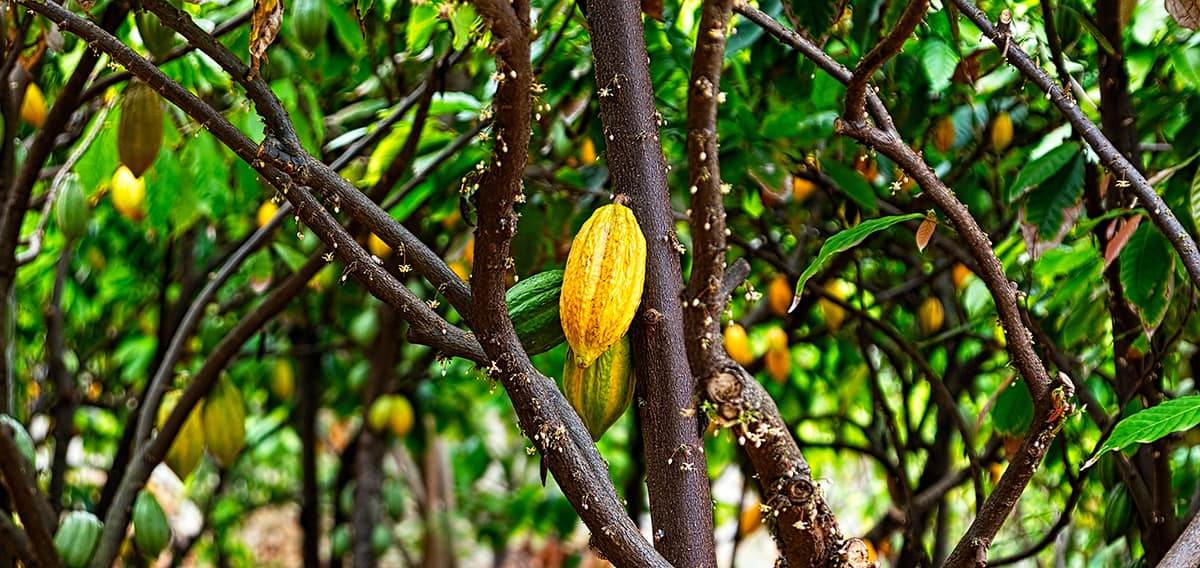
Theobroma is a genus of flowering plants in the mallow family, Malvaceae, native to the tropical forests of Central and South America. The genus comprises about 20 species of small, understory evergreen trees, the most famous of which is Theobroma cacao, the source of chocolate. The name Theobroma is derived from Greek and means "food of the gods," a name that reflects the historical and cultural significance of these plants, particularly the cacao tree, in ancient Mesoamerican civilizations. The most prominent member of the genus, the cacao tree (Theobroma cacao), is a small, branching tree that typically grows to a height of 20-30 feet. It has large, glossy, oblong leaves that can reach up to a foot in length. A distinctive feature of the cacao tree is its cauliflorous nature, meaning that its small, pinkish, fragrant flowers grow in clusters directly on the trunk and older branches. These flowers develop into large, ribbed pods, which can be yellow, red, or brown when ripe. Each pod contains 20 to 60 seeds, or "beans," embedded in a sweet, mucilaginous white pulp. The economic and cultural significance of the cacao bean is immense. The seeds are the primary raw material for the production of chocolate. After being harvested, the beans undergo a process of fermentation, drying, and roasting, which develops their characteristic flavor and aroma. The processed beans are then ground into a paste, which can be separated into cocoa solids and cocoa butter. These components are then used to create the vast array of chocolate products consumed worldwide. Beyond its use in confectionery, the cacao pulp is also consumed fresh or used to make juices and jellies. Historically, the beans were so highly valued by the Aztecs and Mayans that they were used as a form of currency.Read more
1 of 1 nursery carries this plant
- Top TropicalsShips
Fort Myers, FL918 mi away
- 3 galIn stock$49.99
Distances are approximate, based on your network location.