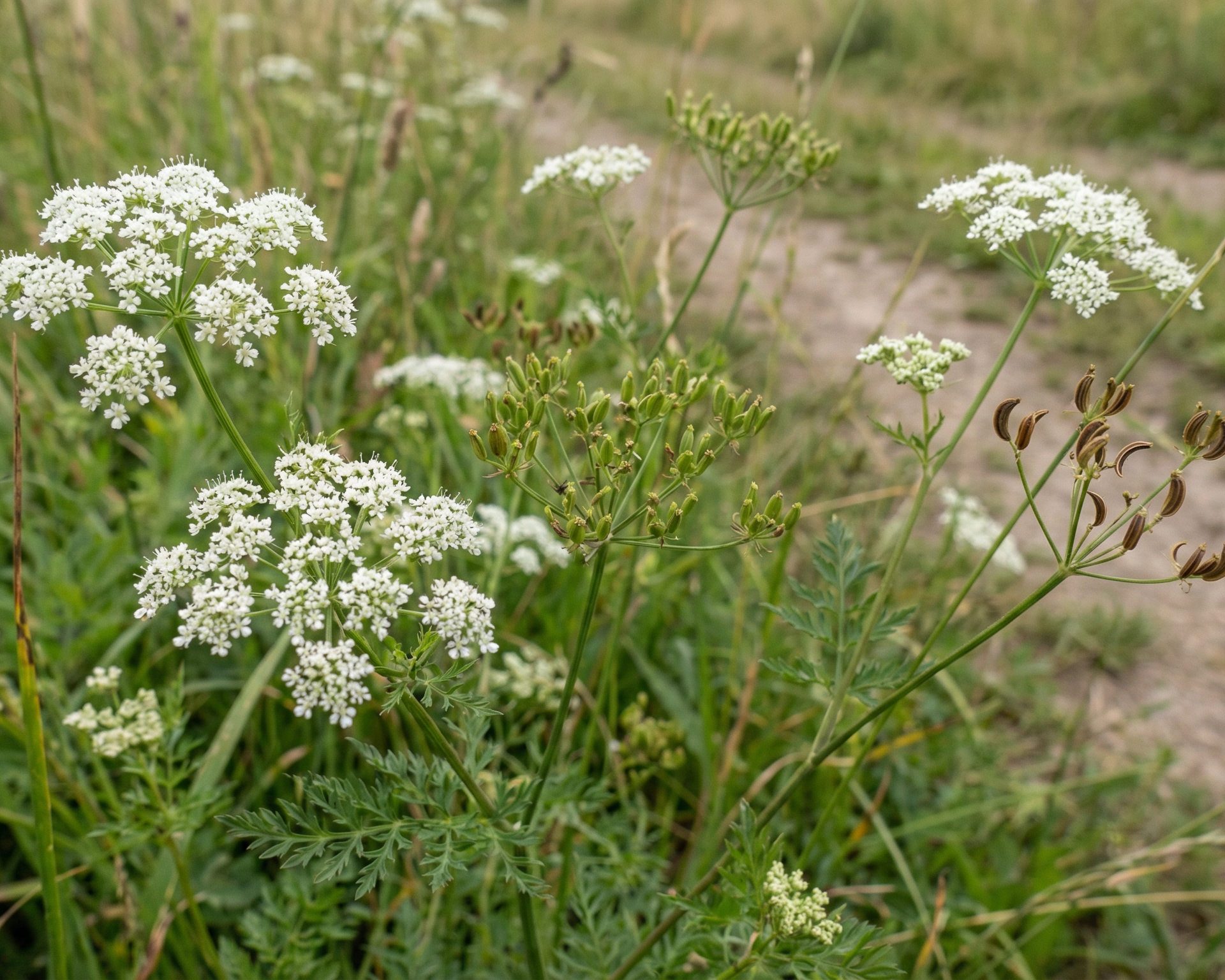
Caraway
Carum carvi
1 nursery nationwide
Compare nurseries
1 nursery · 1 matching option
1 location on the map. Select a marker or a nursery to compare.
Preparing the map…
Your location isn’t saved. Confirm availability and visiting hours with the nursery.
About Caraway
Caraway, scientifically known as Carum carvi, is a versatile biennial herb belonging to the Apiaceae family, which also includes well-known plants like carrots, parsley, and celery. Native to western Asia, Europe, and North Africa, caraway has been cultivated for centuries for its aromatic seeds, which are used as a spice in various cuisines around the world. The plant itself is characterized by its feathery, finely divided leaves and small, white or pinkish flowers that grow in umbrella-shaped clusters called umbels. The caraway plant typically grows to a height of about 20-80 cm. During its first year, it forms a rosette of leaves, and in its second year, it produces a flowering stalk. The most economically important part of the plant is its fruit, commonly referred to as a seed. These small, crescent-shaped seeds are dark brown and have a pungent, anise-like flavor and aroma, which comes from essential oils like carvone and limonene. Caraway has a rich history of culinary and medicinal use. The seeds are a popular ingredient in European and Middle Eastern cooking, often used to flavor rye bread, cheeses, sausages, and soups. In traditional medicine, caraway has been used to treat a variety of ailments, particularly digestive issues such as indigestion, bloating, and gas. The essential oil extracted from the seeds is also used in the cosmetic and pharmaceutical industries. All parts of the caraway plant are edible, including the leaves and roots, though they are less commonly consumed.
Plant facts
- Sun
- Full Sun, Partial Shade
- Water
- Regular, Low, Drought Tolerant
- USDA zones
- 4-9
- Lifecycle
- Biennial