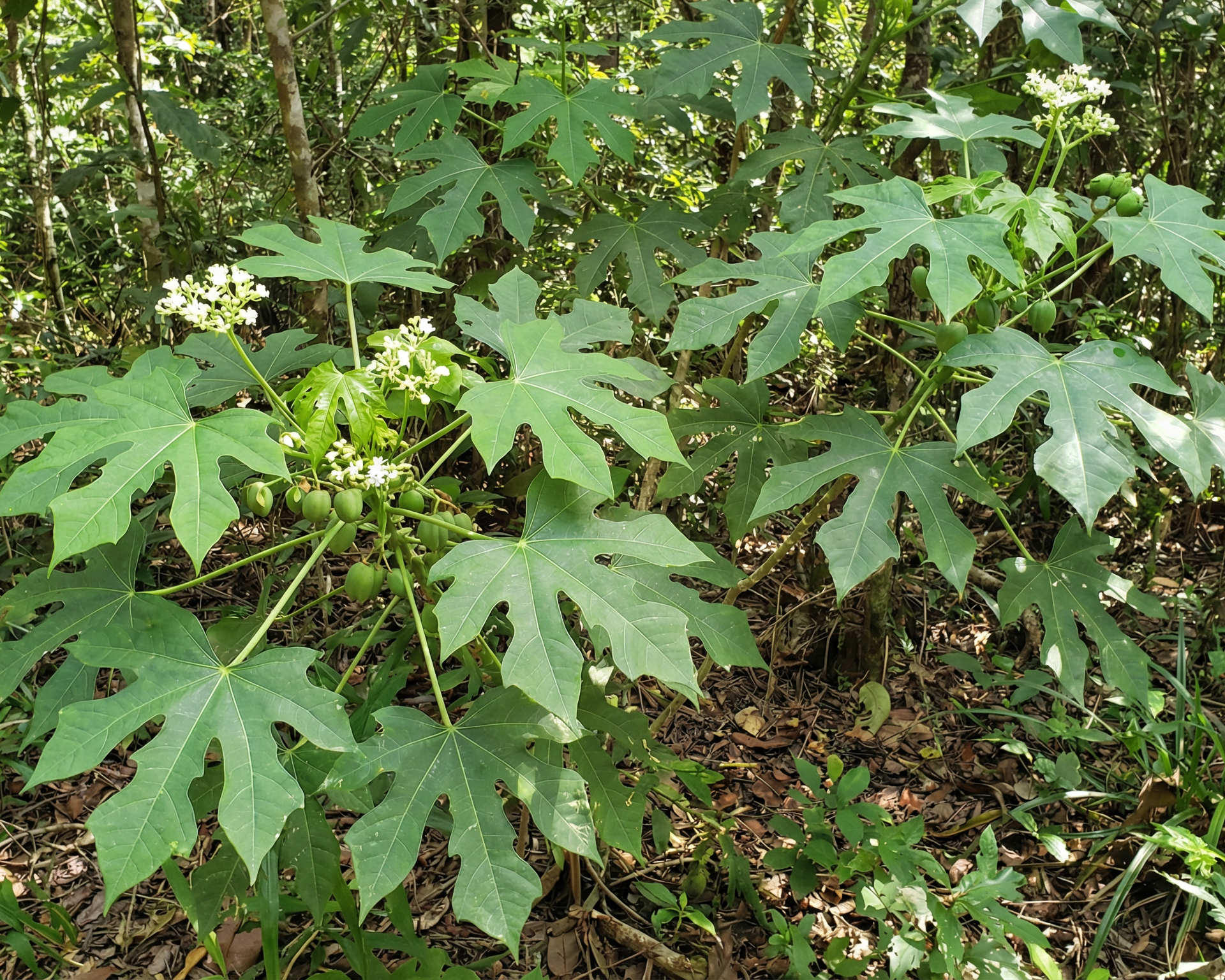
Chaya
Cnidoscolus aconitifolius
3 nurseries nationwide
Compare nurseries
3 nurseries · 10 matching options
3 locations on the map. Select a marker or a nursery to compare.
Preparing the map…
Your location isn’t saved. Confirm availability and visiting hours with the nursery.
About Chaya
Chaya (Cnidoscolus aconitifolius), also known as tree spinach, is a large, fast-growing, and highly nutritious perennial shrub belonging to the Euphorbiaceae family. Believed to have originated on Mexico’s Yucatán Peninsula, this plant has been a staple food source for centuries in Mexico and Central America. It is a leafy, succulent-stemmed shrub that can reach up to 6 meters in height, though it is often pruned to about 2 meters for easier leaf harvesting. The large, dark green leaves are palmately lobed, resembling those of a cassava or hibiscus plant, and in some varieties, are covered with stinging hairs that can cause skin irritation. The primary significance of Chaya lies in its culinary use. The leaves are a rich source of protein, vitamins (especially vitamin A and C), calcium, iron, and antioxidants. However, the raw leaves contain toxic hydrocyanic glycosides, which are neutralized by cooking. Therefore, the leaves must be boiled for at least 15-20 minutes before consumption. Once cooked, they have a mild flavor similar to spinach and can be used in a wide variety of dishes, including soups, stews, and tamales. Beyond its nutritional value, Chaya is also utilized in traditional medicine to treat a range of ailments, from diabetes and obesity to kidney stones and acne. From a permaculture perspective, Chaya is a highly valuable plant. It is a hardy, drought-tolerant, and pest-resistant species that thrives in a variety of soil types, although it prefers well-drained conditions and full sun exposure. Its rapid growth and dense foliage make it an excellent choice for creating living fences, windbreaks, and privacy screens. Furthermore, the plant's ability to tolerate a wide range of growing conditions and its minimal maintenance requirements make it a sustainable and resilient food source, particularly in tropical and subtropical climates. Propagation of Chaya is remarkably simple and is typically done through woody stem cuttings. Cuttings that are 15-30 cm in length can be planted directly into the ground, where they will readily root and begin to grow. The plant's resilience and ease of propagation have contributed to its spread beyond its native range, and it is now cultivated in many other tropical regions around the world. Its combination of high nutritional value, culinary versatility, and low-maintenance cultivation makes Chaya a plant of significant interest for food security and sustainable agriculture.
Plant facts
- Sun
- Full Sun, Partial Sun, Partial Shade
- Water
- Regular, Drought Tolerant
- USDA zones
- 9-11
- Lifecycle
- Perennial
Variety guides
Explore the complete plant collection, including varieties with no nursery listings yet.