Fruit & Nut Trees
Chestnut
Castanea
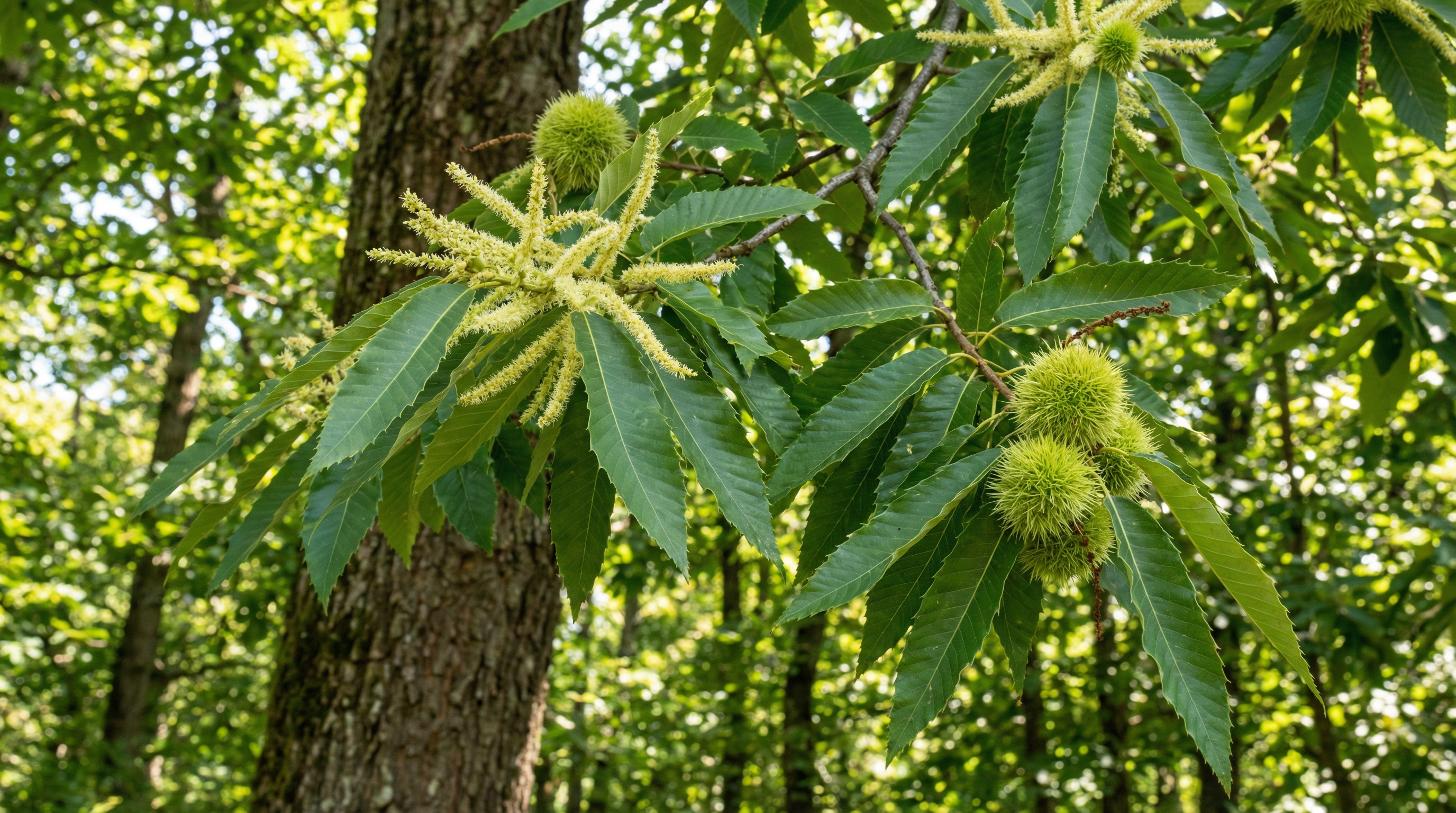
The genus Castanea, commonly known as Chestnut, belongs to the beech family, Fagaceae. It comprises eight or nine species of deciduous trees and shrubs native to the temperate regions of the Northern Hemisphere [1][2]. These plants are renowned for the edible nuts they produce, which are also called chestnuts. The group includes several well-known species such as the American Chestnut (Castanea dentata), Chinese Chestnut (C. mollissima), Japanese Chestnut (C. crenata), and the European Sweet Chestnut (C. sativa). Chestnut trees are characterized by their large, toothed leaves and the spiny husks, called burs, that enclose the nuts. There are distinct differences between species; for instance, the American Chestnut typically grows with a single, straight trunk, whereas the Chinese Chestnut often has a more spreading form with multiple trunks [3]. The nuts themselves also vary, with Chinese chestnuts generally being larger and sweeter than their American counterparts. The American Chestnut was once a dominant species in the forests of eastern North America before being decimated by the chestnut blight in the early 20th century. The significance of the chestnut genus is multifaceted. Culinarily, the nuts are highly valued and can be roasted, boiled, or ground into flour for use in a wide variety of dishes, including soups, stews, stuffings, and desserts [4]. Medicinally, various parts of the plant have been used in traditional remedies; the leaves, for example, are known for their astringent and antitussive properties and have been used to treat ailments like diarrhea and coughs [5]. The durable, rot-resistant wood is also valuable for carpentry, furniture, and fence posts [6]. [1] https://en.wikipedia.org/wiki/Chestnut [2] https://www.treesandshrubsonline.org/articles/castanea/ [3] https://tacf.org/identification/chinese-american-chestnuts/ [4] https://www.countrylife.co.uk/gardens/gardening-tips/what-to-do-with-sweet-chestnuts-from-roasting-over-an-open-fire-to-adding-zip-to-burgers-and-brownies-233845 [5] https://www.eatweeds.co.uk/sweet-chestnut-castanea-sativa [6] https://www.woodlandtrust.org.uk/trees-woods-and-wildlife/british-trees/a-z-of-british-trees/sweet-chestnut/Read more
1 of 1 nursery carries this plant
- Chestnut Hill NurseryShips
Alachua, FL703 mi away
- 3 galIn stock$44.95
Distances are approximate, based on your network location.
Plant facts
- Sun
- Full SunPartial Sun
- Water
- RegularLowDrought Tolerant
- USDA zones
- 4-9
- Lifecycle
- Perennial