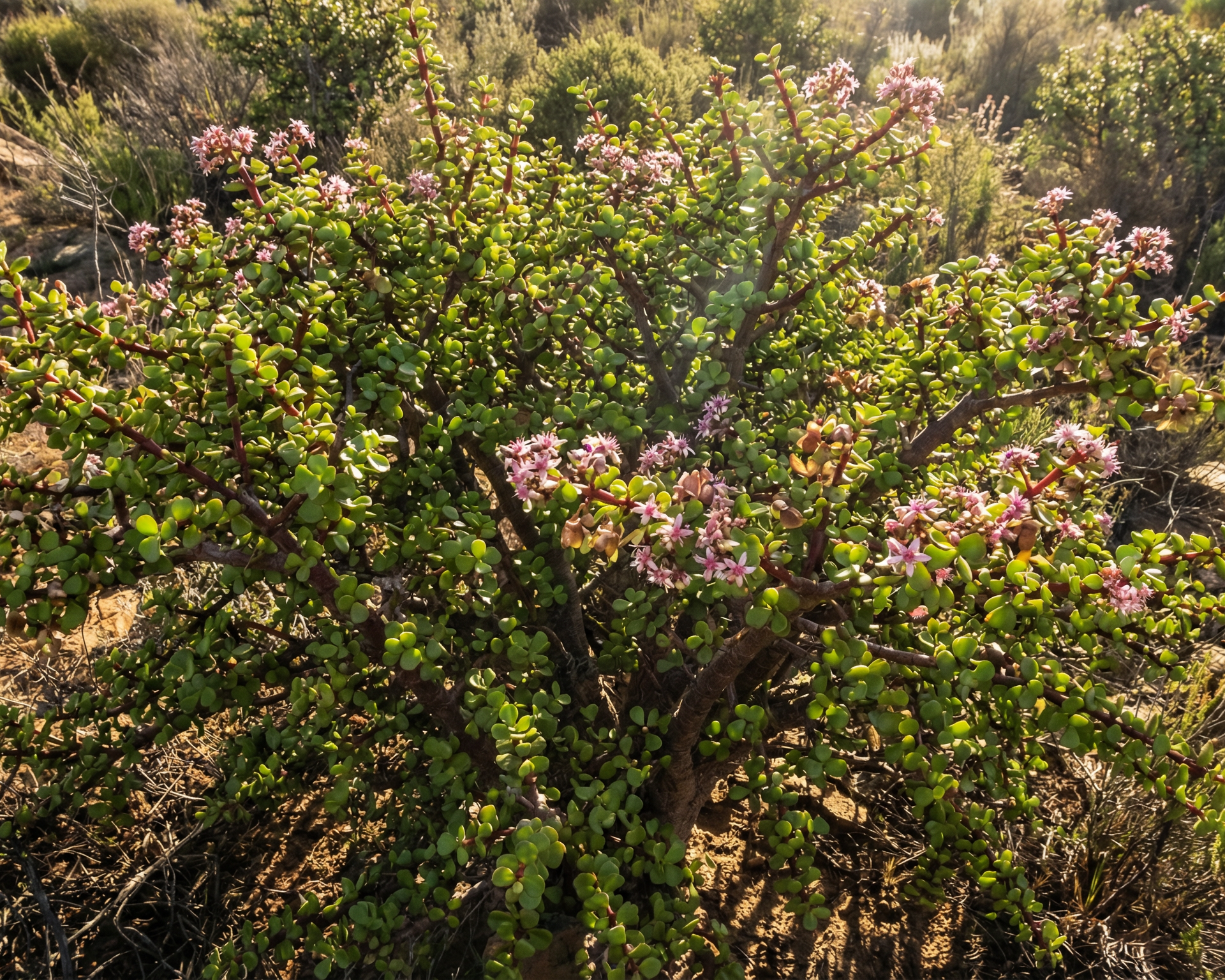
Elephant bush (spekboom)
Portulacaria afra
13 nurseries nationwide
Compare nurseries
13 nurseries · 55 matching options
13 locations on the map. Select a marker or a nursery to compare.
Preparing the map…
Your location isn’t saved. Confirm availability and visiting hours with the nursery.
About Elephant bush (spekboom)
Portulacaria afra, commonly known as Elephant Bush, is a fascinating and popular succulent shrub native to South Africa. It is also known by other names such as Porkbush and Spekboom. While traditionally placed in the purslane family (Portulacaceae), recent molecular studies have led to its reclassification into the Didiereaceae family. This plant is widely cultivated around the world as a houseplant, in succulent gardens, and for xeriscaping due to its low maintenance requirements and attractive appearance. Elephant Bush is a soft-wooded, semi-evergreen, multi-stemmed shrub or small tree that can reach heights of 8 to 15 feet in its natural habitat. It features fleshy, glossy, green, round to oval-shaped leaves that are nearly sessile on reddish-brown stems that mature to a grayish color. The plant produces small, inconspicuous, star-shaped pink or white flowers in late spring or early summer, although flowering is rare in cultivation. Its branches are brittle and can break off easily, often rooting where they fall to form new plants. This succulent has a variety of uses and a significant ecological impact. The leaves are edible and have a sour taste, making them a popular ingredient in salads and soups in Southern Africa. It is also an important source of food for livestock and wild animals, particularly during periods of drought. Notably, Elephant Bush is an excellent 'carbon sponge,' capable of sequestering large amounts of carbon from the atmosphere. Traditionally, it has also been used for medicinal purposes to treat various skin conditions. Growing Elephant Bush is relatively easy, making it a great choice for both novice and experienced gardeners. It thrives in bright light and requires well-drained soil, such as a cactus mix. While it is drought-tolerant, it grows more vigorously with regular watering, but care must be taken to avoid overwatering, which can lead to root rot. Propagation is simple and can be done from stem cuttings, which root readily. The plant is generally pest-free, but mealybugs can occasionally be an issue, especially when grown indoors.
Plant facts
- Sun
- Full Sun, Partial Sun
- Water
- Low, Drought Tolerant
- USDA zones
- 9-11
- Lifecycle
- Perennial