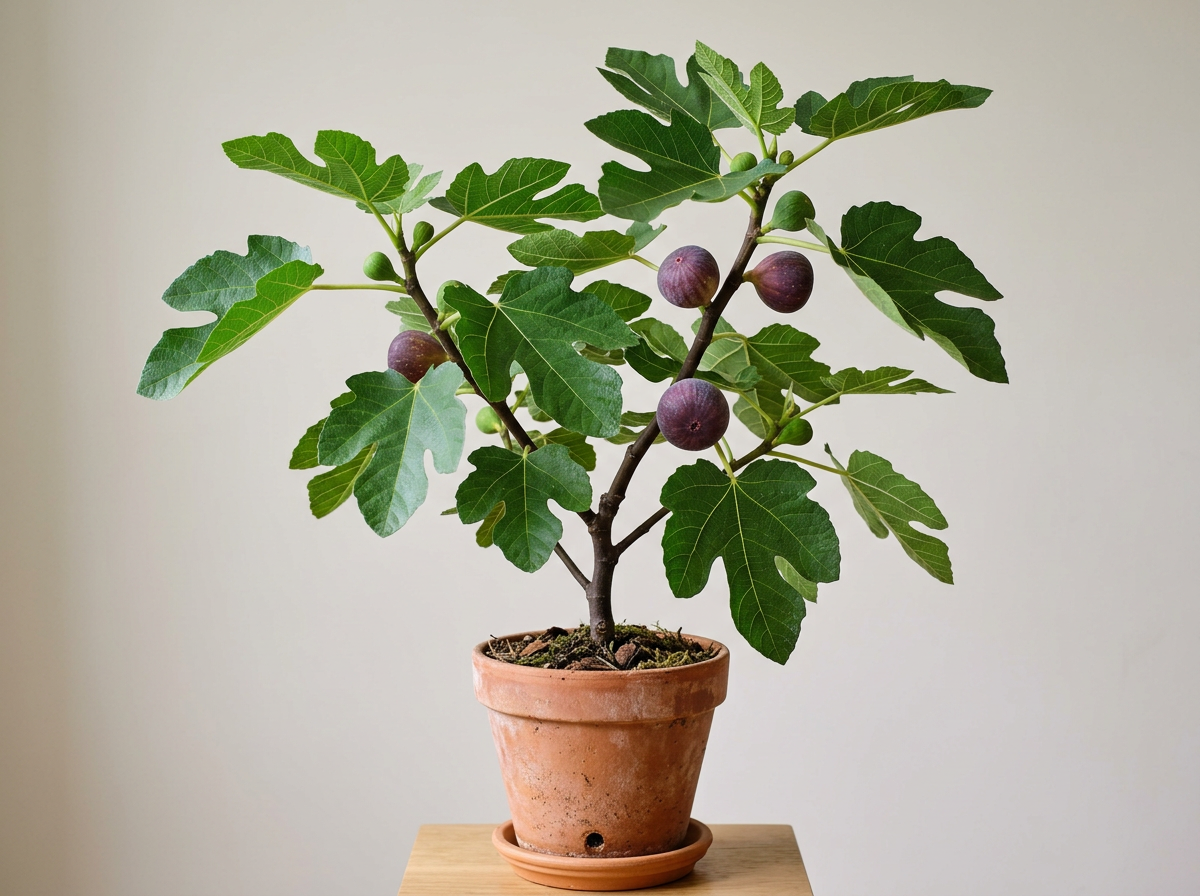
Fruit & Nut Trees
Fig
Ficus carica
The genus Ficus, collectively known as figs, is a large and diverse group of about 850 to 900 species of woody plants in the family Moraceae. These plants take on a variety of forms, including trees, shrubs, vines, and epiphytes, and are found in tropical regions worldwide, with some species extending into warmer temperate zones. The most well-known member of this genus is the common fig (Ficus carica), which has been cultivated for thousands of years for its edible fruit. Figs are a keystone species in many tropical forests, providing a crucial food source for a wide range of animals, from birds and bats to monkeys and other mammals. The most distinctive characteristic of the Ficus genus is its unique reproductive structure, the syconium. This is a fleshy, hollow, and pear-shaped inflorescence that contains hundreds of tiny flowers lining its inner surface. This structure develops into the familiar fig fruit. Another key feature of many fig species is the presence of aerial roots, which can be extensive and even develop into supportive trunks in species like the banyan tree (Ficus benghalensis). All figs produce a milky or yellowish latex when their tissues are broken, and their leaves are typically simple, waxy, and have a characteristic "triveined" pattern at the base. The pollination of figs is a fascinating example of mutualism, as each species of fig is typically pollinated by a specific species of tiny fig wasp. Figs hold significant cultural and economic importance across the globe. The common fig is a major crop in many Mediterranean countries and is consumed both fresh and dried. Beyond their culinary uses, many species of Ficus are revered for their cultural and spiritual significance. The Bo tree (Ficus religiosa), for example, is sacred to Buddhists as it is believed to be the tree under which the Buddha attained enlightenment. Other species, such as the weeping fig (Ficus benjamina) and the fiddle-leaf fig (Ficus lyrata), are popular ornamental plants grown indoors and outdoors. Historically, the India rubber plant (Ficus elastica) was a significant source of natural rubber.Read more
6 of 6 nurseries carry this plant
- Peaceful Heritage NurseryShips
Stanford, KY190 mi away
- 3 galIn stock$29.95
- Trees of JoyShips
Bethlehem, PA405 mi away
- 3 galIn stock$45.00
- Food Forest NurseryShips
West Fork, AR669 mi away
- 3 galIn stock$34.95
- Just Fruits and ExoticsShips
Crawfordville, FL681 mi away
- 3 galIn stock$34.99
- Chestnut Hill NurseryShips
Alachua, FL703 mi away
- 3 galIn stock$29.95
- Top TropicalsShips
Fort Myers, FL918 mi away
- 3 galIn stock$34.99
Distances are approximate, based on your network location.