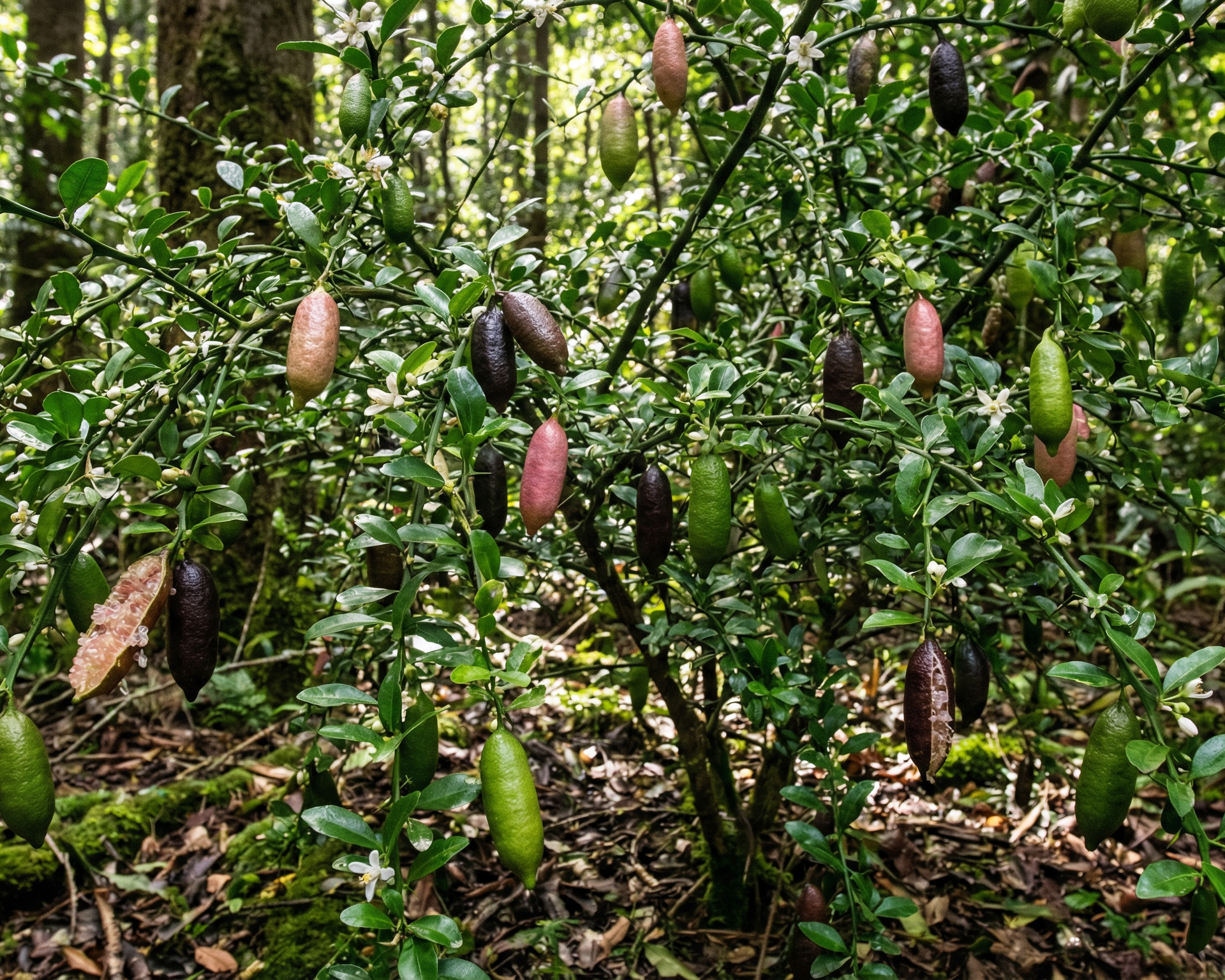
Australian finger lime
Citrus australasica
2 nurseries nationwide
Compare nurseries
Choose a city or ZIP to find nearby growers. Showing nationwide listings until you choose an area.
2 nurseries · 4 matching options
2 locations on the map. Select a marker or a nursery to compare.
Preparing the map…
Your location isn’t saved. Confirm availability and visiting hours with the nursery.
About Australian finger lime
The Finger Lime (Microcitrus australasica), also known as the Caviar Lime, is a unique and fascinating plant native to the subtropical rainforests of Australia, specifically in the coastal border regions of Queensland and New South Wales. While traditionally placed in the genus Microcitrus, modern taxonomic studies often include it within the broader Citrus genus. It is highly prized for its distinctive fruit, which contains globular juice vesicles that burst in the mouth with a tangy flavor, earning them the nickname "lime caviar." The Finger Lime plant is a thorny, understorey shrub or small tree that can grow up to 10 meters in height. It features small, light green, aromatic leaves and produces white or pale pink flowers. The most notable characteristic is its fruit, which is typically cylindrical, elongated, and often slightly curved, resembling a small finger. The skin is thin, can range in color from green to yellow, red, or purple, and is covered in numerous small oil glands. Inside, the pulp consists of loosely packed, stalked, bead-like vesicles that are the source of its culinary fame. Historically, the Finger Lime was a valuable resource for Indigenous Australians, who consumed the fruit for hydration and used it for medicinal purposes, treating skin ailments and infections. In contemporary times, it has gained international recognition as a gourmet bushfood. The "lime caviar" is used as a garnish for seafood, in cocktails, desserts, and sauces, providing a burst of acidic flavor and an interesting texture. Beyond its culinary appeal, the Finger Lime holds agricultural significance due to its natural resistance to certain citrus diseases, such as Phytophthora citrophthora root disease, making it a valuable genetic resource for breeding more resilient citrus rootstocks. Cultivation of the Finger Lime has expanded from its native habitat to other parts of the world. It thrives in well-drained soils and prefers a subtropical to temperate climate. While it can be susceptible to common citrus pests like scale insects and katydids, it has the advantage of not being a host for the destructive Queensland fruit fly, which is a significant benefit for commercial growers in Australia. The plant is favored by disturbance in its natural habitat and can be grown from seed or, more commonly for commercial production, by grafting onto standard citrus rootstocks to ensure consistency in fruit quality.
Plant facts
- Sun
- Full Sun, Partial Sun, Partial Shade
- Water
- Drought Tolerant, Regular
- USDA zones
- 9-11
- Lifecycle
- Perennial