Just Fruits and Exotics
Crawfordville, FL
3 options
From $19.99
Catalog checked Oct 1, 2026. Confirm availability before visiting.
13 nurseries listed
13 nurseries · 66 matching options
Crawfordville, FL
3 options
From $19.99
Catalog checked Oct 1, 2026. Confirm availability before visiting.
Tampa, FL
10 options
From $7.00
Catalog checked Oct 1, 2026. Confirm availability before visiting.
Fountain, FL
3 options
From $10.00
Catalog checked Oct 1, 2026. Confirm availability before visiting.
Miami, FL
10 options
From $11.25
Catalog checked Oct 1, 2026. Confirm availability before visiting.
Largo, FL
9 options
From $8.99
Catalog checked Oct 1, 2026. Confirm availability before visiting.
Showing 9–13 of 13 nurseries
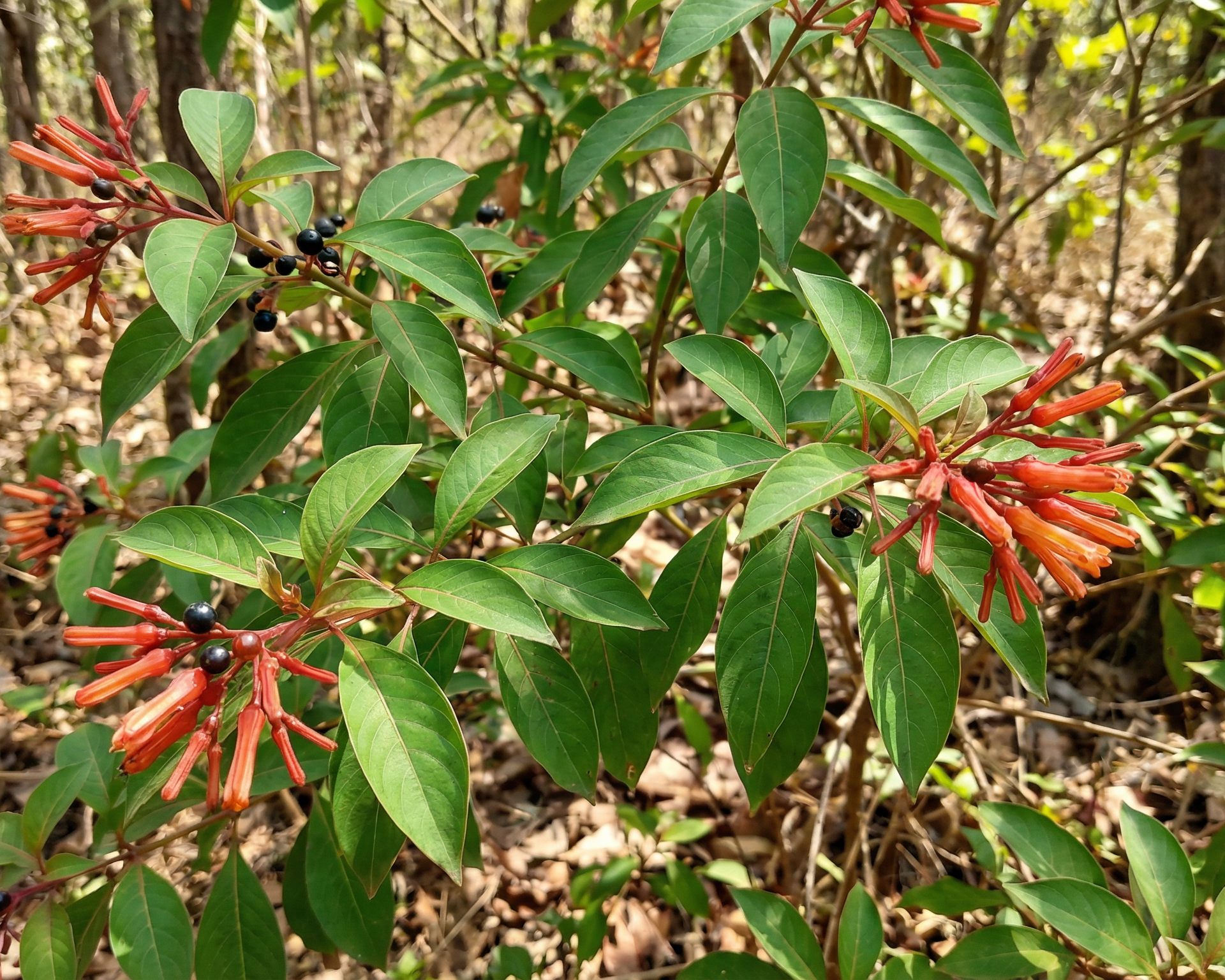
Hamelia, commonly known as Firebush, is a genus of flowering plants belonging to the coffee family, Rubiaceae. Native to the subtropical and tropical regions of the Americas, its range extends from Florida down to Argentina. These plants are celebrated for their vibrant, tubular flowers and their ability to attract a wide array of wildlife, making them a popular choice for gardens in warmer climates. While the genus comprises several species, Hamelia patens is the most well-known and is often what gardeners refer to when they speak of Firebush. Firebush is typically a large, semi-woody, evergreen shrub or a small tree that can reach heights of up to 15 feet in its native habitat. In cooler climates where it is not winter-hardy, it is often grown as a root-hardy perennial or an annual, typically reaching a more manageable height of 2-3 feet in a single growing season. The plant is characterized by its whorls of pointed, oval, gray-green leaves that often have reddish veins and turn a beautiful red in the fall. Its most striking feature is the profusion of bright, orange-red to red tubular flowers that appear in clusters from late spring until the first frost. These flowers are followed by small, juicy berries that ripen from green to red and finally to a dark black. Firebush is highly valued in horticulture for its ornamental appeal and its role in supporting local ecosystems. The nectar-rich flowers are a magnet for hummingbirds and various butterfly species, including the zebra longwing and gulf fritillary. The berries are a food source for many songbirds. For humans, the acidic-tasting berries are edible and are used in Mexico to create a fermented beverage. Beyond its culinary and ornamental uses, various parts of the plant have been utilized in folk medicine throughout its native range to treat a variety of ailments. Cultivating Firebush is relatively straightforward, as it is a hardy and low-maintenance plant. It thrives in full sun to partial shade and adapts to a wide range of well-drained soils. Once established, it is notably heat and drought-tolerant, making it an excellent candidate for xeriscaping and gardens in hot climates. It has no serious insect or disease problems. Pruning can be done to maintain a desired size and shape, particularly in regions where it grows year-round, though heavy pruning may reduce flowering. Its resilience and vibrant, long-lasting blooms make it a rewarding plant for both novice and experienced gardeners.