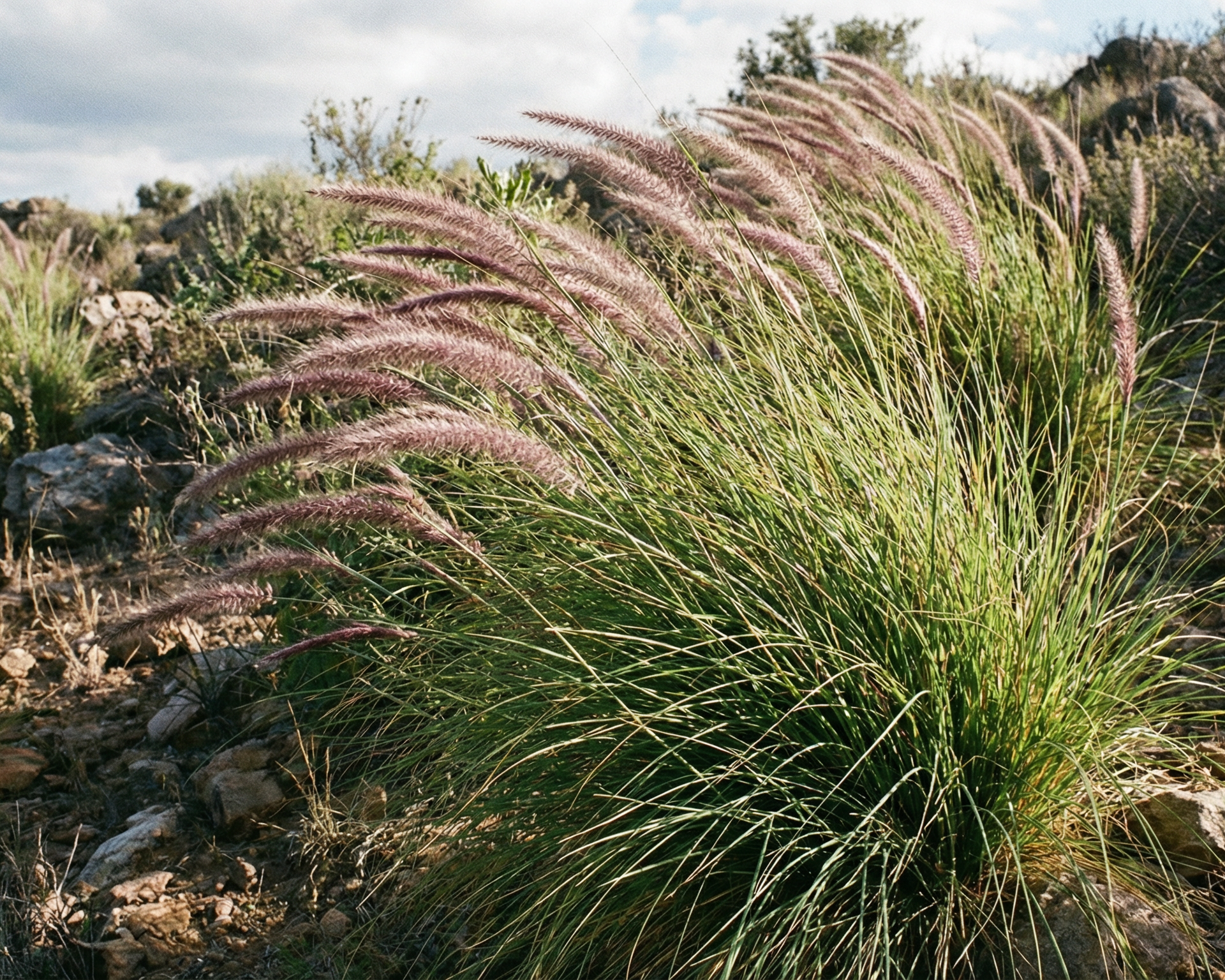
Fountain Grass
6 nurseries listed
Compare nurseries
6 nurseries · 44 matching options
6 locations on the map. Select a marker or a nursery to compare.
Preparing the map…
Your location isn’t saved. Confirm availability and visiting hours with the nursery.
About Fountain Grass
Fountain Grass, belonging to the genus Pennisetum, is a group of popular ornamental grasses cherished for their graceful, arching form that resembles a cascading fountain. This genus comprises around 80 species of annual and perennial grasses native to tropical and warm temperate regions of Africa, Asia, and the Middle East. While botanically many species have been reclassified into the genus Cenchrus, the name Pennisetum remains prevalent in horticultural circles. These grasses are highly valued in landscape design for the unique texture, color, and movement they bring to gardens, with their foliage and flower spikes swaying elegantly in the breeze. The key characteristics of Fountain Grass include its dense, clump-forming habit and fine-textured, narrow leaves that can range in color from deep green to rich burgundy and red. The most distinctive feature is the showy, bottlebrush-like flower spikes, or inflorescences, that emerge in late summer and persist into the fall. These feathery plumes, which give the genus its name from the Latin penna (feather) and seta (bristle), appear in a variety of colors, including white, pink, copper, and deep purple. The overall growth habit is typically upright at first, with the leaves and flower stalks arching gracefully as the plant matures, reaching heights from one to five feet depending on the species and cultivar. In landscaping, Fountain Grass is exceptionally versatile. It can be used as a striking specimen plant, grouped together for mass plantings, or incorporated into perennial borders to provide textural contrast. Its moderate size makes it suitable for both large and small gardens, and it performs well in containers. The attractive flower plumes are often cut for fresh and dried floral arrangements. Furthermore, these grasses are known to be deer resistant and can attract birds to the garden, adding to their ecological value. Certain cultivars, like the popular Purple Fountain Grass (Pennisetum setaceum 'Rubrum'), are prized for their dramatic, colorful foliage. Fountain Grass is relatively easy to cultivate, thriving in full sun and average, well-drained soils. Once established, many species are quite drought-tolerant. In colder climates (below USDA Zone 9), most fountain grasses are treated as annuals as they cannot survive winter temperatures. In warmer regions, they are grown as perennials. Maintenance is generally low; the dried, dormant foliage can be left for winter interest and then cut back to a few inches above the ground in late winter or early spring before new growth begins. While generally pest-free, some species can self-seed prolifically and may be considered invasive in certain warmer regions.