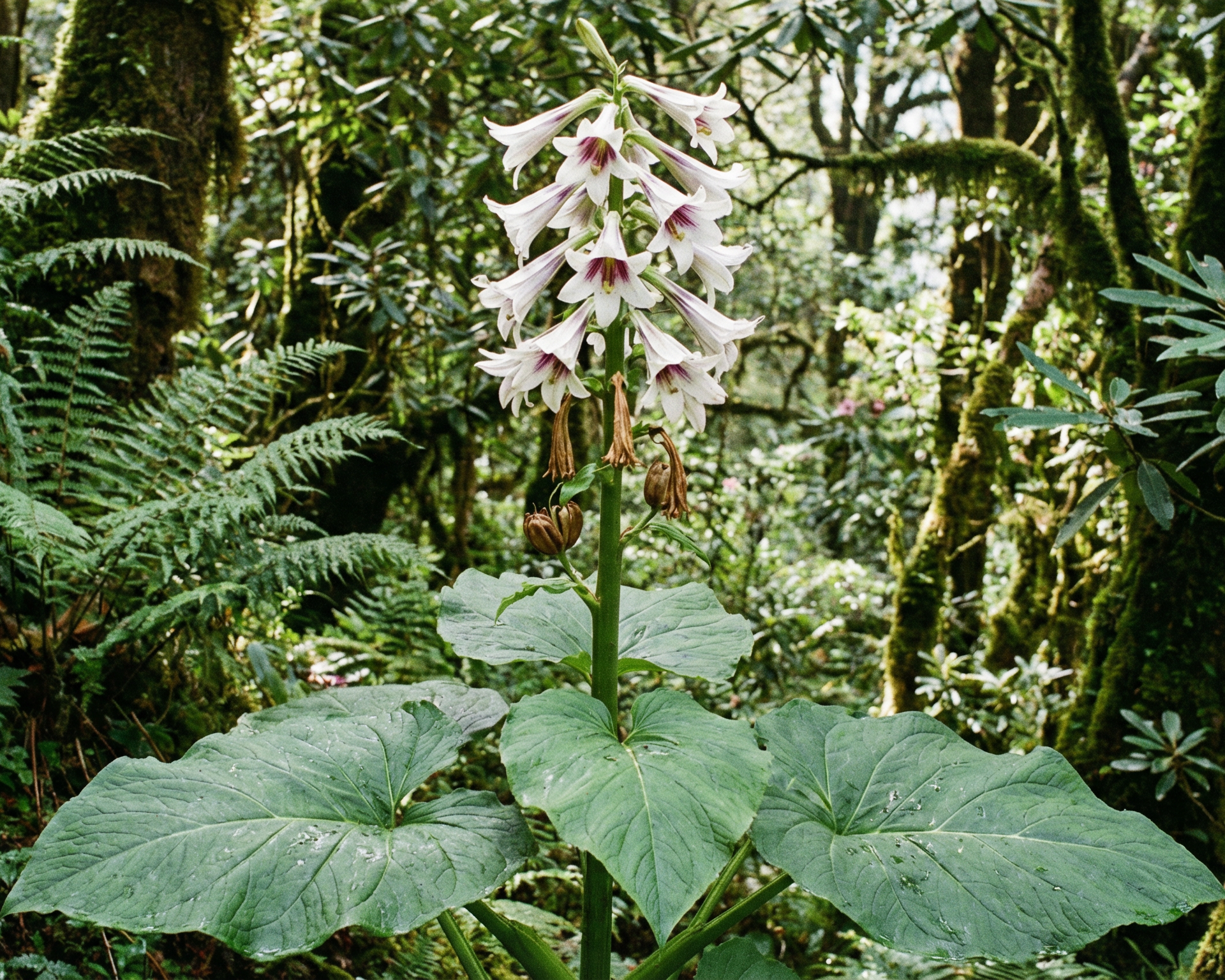
Giant Himalayan lily
Cardiocrinum giganteum
1 nursery nationwide
Compare nurseries
1 nursery · 1 matching option
1 location on the map. Select a marker or a nursery to compare.
Preparing the map…
Your location isn’t saved. Confirm availability and visiting hours with the nursery.
About Giant Himalayan lily
Cardiocrinum, commonly known as the Giant Lily, is a genus of three species of large, bulbous perennials in the lily family, Liliaceae. Native to the woodlands of the Himalayas, China, and Japan, these magnificent plants are closely related to true lilies (genus Lilium) but are distinguished by their large, heart-shaped leaves, which give the genus its name from the Greek words kardia (heart) and krinon (lily). The most well-known species is Cardiocrinum giganteum, the Giant Himalayan Lily, which can reach astonishing heights of up to 9 feet. Giant Lilies are known for their dramatic and stately presence in the garden. They are monocarpic, meaning that after taking several years to mature, the main bulb produces a single, spectacular flowering stalk and then dies, leaving behind offsets to continue the life cycle. The flower stalk is thick and sturdy, bearing a raceme of up to 20 large, fragrant, trumpet-shaped flowers. These blossoms are typically creamy-white with reddish-purple streaks inside. The foliage is equally impressive, with large, glossy, heart-shaped leaves forming a basal rosette before the flower stalk emerges. Primarily cultivated for their ornamental value, Giant Lilies are a show-stopping addition to woodland gardens, shade gardens, and cottage-style landscapes where their dramatic height and beautiful flowers can be fully appreciated. Their fragrant blooms attract pollinators such as bees and butterflies, adding to the biodiversity of the garden. While not widely known for other uses, the hollow stems of Cardiocrinum giganteum have historically been used to make flutes. Cultivating Giant Lilies can be a rewarding challenge for the patient gardener. They thrive in cool, moist, humus-rich, and well-drained soil in a partially shaded location, sheltered from strong winds. They are intolerant of hot, sunny conditions, which can scorch their leaves. Propagation is typically done by seed or by separating the offsets that form around the parent bulb. It can take anywhere from four to eight years for a plant to reach flowering size from seed or an offset. Gardeners should be mindful of pests such as slugs and snails, and ensure good drainage to prevent bulb rot.
Plant facts
- Sun
- Partial Sun, Partial Shade, Full Shade
- Water
- Regular
- USDA zones
- 7-9
- Lifecycle
- Perennial