Fruit & Nut Trees
Guava
Psidium guajava
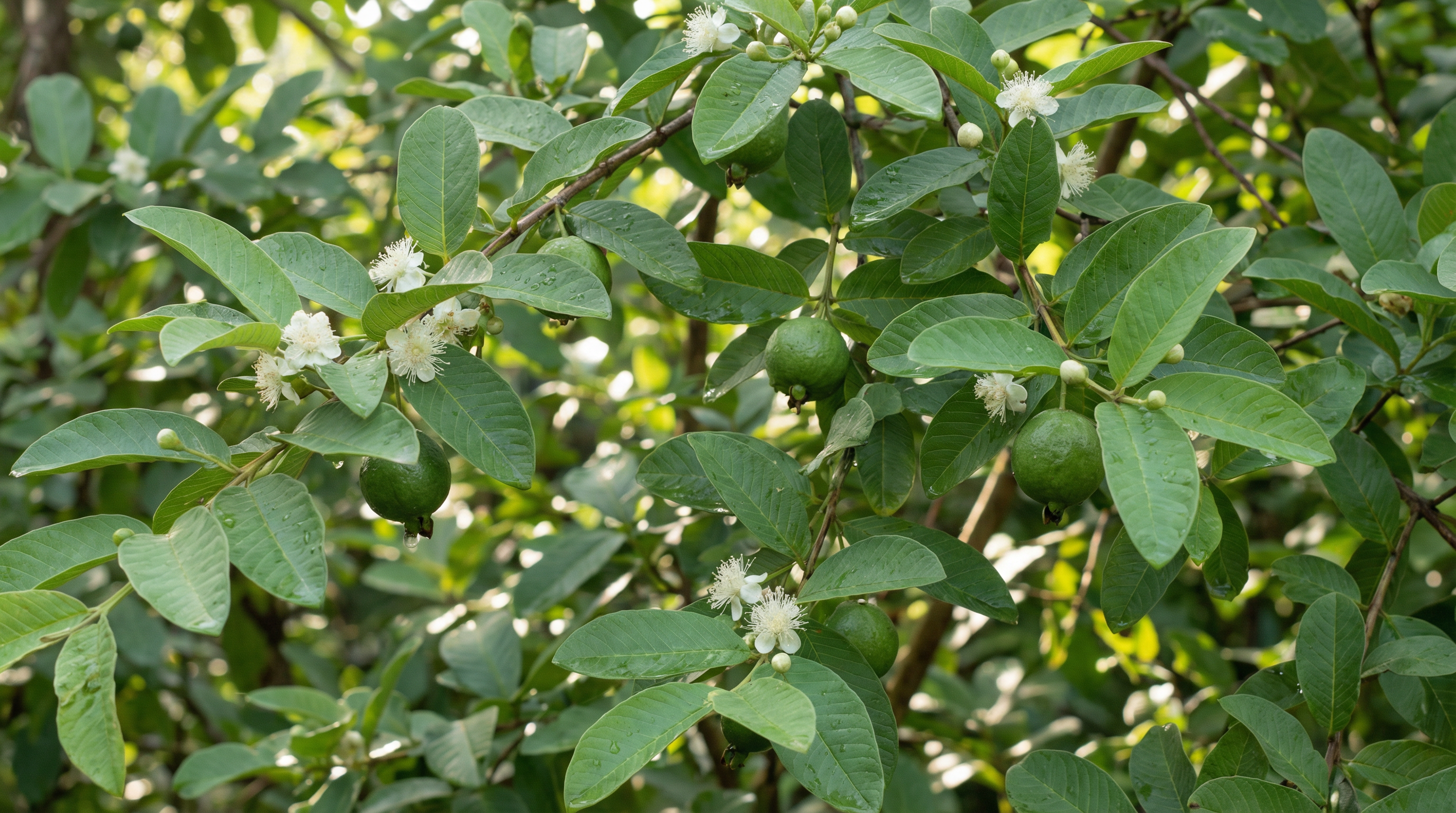
Guava is the common name for a genus of fruit-bearing shrubs and small trees in the Myrtle family (Myrtaceae), known scientifically as Psidium. Native to the tropical and subtropical regions of the Americas, this genus encompasses over 100 species, with the common guava (Psidium guajava) being the most famous and widely cultivated. The fruit is celebrated for its unique flavor, which can range from sweet to tangy, and its distinct, pleasant aroma. Guavas have been naturalized in many other parts of the world, becoming a significant agricultural and culinary asset in tropical and subtropical climates globally. Guava plants are characterized by their tough, dark green leaves and white, fragrant flowers. The fruit itself is a berry, with a peel that can be yellow or green and flesh that may be white, pink, or red, often filled with small, hard seeds. The plants are hardy and can thrive in a variety of soil conditions, though they prefer well-drained soil and full sun. They are relatively fast-growing and can begin producing fruit within a few years of planting. The uses and significance of guava are extensive. The fruit is a nutritional powerhouse, rich in vitamin C, antioxidants, potassium, and fiber. It is consumed fresh, juiced, or used in jams, jellies, and desserts. Beyond its culinary appeal, guava has a long history of use in traditional medicine. Various parts of the plant, especially the leaves, have been used to treat a range of ailments, including digestive issues, high blood pressure, and diabetes. Modern research has begun to validate some of these traditional uses, highlighting the plant's potential for pharmaceutical applications.Read more
4 of 4 nurseries carry this plant
- Just Fruits and ExoticsShips
Crawfordville, FL681 mi away
- 3 galIn stock$34.99
- Top TropicalsShips
Fort Myers, FL918 mi away
- 3 galIn stock$34.99
- Excalibur Fruit Trees
Lake Worth, FL939 mi away
- 3 galIn stock$31.99
- Pine Island Nursery
Miami, FL1005 mi away
- 3 galIn stock$29.99
Distances are approximate, based on your network location.
Plant facts
- Sun
- Full Sun
- Water
- RegularDrought Tolerant
- USDA zones
- 9-11
- Lifecycle
- Perennial