Fruit & Nut Trees
Jamaican Cherry
Muntingia calabura
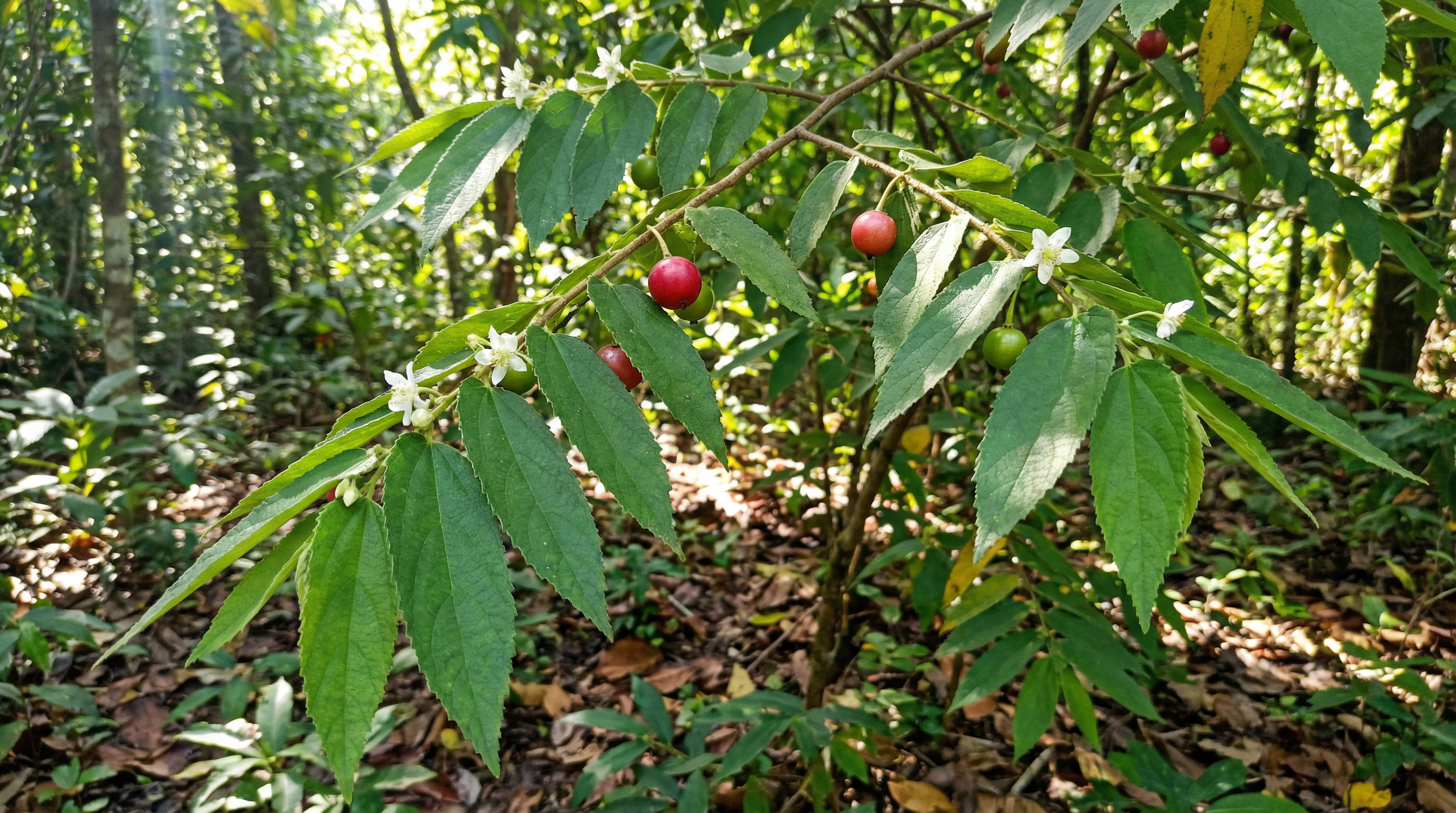
Muntingia calabura, commonly known as the Jamaican Cherry, Panama Berry, or Strawberry Tree, is the sole species within the genus Muntingia. This fast-growing, small to medium-sized tree or shrub is native to the tropical regions of the Americas, from Mexico south to Bolivia and Argentina. It has been widely introduced and has naturalized in many other tropical areas across the globe. Valued for its edible fruit and its ability to thrive in poor soil conditions, the Jamaican Cherry is a resilient and versatile plant often found in disturbed lowland areas, along riverbanks, and even in urban environments where other trees might struggle to grow. The Jamaican Cherry tree typically reaches a height of 7 to 12 meters, featuring a broad, spreading crown with drooping branches. Its leaves are alternate, oblong-lanceolate, and covered in short hairs, giving them a slightly sticky feel. The tree produces small, delicate white flowers, which strikingly resemble those of a strawberry plant. These flowers are short-lived, lasting only a single day. Following the bloom, the tree bears an abundance of small, round, red-skinned berries. The fruit's pulp is juicy and exceptionally sweet, often compared to the taste of cotton candy or figs, and contains numerous tiny, edible yellow seeds. Beyond its ornamental appeal, Muntingia calabura holds significant value for its various uses. The fruits are a popular treat, especially among children, and can be eaten fresh off the tree or processed into jams, tarts, and other culinary creations. In traditional medicine, various parts of the plant have been utilized for their purported healing properties; the leaves are used to make a tea for treating headaches and gastric ulcers, while the flowers and bark are considered to have antiseptic qualities. The fibrous bark can be made into ropes, and its soft wood is used for light construction and as a quick-burning fuel. Furthermore, the tree plays a role in agroforestry and ecological restoration, as it provides food and shelter for wildlife and helps to prevent soil erosion. Cultivating the Jamaican Cherry is relatively straightforward due to its hardy and adaptable nature. It flourishes in a variety of soil types, including acidic and alkaline conditions, and is notably drought-tolerant. The tree prefers a sunny location and a tropical or subtropical climate, suitable for USDA zones 9b-11. Propagation can be achieved through seeds, which are often dispersed by birds and bats, as well as by cuttings or air layering. Its rapid growth rate means that it can start producing fruit within just a couple of years, making it a rewarding plant for home gardens and permaculture systems. ## Sources - https://en.wikipedia.org/wiki/Muntingia - https://tropical.theferns.info/viewtropical.php?id=Muntingia+calabura - https://blogs.ifas.ufl.edu/hillsboroughco/2024/06/11/panama-berry-tree-muntingia-calabura/Read more
1 of 1 nursery carries this plant
- Top TropicalsShips
Fort Myers, FL918 mi away
- 3 galIn stock$34.99
Distances are approximate, based on your network location.
Plant facts
- Sun
- Full SunPartial Sun
- Water
- RegularDrought Tolerant
- USDA zones
- 9-12
- Lifecycle
- Perennial