Fruit & Nut Trees
Jocote
Spondias purpurea
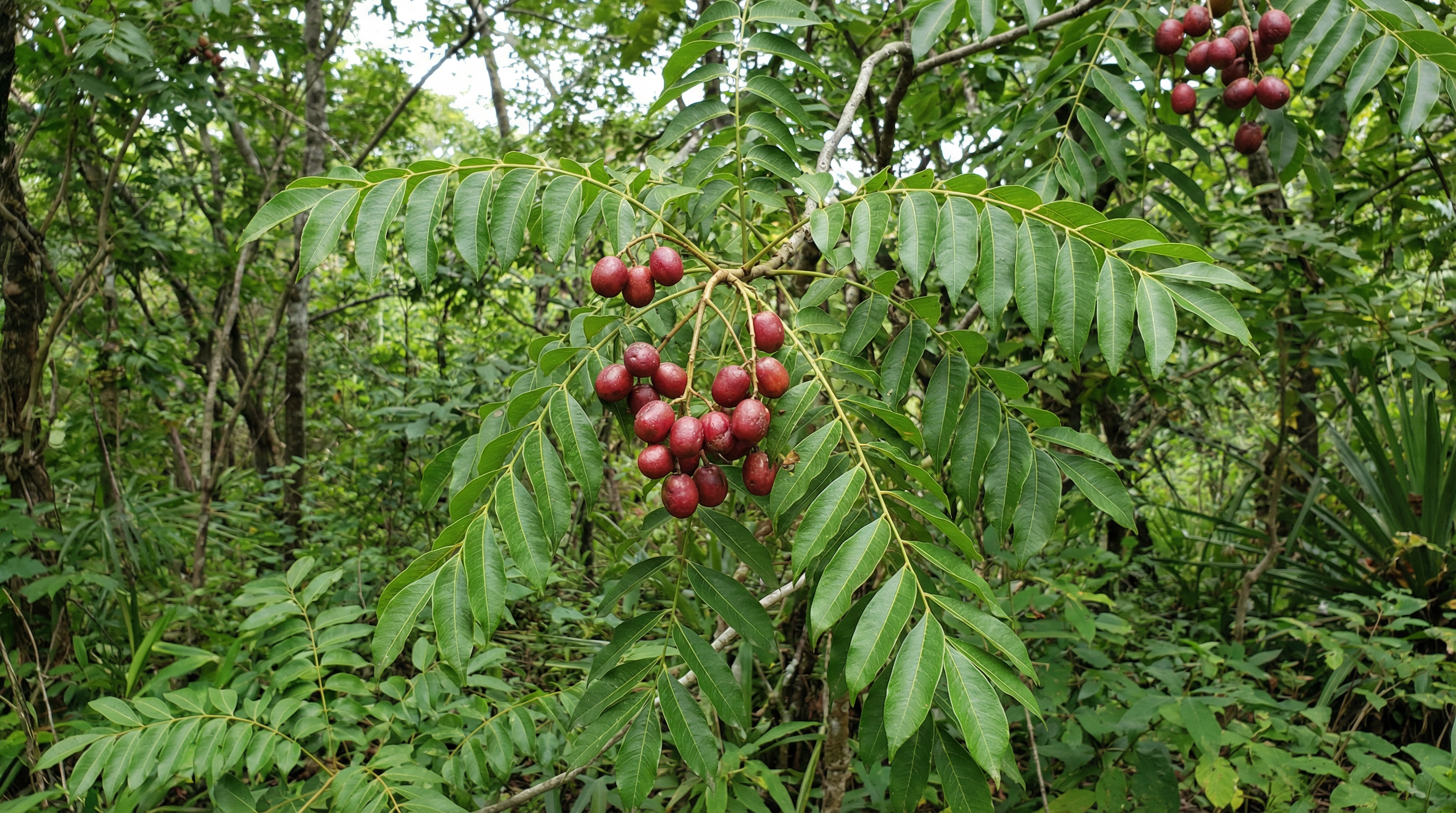
Jocote (Spondias purpurea), also known as purple mombin, red mombin, or Spanish plum, is a species of flowering plant in the cashew family, Anacardiaceae. Native to the tropical regions of the Americas, this fruit-bearing tree is a prominent member of the Spondias genus, which encompasses about 17 species of trees and shrubs found in tropical climates worldwide. While the genus as a whole is often referred to as hog plums or mombins, the jocote is one of the most widely cultivated and commercially significant species, particularly in Central America, where it is a popular seasonal fruit. The jocote tree is a small to medium-sized deciduous tree, typically reaching heights of 7 to 15 meters. It has a spreading crown and a trunk that can grow up to 80 cm in diameter. The leaves are pinnately compound, with 5 to 12 pairs of leaflets that are elliptic to lanceolate in shape. The tree sheds its leaves during the dry season, and small, reddish-purple flowers appear in large panicles before the new leaves emerge. The fruit is an oblong or ovoid drupe, about 3 to 5 cm long, with a thin, waxy skin that turns red or purple when ripe. The pulp is yellow, juicy, and has a sweet, slightly acidic flavor, surrounding a single large, fibrous stone. Jocotes are highly valued for their edible fruit, which is most often eaten fresh but is also used to make juices, preserves, and sauces. In many parts of Latin America, the fruit is a common street food, often enjoyed with a sprinkle of salt and chili powder. Beyond its culinary uses, various parts of the jocote tree have applications in traditional medicine. The fruit is known for its diuretic properties, while a decoction of the bark is used to treat ailments such as diarrhea, dysentery, and fevers. The tree is also valued in agroforestry systems for its hardiness and ability to thrive in a range of soil conditions. Cultivating jocote trees is relatively straightforward in suitable climates. They prefer well-drained soils and full sun exposure and are quite drought-tolerant once established. Propagation is most commonly done through large cuttings, which can root easily and begin producing fruit within a few years. While they can be grown from seed, this method is less common as it takes longer for the trees to mature. The trees are generally low-maintenance, requiring minimal pruning and being relatively resistant to pests and diseases, making them a resilient and productive addition to tropical and subtropical gardens and farms. ## Sources - https://en.wikipedia.org/wiki/Spondias - https://en.wikipedia.org/wiki/Spondias_purpurea - https://fsus.ncbg.unc.edu/main.php?pg=show-taxon.php&plantname=spondias+purpurea - https://tropical.theferns.info/viewtropical.php?id=Spondias+purpureaRead more
1 of 1 nursery carries this plant
- Top TropicalsShips
Fort Myers, FL918 mi away
- 3 galIn stock$39.99
Distances are approximate, based on your network location.
Plant facts
- Sun
- Full SunPartial Shade
- Water
- Regular
- USDA zones
- 10-11
- Lifecycle
- Perennial