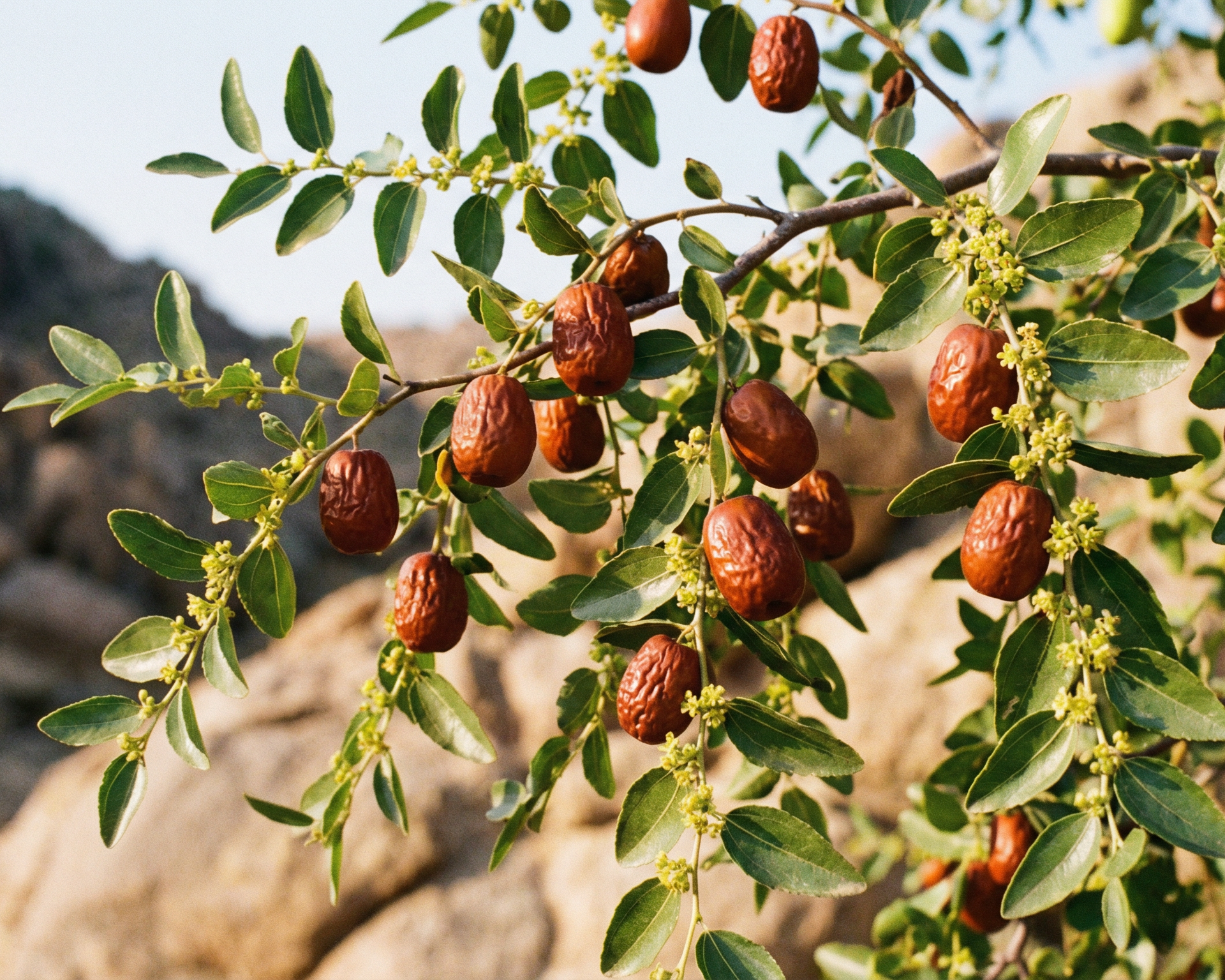
Chinese jujube
Ziziphus jujuba
17 nurseries listed · 7 named varieties
Compare nurseries
17 nurseries · 227 matching options
17 locations on the map. Select a marker or a nursery to compare.
Preparing the map…
Your location isn’t saved. Confirm availability and visiting hours with the nursery.
About Chinese jujube
Jujube, scientifically known as Ziziphus, is a genus of spiny shrubs and small trees belonging to the buckthorn family (Rhamnaceae). The genus comprises approximately 68 species, which are native to tropical and subtropical regions across the globe. The most well-known species is Ziziphus jujuba, commonly referred to as the jujube or Chinese date. This deciduous tree is cultivated for its edible fruit, which resembles a date in appearance and has a sweet, apple-like flavor. Jujube trees are characterized by their thorny branches and glossy green leaves. They are hardy and can tolerate a wide range of temperatures and soil conditions, making them a resilient and low-maintenance crop. The fruit, which is the most significant part of the plant, is a drupe that varies in size and shape depending on the cultivar. It is rich in vitamin C, B vitamins, and essential fatty acids, making it a nutritious food source. The uses of jujube are diverse and span culinary, medicinal, and cultural domains. In many cultures, the fruit is eaten fresh, dried, or candied. It is also used in a variety of culinary preparations, including teas, syrups, and desserts. In traditional medicine, particularly in Chinese medicine, jujube is valued for its calming properties and is used to alleviate stress and anxiety, and to improve sleep. The plant's resilience and adaptability also make it a valuable species in permaculture and agroforestry systems, where it can contribute to soil health and biodiversity.
Plant facts
- Sun
- Full Sun
- Water
- Drought Tolerant, Low
- USDA zones
- 5-10
- Lifecycle
- Perennial
Variety guides
Explore the complete plant collection, including varieties with no nursery listings yet.
- GA-8662 nurseries listed
- Honey Jar1 nursery listed
- Lang1 nursery listed
- Li1 nursery listed
- So1 nursery listed
- Sugar Cane1 nursery listed
- Tigertooth1 nursery listed
- Ant Admire0 nurseries listed
- Autumn Beauty0 nurseries listed
- Black Sea0 nurseries listed
- Chico0 nurseries listed
- Coco0 nurseries listed
- Globe0 nurseries listed
- La Fleur0 nurseries listed
- Norris #10 nurseries listed
- Redlands #40 nurseries listed
- Sherwood0 nurseries listed
- Sihong0 nurseries listed
- Winter Delight0 nurseries listed
- Xu Zhou0 nurseries listed
- Yazoo Li0 nurseries listed