Citrus
Kumquat
Citrus japonica
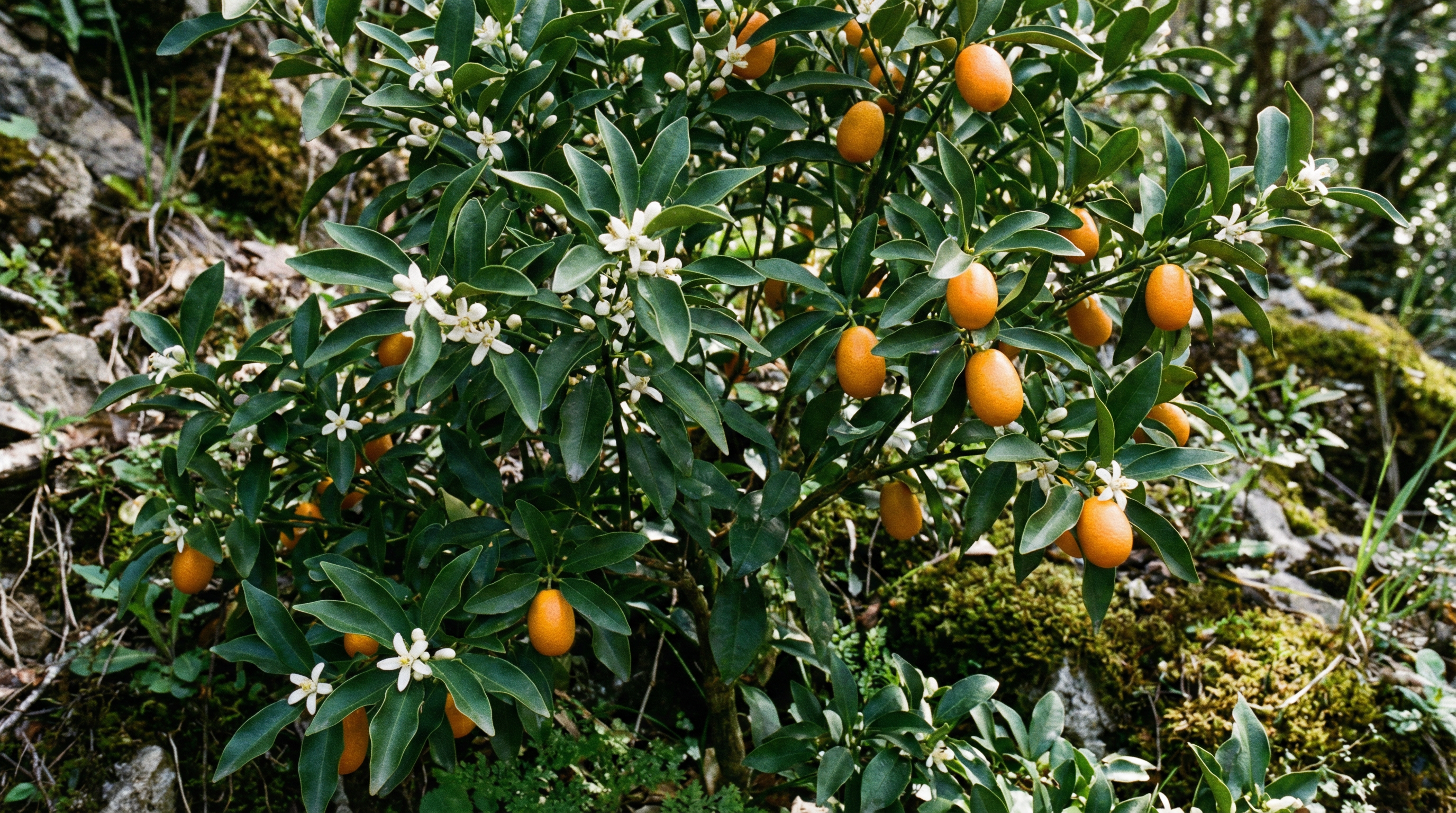
## Kumquat: A Golden Gem of the Citrus World The kumquat, belonging to the genus Fortunella (though sometimes classified within Citrus), is a unique group of small, fruit-bearing trees celebrated for their distinctive, entirely edible fruits. Native to Southern China, these plants have a rich history, with the first literary mention dating back to the 12th century [1]. The name "kumquat" itself is derived from the Cantonese words "gām gwāt," meaning "golden orange," a fitting descriptor for its vibrant fruit [2]. It was introduced to Europe in 1846 by the Scottish botanist Robert Fortune, in whose honor the genus Fortunella was named [2]. ## Physical Characteristics and Growth Kumquat trees are slow-growing evergreen shrubs that typically reach heights of 2.5 to 4.5 meters. They feature dense, sometimes thorny branches with glossy, dark green leaves. In the spring, they produce fragrant, white flowers that are self-pollinating [1, 2]. The resulting fruit is the plant's most notable feature: a small, oval or round citrus, approximately the size of a large olive. Uniquely, the entire fruit is consumed, offering a delightful contrast between its sweet, edible rind and its tart inner pulp [1]. ## Culinary, Medicinal, and Ornamental Uses The kumquat is a versatile plant with a wide array of applications. In the culinary world, the fruits are enjoyed fresh, candied, or used to make marmalades, jellies, and liqueurs. Their sweet and sour flavor profile also lends itself well to savory dishes, particularly with poultry and fish [3]. From a medicinal standpoint, kumquats are a powerhouse of nutrients, rich in vitamin C and antioxidants. In traditional Chinese medicine, they are used to support the immune system, aid digestion, and alleviate coughs and colds [2, 3]. Their attractive appearance, with vibrant orange fruits set against deep green foliage, also makes them popular ornamental plants for gardens and containers [2]. ## Cultivation and Care Kumquats are notably hardier than many other citrus varieties, capable of withstanding cold temperatures down to about -8°C (18°F) when dormant [2]. They thrive in full sun and require well-drained soil, as they are intolerant of waterlogged conditions [3]. For optimal fruit sweetness, a warm growing season is preferred. Propagation is typically done vegetatively through methods like grafting onto another citrus rootstock, air layering, or taking cuttings, as kumquats do not reliably grow true from seed [1]. These resilient and rewarding plants are an excellent choice for gardeners seeking both ornamental beauty and a unique edible harvest. ### References [1] [https://en.wikipedia.org/wiki/Kumquat](https://en.wikipedia.org/wiki/Kumquat) "Kumquat - Wikipedia" [2] [https://edis.ifas.ufl.edu/publication/FR368](https://edis.ifas.ufl.edu/publication/FR368) "FOR300/FR368: Fortunella spp., Kumquat - UF/IFAS EDIS" [3] [https://pfaf.org/user/Plant.aspx?LatinName=Fortunella+margarita](https://pfaf.org/user/Plant.aspx?LatinName=Fortunella+margarita) "Fortunella margarita Oval Kumquat PFAF Plant Database" ## Sources - https://en.wikipedia.org/wiki/Kumquat - https://edis.ifas.ufl.edu/publication/FR368 - https://pfaf.org/user/Plant.aspx?LatinName=Fortunella+margaritaRead more
2 of 2 nurseries carry this plant
- Just Fruits and ExoticsShips
Crawfordville, FL681 mi away
- 7 galIn stock$39.99
- Four Winds GrowersShips
Watsonville, CA2092 mi away
- 3 galIn stock$69.99
Distances are approximate, based on your network location.
Plant facts
- Sun
- Full Sun
- Water
- RegularDrought Tolerant
- USDA zones
- 9-11
- Lifecycle
- Perennial