Lavender (Lavandula) is a genus of about 47 species of flowering plants in the mint family, Lamiaceae, native to the Old World, particularly the Mediterranean region. These plants are celebrated for their intoxicatingly fragrant flowers and foliage, which have been used for centuries in perfumes, cosmetics, and herbal remedies. Commonly grown in gardens worldwide, lavenders are cherished not only for their aromatic properties but also for their beauty, attracting pollinators like bees and butterflies.
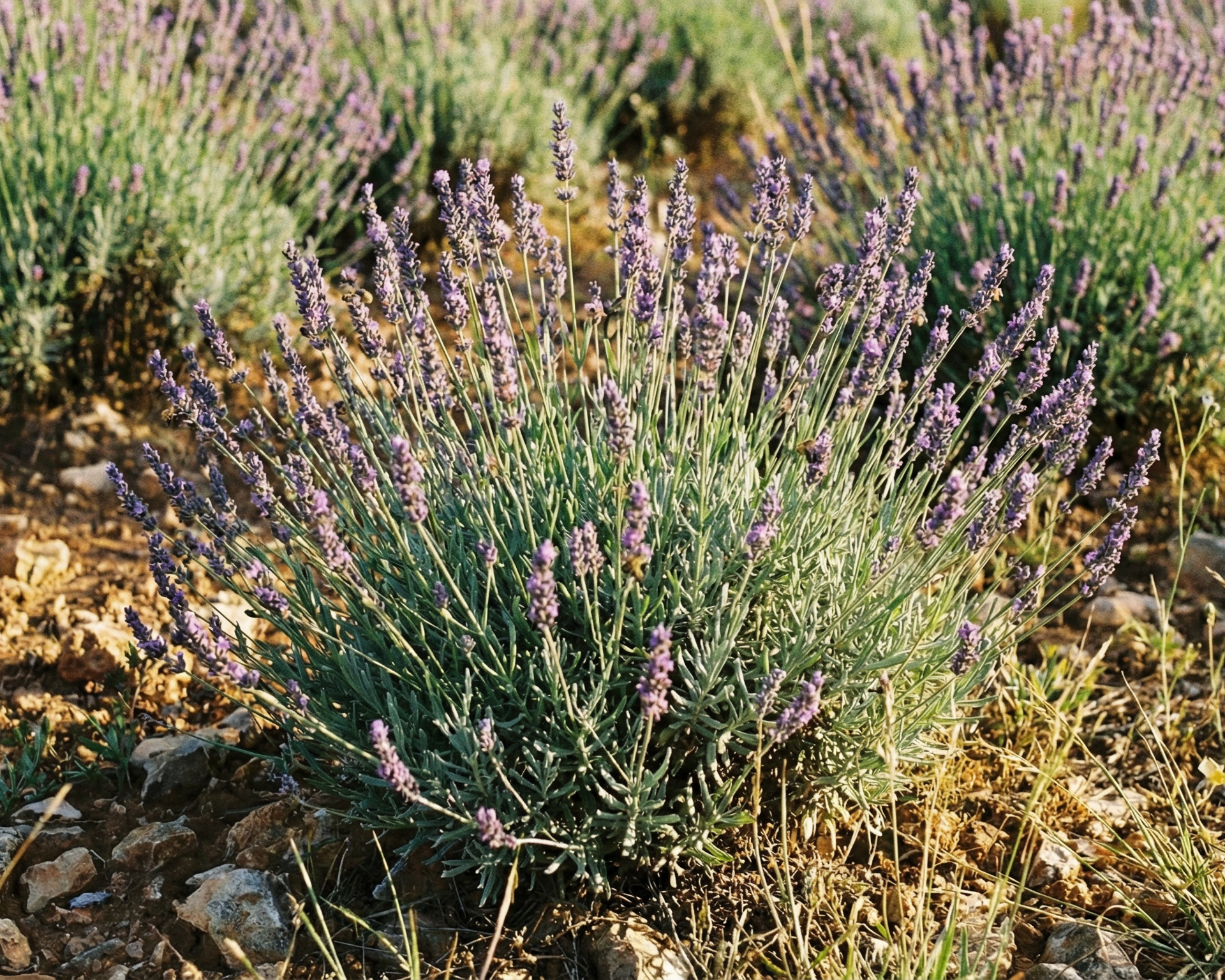
Typically, lavenders are small, evergreen shrubs characterized by their gray-green, linear leaves, which are often covered in fine hairs. The flowers, which can be shades of purple, lilac, blue, or even white, are arranged in whorls on spikes that rise above the foliage. The entire plant is aromatic, with the fragrance emanating from essential oils stored in glands on the leaves, stems, and flowers. These plants thrive in dry, well-drained, sunny conditions and are relatively low-maintenance, making them a popular choice for gardeners in suitable climates.
Lavender has a wide array of uses, making it a significant plant both commercially and culturally. The essential oil, extracted primarily from Lavandula angustifolia (English lavender), is a key ingredient in perfumes, soaps, lotions, and aromatherapy products. In the culinary world, lavender buds are used to flavor teas, baked goods, desserts, and even savory dishes. The plant also has a long history of use in traditional medicine for its calming and soothing properties. Furthermore, dried lavender flowers are used in potpourri and sachets to freshen linens and repel moths.
 On site