Fruit & Nut Trees
Lychee
Litchi chinensis
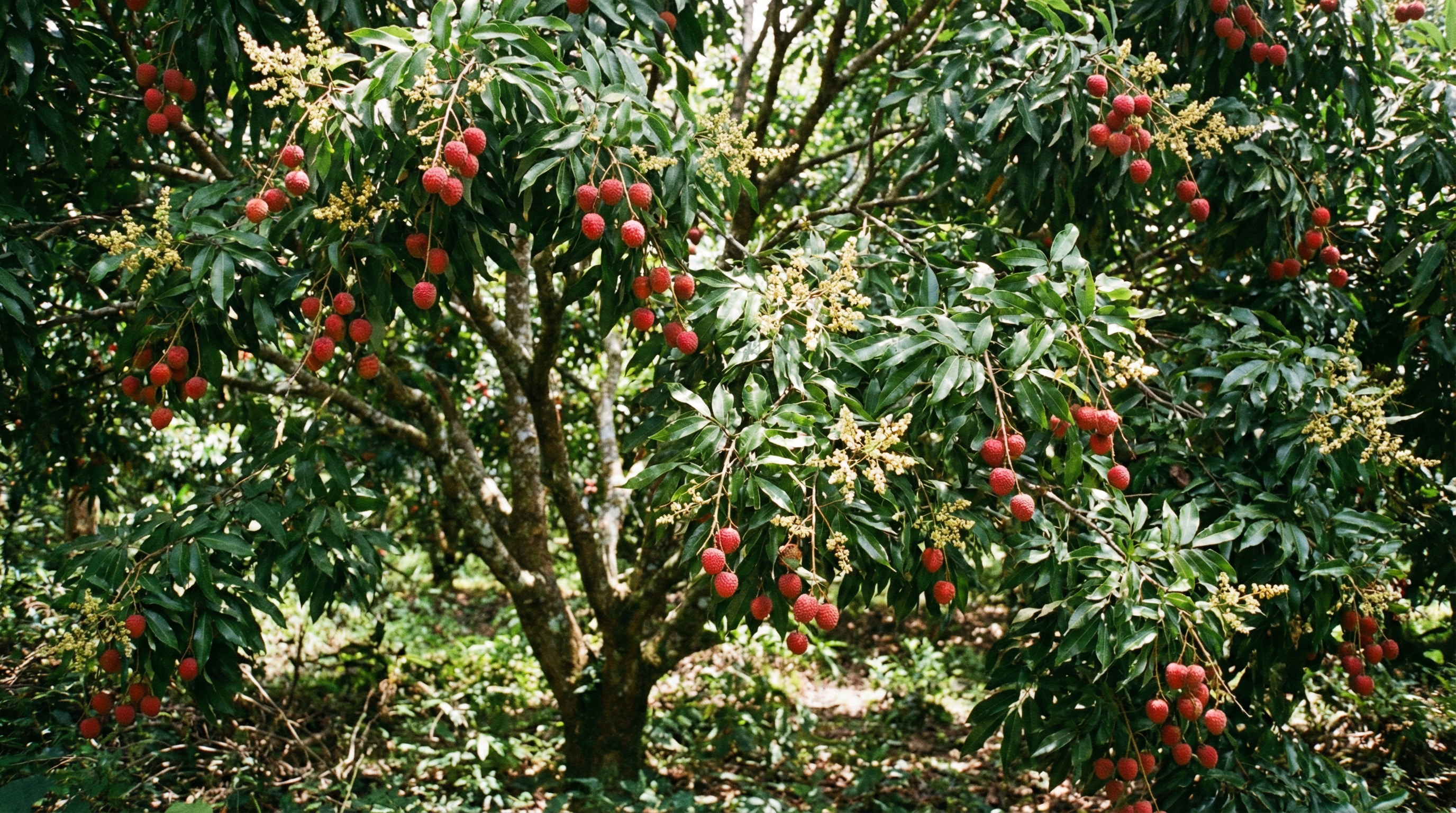
Litchi chinensis, commonly known as Lychee, is the sole member of the genus Litchi and belongs to the soapberry family, Sapindaceae. Native to southern China, this fruit tree has a long and storied history, with cultivation dating back to at least the 11th century. It is a highly esteemed fruit, particularly in Asia, and was once a delicacy in the Chinese Imperial Court. Today, its cultivation has spread to tropical and subtropical regions worldwide, including Southeast Asia, India, South Africa, and the Americas, where it is valued for both its fruit and its ornamental qualities. The Lychee is a slow-growing, evergreen tree that typically reaches a height of 20-30 feet in cultivation, though it can grow much taller in its native habitat. It forms a dense, rounded canopy with dark green, glossy, pinnate leaves. In the spring, it produces long panicles of small, fragrant, yellow-green flowers, which are followed by the fruit. The fruit is a globose to ovoid drupe, about 1-1.5 inches in diameter, with a rough, leathery, pinkish-red rind. Inside, the translucent, white, juicy flesh surrounds a single, large, dark brown seed. The flavor of the flesh is sweet, with a slight tartness and a distinct floral aroma. The primary and most celebrated use of the Lychee is as an edible fruit. It is a good source of vitamin C and is most often enjoyed fresh, when its unique floral flavor is most pronounced. The fruit can also be canned, dried (known as lychee nuts), or made into preserves and sauces. Beyond its culinary appeal, the Lychee holds cultural significance, particularly in China, where it is a symbol of romance and good fortune. In traditional medicine, various parts of the plant, including the fruit, seeds, and flowers, have been used to treat a range of ailments. For successful cultivation, Lychee trees require a specific set of conditions. They thrive in warm, humid, subtropical climates that have a brief, cool, and dry period, which is necessary to induce flowering and fruit set. The trees prefer deep, fertile, slightly acidic, and well-drained soils, and they need to be planted in a location with full sun and protection from strong winds. While they require consistent moisture, they are intolerant of waterlogged conditions. Propagation is most commonly done through air-layering or grafting, as trees grown from seed take many years to bear fruit and the fruit quality may not be consistent. ## Sources - https://en.wikipedia.org/wiki/Lychee - https://www.missouribotanicalgarden.org/PlantFinder/PlantFinderDetails.aspx?taxonid=286819 - https://tropical.theferns.info/viewtropical.php?id=Litchi+chinensisRead more
3 of 3 nurseries carry this plant
- Top TropicalsShips
Fort Myers, FL918 mi away
- 7 galIn stock$54.99
- Excalibur Fruit Trees
Lake Worth, FL939 mi away
- 7 galIn stock$57.99
- Pine Island Nursery
Miami, FL1005 mi away
- 7 galIn stock$54.99
Distances are approximate, based on your network location.
Plant facts
- Sun
- Full Sun
- Water
- Regular
- USDA zones
- 10-11
- Lifecycle
- Perennial