Fruit & Nut Trees
Mamey Sapote
Pouteria sapota
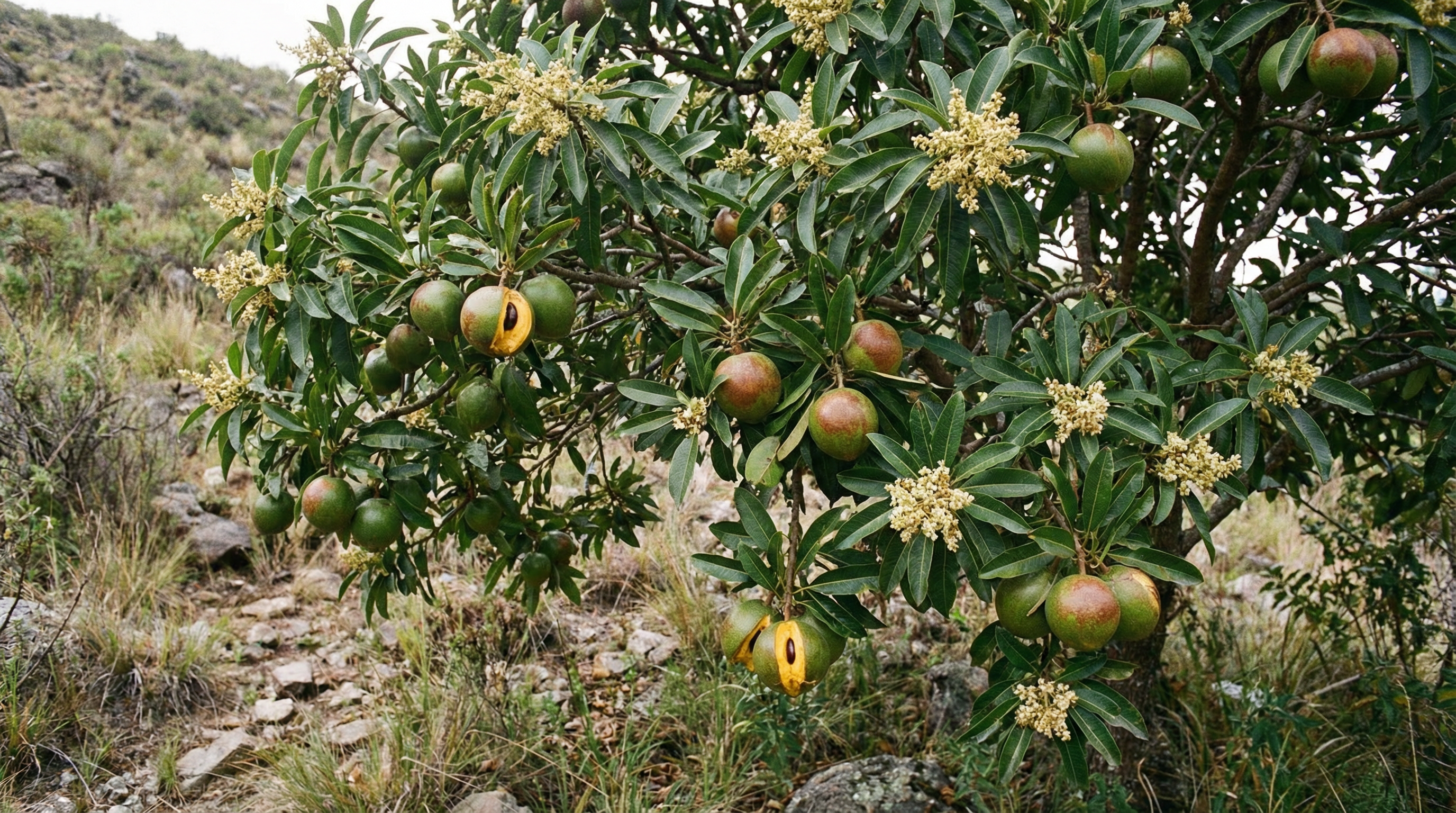
# Mamey Sapote Mamey Sapote (Pouteria sapota) is a species of tree native to Mexico and Central America, and is a prominent member of the Pouteria genus. While the genus contains a wide variety of species, the Mamey Sapote is arguably the most famous and economically important. The fruit is widely cultivated and enjoyed throughout Latin America and in parts of Florida, and is the national fruit of Cuba. Its popularity has led to its introduction and cultivation in many other tropical regions around the world, including the Caribbean and Southeast Asia. The Mamey Sapote tree is a large, evergreen or semi-deciduous tree that can grow to heights of 15 to 45 meters (60 to 140 feet). It has a thick central trunk and a spreading canopy. The leaves are large, simple, and clustered at the ends of the branches. The fruit itself is a large berry, typically 10 to 25 cm (4 to 10 inches) long and 8 to 12 cm (3 to 5 inches) wide. It has a rough, brown, semi-woody rind. The flesh, when ripe, is a vibrant salmon-pink to reddish-orange color, with a soft, creamy, and smooth texture often compared to a baked sweet potato or pumpkin. The flavor is unique, sweet, and malty, with notes of honey, sweet potato, and almond. In the center of the fruit is a single, large, elliptical, and glossy black seed. The primary use of the Mamey Sapote is culinary. The ripe fruit is typically eaten fresh, either on its own or as an ingredient in a variety of dishes. It is a popular addition to smoothies, milkshakes, ice cream, and fruit bars. The fruit's creamy texture and sweet flavor also make it suitable for use in desserts such as mousses, pies, and preserves. Beyond its culinary uses, the Mamey Sapote holds cultural significance in the regions where it is grown, often being a staple at local markets. The oil extracted from the seed, known as sapayul oil, has been traditionally used in some cultures for skin and hair care. Cultivation of the Mamey Sapote requires a tropical climate with warm temperatures and well-drained soil. The trees are sensitive to frost, especially when young. They thrive in areas with regular rainfall but can tolerate short periods of drought. Propagation is typically done through grafting, which ensures that the resulting trees produce high-quality fruit and bear fruit sooner than seed-grown trees. While the trees can be grown from seed, the fruit quality can be variable, and it can take many years for the tree to mature and produce fruit. ## Sources - https://en.wikipedia.org/wiki/Pouteria - https://en.wikipedia.org/wiki/Pouteria_sapota - https://www.sciencedirect.com/topics/agricultural-and-biological-sciences/pouteria - https://foodprint.org/real-food/mamey-sapote/ - https://www.growables.org/information/TropicalFruit/canistel.htmRead more
3 of 3 nurseries carry this plant
- Top TropicalsShips
Fort Myers, FL918 mi away
- 7 galIn stock$49.99
- Excalibur Fruit Trees
Lake Worth, FL939 mi away
- 7 galIn stock$47.99
- Pine Island Nursery
Miami, FL1005 mi away
- 7 galIn stock$44.99
Distances are approximate, based on your network location.