Mango
Mangifera indica
20 nurseries nationwide · 25 named varieties
Compare nurseries
5 nurseries · 12 matching options
5 locations on the map. Select a marker or a nursery to compare.
Preparing the map…
Your location isn’t saved. Confirm availability and visiting hours with the nursery.
About Mango
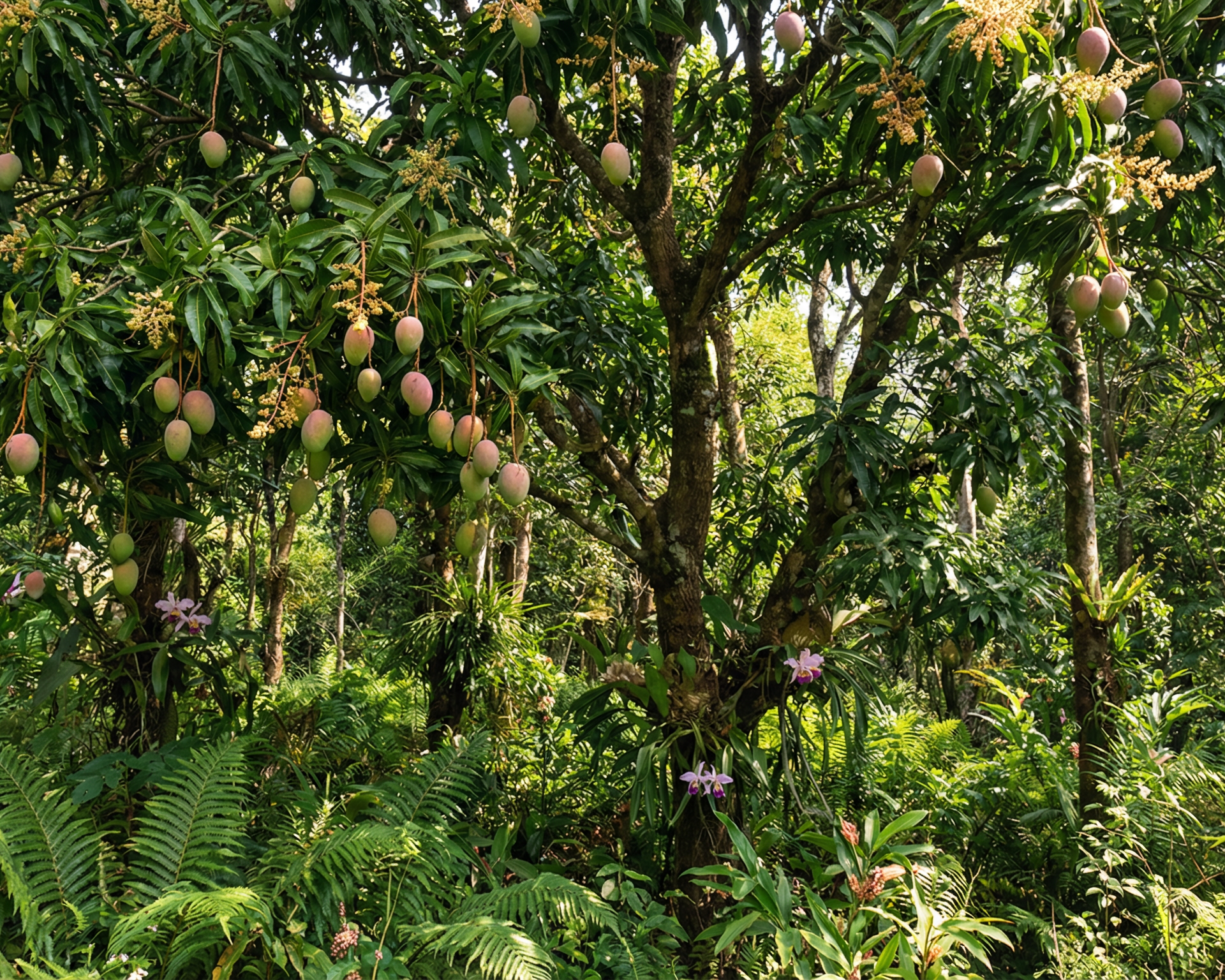
The mango, scientifically known as Mangifera indica, is a species of flowering plant in the family Anacardiaceae. It is one of the most popular tropical fruits in the world, cherished for its sweet, juicy flesh and vibrant color. Believed to have originated in the region between northwestern Myanmar, Bangladesh, and northeastern India, the mango has been cultivated for over 4,000 years. It holds significant cultural importance and is the national fruit of India, Pakistan, and the Philippines, and the national tree of Bangladesh. The mango tree is a large, evergreen tree that can reach heights of 30 to 100 feet with a broad, rounded canopy that can spread up to 50 feet wide. Its leaves are long, leathery, and glossy dark green when mature, with new foliage emerging in a reddish-bronze color. The tree produces large panicles of small, fragrant, white to pinkish flowers in the late winter and early spring, which are pollinated by insects. The fruit, a fleshy drupe, varies in shape from round to oval or kidney-shaped and has a skin that ranges in color from green to yellow, orange, or red when ripe. The flesh is typically a rich orange-yellow, with a sweet, aromatic flavor and a single large, flat seed in the center. Beyond its delicious taste, the mango offers a wide array of culinary and other uses. Ripe mangoes are commonly eaten fresh, juiced, or used in desserts such as ice cream, smoothies, and pastries. Unripe mangoes are used in many cultures for making pickles, chutneys, and salads. The fruit is highly nutritious, providing significant amounts of vitamin C, vitamin A, and fiber, and is associated with various health benefits, including improved immunity and digestion. The wood of the mango tree, while susceptible to fungi and insects, is used for making furniture, ukuleles, and plywood, and the bark can be used to produce a yellow dye.
Plant facts
- Sun
- Full Sun
- Water
- Regular, Drought Tolerant
- USDA zones
- 10-11
- Lifecycle
- Perennial
Variety guides
Explore the complete plant collection, including varieties with no nursery listings yet.
- Carrie7 nurseries listed
- Glenn7 nurseries listed
- Haden7 nurseries listed
- Valencia Pride6 nurseries listed
- Ice Cream Mango5 nurseries listed
- Kent5 nurseries listed
- Mallika5 nurseries listed
- Alphonso4 nurseries listed
- Fairchild4 nurseries listed
- Nam Doc Mai4 nurseries listed
- Tommy Atkins4 nurseries listed
- Cogshall3 nurseries listed
- Edward3 nurseries listed
- Pickering3 nurseries listed
- Angie2 nurseries listed
- Florigon2 nurseries listed
- Irwin2 nurseries listed
- Julie2 nurseries listed
- Kesar2 nurseries listed
- Neelum2 nurseries listed
- Rosigold2 nurseries listed
- Ataulfo1 nursery listed
- Graham1 nursery listed
- Keitt1 nursery listed