Mango
Mangifera indica
Fruit & Nut Trees
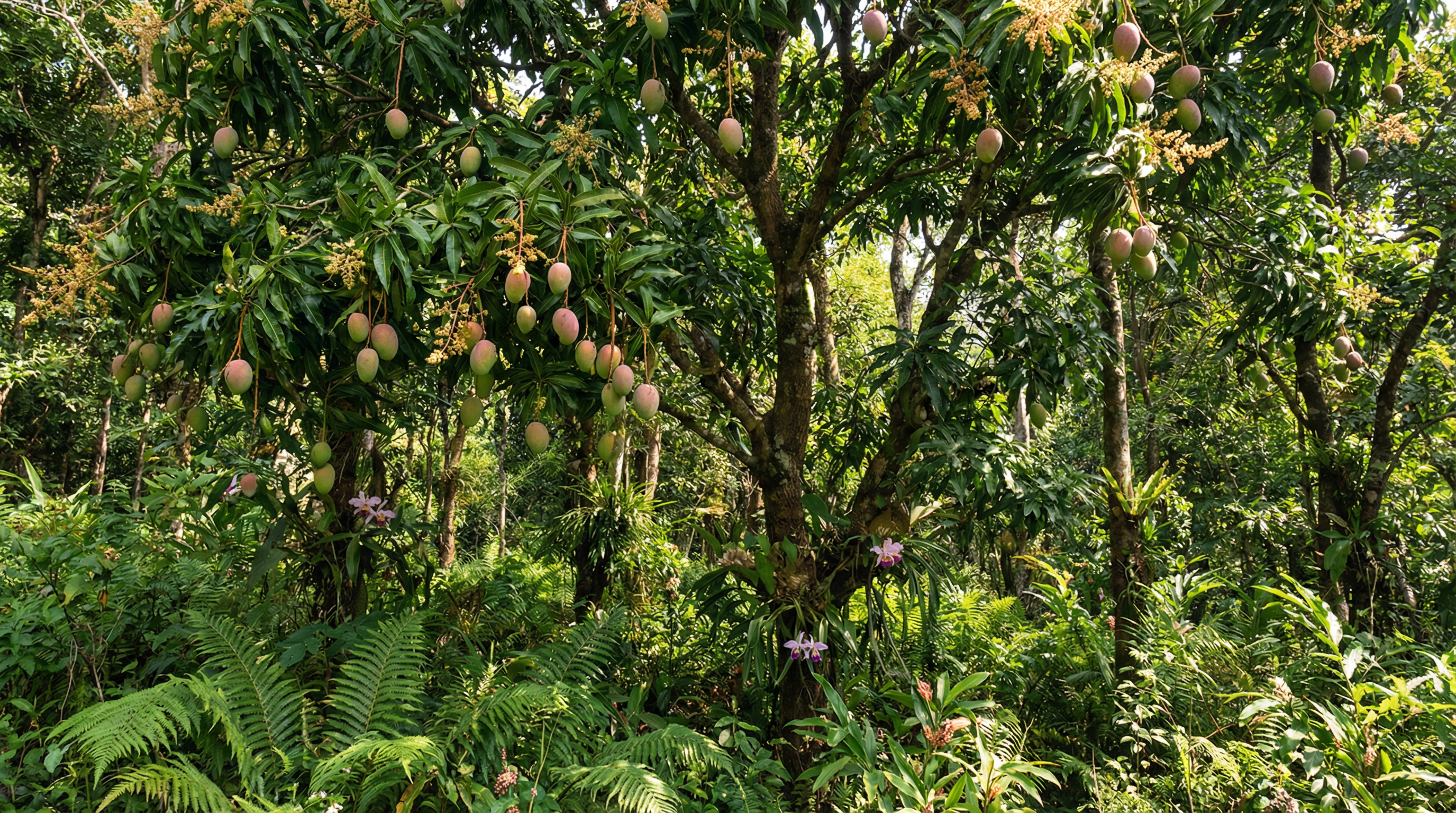
The mango, scientifically known as *Mangifera indica*, is a species of flowering plant in the family Anacardiaceae. It is one of the most popular tropical fruits in the world, cherished for its sweet, juicy flesh and vibrant color. Believed to have originated in the region between northwestern Myanmar, Bangladesh, and northeastern India, the mango has been cultivated for over 4,000 years. It holds significant cultural importance and is the national fruit of India, Pakistan, and the Philippines, and the national tree of Bangladesh. The mango tree is a large, evergreen tree that can reach heights of 30 to 100 feet with a broad, rounded canopy that can spread up to 50 feet wide. Its leaves are long, leathery, and glossy dark green when mature, with new foliage emerging in a reddish-bronze color. The tree produces large panicles of small, fragrant, white to pinkish flowers in the late winter and early spring, which are pollinated by insects. The fruit, a fleshy drupe, varies in shape from round to oval or kidney-shaped and has a skin that ranges in color from green to yellow, orange, or red when ripe. The flesh is typically a rich orange-yellow, with a sweet, aromatic flavor and a single large, flat seed in the center. Beyond its delicious taste, the mango offers a wide array of culinary and other uses. Ripe mangoes are commonly eaten fresh, juiced, or used in desserts such as ice cream, smoothies, and pastries. Unripe mangoes are used in many cultures for making pickles, chutneys, and salads. The fruit is highly nutritious, providing significant amounts of vitamin C, vitamin A, and fiber, and is associated with various health benefits, including improved immunity and digestion. The wood of the mango tree, while susceptible to fungi and insects, is used for making furniture, ukuleles, and plywood, and the bark can be used to produce a yellow dye.
Plant facts
- Sun
- Full Sun
- Water
- RegularDrought Tolerant
- USDA zones
- 10-11
- Lifecycle
- Perennial
2 of 4 nurseries carry this plant
- Just Fruits and ExoticsShips
Crawfordville, FL681 mi away
- 7 galIn stock$59.99View
- Top TropicalsShips
Fort Myers, FL918 mi away
- 7 galIn stock$59.99View
Distances are approximate, based on your network location.