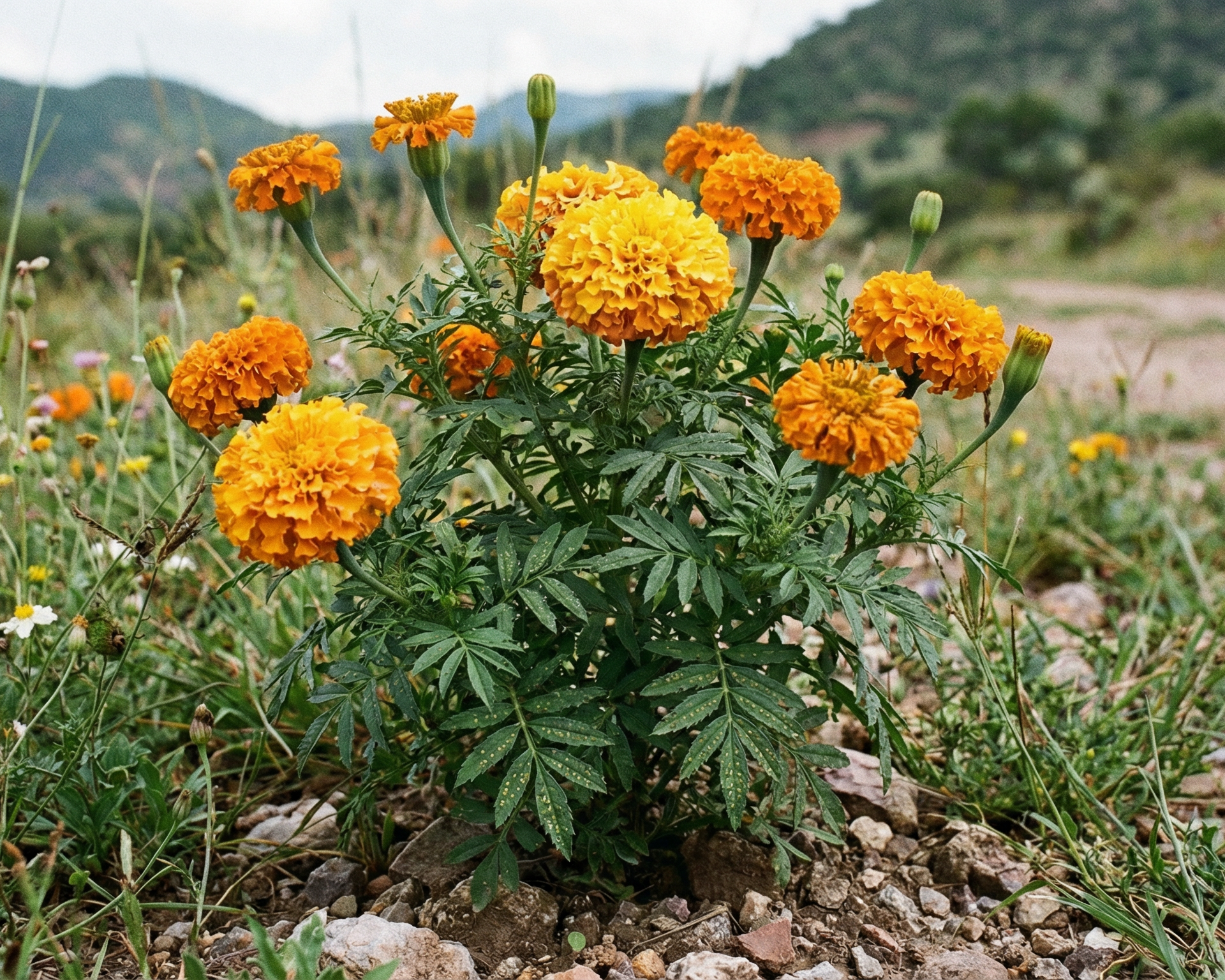
Marigold
Tagetes spp.
10 nurseries nationwide
Compare nurseries
Choose a city or ZIP to find nearby growers. Showing nationwide listings until you choose an area.
10 nurseries · 27 matching options
10 locations on the map. Select a marker or a nursery to compare.
Preparing the map…
Your location isn’t saved. Confirm availability and visiting hours with the nursery.
About Marigold
The genus Tagetes, commonly known as marigold, encompasses a diverse group of about 50 species of annual and perennial herbaceous plants belonging to the sunflower family (Asteraceae). Native to the Americas, particularly Mexico and Central America, these plants have been cultivated and naturalized in various parts of the world. The name "marigold" is derived from "Mary's gold," a name originally given to a similar European plant, Calendula officinalis, in honor of the Virgin Mary. The most common species in cultivation are African marigolds (Tagetes erecta), French marigolds (Tagetes patula), and signet marigolds (Tagetes tenuifolia). Marigolds are prized for their vibrant, showy flowers, which bloom in shades of yellow, orange, gold, and white, often with maroon highlights. The flower heads are typically 1 to 4 inches in diameter and consist of both ray and disc florets. The plants themselves range in height from a few inches to several feet tall, with pinnate (feather-like) green leaves that are aromatic when crushed. Most marigolds have a pungent, musky scent, although some modern cultivars have been bred to be odorless. They thrive in full sun and well-drained soil and are known for their tolerance to drought and ability to grow in a variety of conditions. Beyond their ornamental value, marigolds have a rich history of culinary, medicinal, and cultural uses. The florets of Tagetes erecta are a source of lutein, a carotenoid used as a food coloring (E161b) in the European Union. Certain species, such as Tagetes lucida (Mexican mint marigold), are used as culinary herbs and to make medicinal teas. The pungent aroma of many marigold varieties is due to the presence of thiophenes in their roots, which have insecticidal and nematicidal properties, making them a popular choice for companion planting in vegetable gardens to deter pests. Culturally, marigolds, particularly Tagetes erecta, hold significant importance in Mexico's Day of the Dead celebrations, where they are known as "flor de muerto" (flower of the dead) and are used to decorate altars and graves.
Plant facts
- Sun
- Full Sun, Partial Sun
- Water
- Regular, Drought Tolerant
- USDA zones
- 3-11
- Lifecycle
- Annual
Variety guides
Explore the complete plant collection, including varieties with no nursery listings yet.
- Colossus0 nurseries listed
- Durango Red0 nurseries listed
- French Brocade0 nurseries listed
- Heirloom Signet Starfire0 nurseries listed
- Lemon Gem0 nurseries listed
- Moonlight0 nurseries listed
- Mr. Majestic Double0 nurseries listed
- Orange & Yellow Beast0 nurseries listed
- Pinwheel0 nurseries listed
- Queen Sophia0 nurseries listed
- Red Gem0 nurseries listed
- Tangerine Gem0 nurseries listed
- White Swan F10 nurseries listed