Mulberry
Morus spp.
30 nurseries listed · 7 named varieties
Compare nurseries
3 nurseries · 9 matching options
3 locations on the map. Select a marker or a nursery to compare.
Preparing the map…
Your location isn’t saved. Confirm availability and visiting hours with the nursery.
About Mulberry
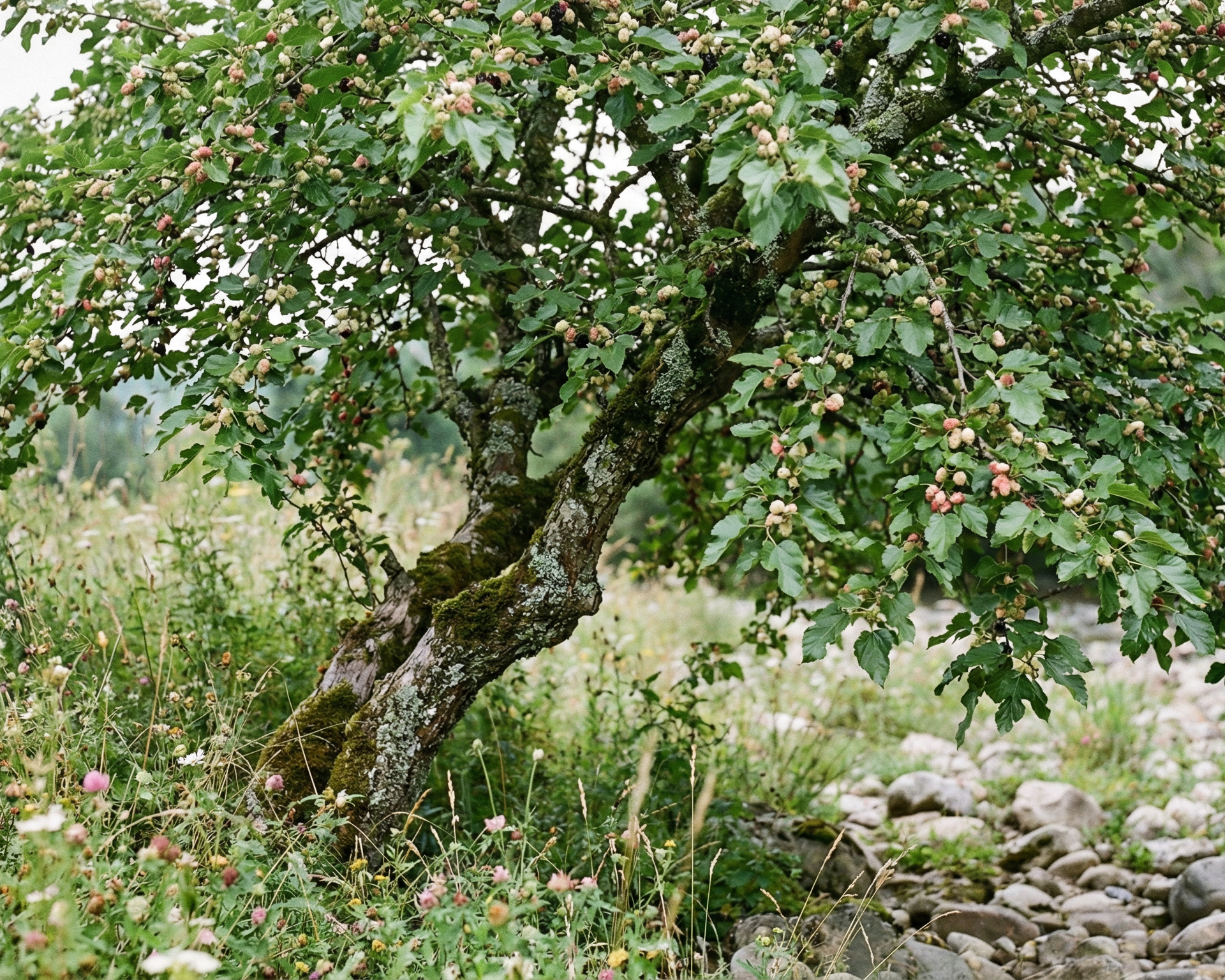
Mulberry, from the genus Morus, is a group of about 10 to 19 species of deciduous trees and shrubs belonging to the Moraceae family. These plants are native to temperate and subtropical regions of Asia, Europe, and North America, and are widely cultivated elsewhere. Mulberries are perhaps most famous for their connection to the silk industry, as the leaves of the white mulberry (Morus alba) are the sole food source for silkworms. Beyond their economic importance, these trees are also appreciated for their rapid growth and the sweet, flavorful fruit they produce. The key characteristics of mulberry trees include their small to medium size, typically reaching heights of 30 to 50 feet. Their leaves are simple, alternate, and often polymorphic, meaning they can have various shapes on the same tree. The trees are often dioecious, with male and female flowers appearing on separate plants in the spring. The fruit, which ripens in summer, is not a true berry but a collective fruit, similar in structure to a blackberry. The color of the fruit can vary from white to red to dark purple, and it is known for its sweet and slightly tart flavor. Mulberries have a wide range of uses and cultural significance. The fruits are enjoyed fresh and can be made into pies, tarts, wines, and cordials. In many cultures, they are a traditional food source and are also used in herbal medicine. The wood of some mulberry species is valued for its durability and is used in crafting and woodworking. In permaculture and sustainable agriculture, mulberries are prized for their hardiness, fast growth, and abundant fruit production, making them a valuable addition to food forests and home gardens.
Plant facts
- Sun
- Full Sun, Partial Sun, Partial Shade
- Water
- Regular, Drought Tolerant
- USDA zones
- 4-9
- Lifecycle
- Perennial
Variety guides
Explore the complete plant collection, including varieties with no nursery listings yet.
- Pakistan5 nurseries listed
- Illinois Everbearing4 nurseries listed
- Dwarf Everbearing3 nurseries listed
- King White Pakistan1 nursery listed
- Mojo1 nursery listed
- Silk Hope1 nursery listed
- Wacissa1 nursery listed
- Black Beauty0 nurseries listed
- Black Persian0 nurseries listed
- Collier0 nurseries listed
- Gerardi Dwarf0 nurseries listed
- Hicks0 nurseries listed
- Kokuso0 nurseries listed
- New American0 nurseries listed
- Noir0 nurseries listed
- Oscar0 nurseries listed
- Shangri-La0 nurseries listed
- Skinner0 nurseries listed
- Stubbs0 nurseries listed
- Tehama0 nurseries listed
- Townsend0 nurseries listed
- Travis0 nurseries listed
- Wellington0 nurseries listed