- Sun
- Full Sun, Partial Sun, Partial Shade
- Water
- Regular, Low, Drought Tolerant
- USDA zones
- 3-11
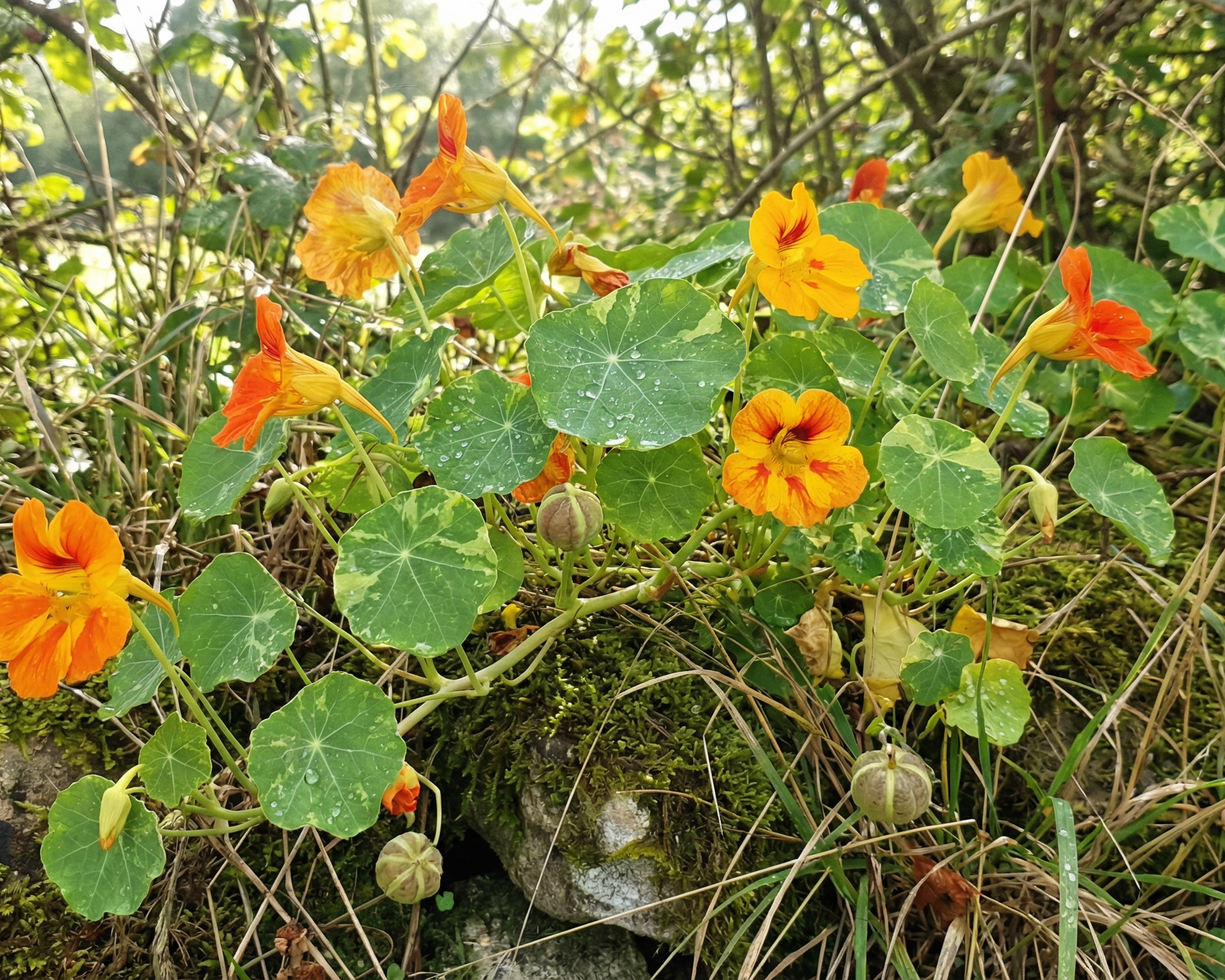
Garden nasturtium
Tropaeolum majus
Nasturtium, the common name for plants in the genus Tropaeolum, is a group of approximately 80 species of annual and perennial herbaceous flowering plants. Native to South and Central America, these plants are the sole genus in the family Tropaeolaceae. Read more
Compare nurseries
1 nursery · 1 matching option
Choose a city or ZIP to find nearby growers. Showing nationwide listings until you choose an area.
1 location on the map. Select a marker or a nursery to compare.
Preparing the map…
Your location isn’t saved. Confirm availability and visiting hours with the nursery.
Variety guides
Explore the complete plant collection, including varieties with no nursery listings yet.
Not yet listed: Alaska, Amazon Jewel, Black Velvet, Buttercream, Cherries Jubilee, Climbing Phoenix, Copper Sunset, Cream Troika, Creamsicle, Cup of Sun, Empress Of India, Little Firebirds, Moonlight, Purple Emperor, Spitfire, Tip Top Alaska, Tip Top Alaska Salmon, Vanilla Berry
0 nurseries listed
About Garden nasturtium
Nasturtium, the common name for plants in the genus Tropaeolum, is a group of approximately 80 species of annual and perennial herbaceous flowering plants. Native to South and Central America, these plants are the sole genus in the family Tropaeolaceae. The most widely recognized species is Tropaeolum majus, the garden nasturtium. The name "nasturtium" is derived from the Latin words for "nose-twister," alluding to the plant's peppery scent, which is similar to that of watercress.
Nasturtiums are celebrated for their vibrant, often intensely colored flowers and unique, shield-shaped (peltate) leaves, where the petiole attaches to the center of the leaf blade, creating an umbrella-like appearance. The flowers are bisexual, zygomorphic, and feature five petals, a funnel-shaped nectar spur, and a spicy fragrance. Their growth habits vary, with some species exhibiting a climbing or trailing nature, making them ideal for trellises and hanging baskets, while others grow as compact, bushy plants suitable for beds and borders.
Beyond their ornamental value, nasturtiums are well-regarded for their culinary uses. All parts of the common garden nasturtium (Tropaeolum majus) are edible, offering a peppery flavor reminiscent of watercress. The flowers and leaves are frequently added to salads, while the unopened flower buds and seeds can be pickled to create a condiment known as "poor man's capers." In the garden, nasturtiums are known to attract beneficial insects and hummingbirds, and they are often used as companion plants to deter pests from other crops.