Orchid Cactus
Epiphyllum spp.
2 nurseries nationwide
Compare nurseries
Choose a city or ZIP to find nearby growers. Showing nationwide listings until you choose an area.
2 nurseries · 7 matching options
2 locations on the map. Select a marker or a nursery to compare.
Preparing the map…
Your location isn’t saved. Confirm availability and visiting hours with the nursery.
About Orchid Cactus
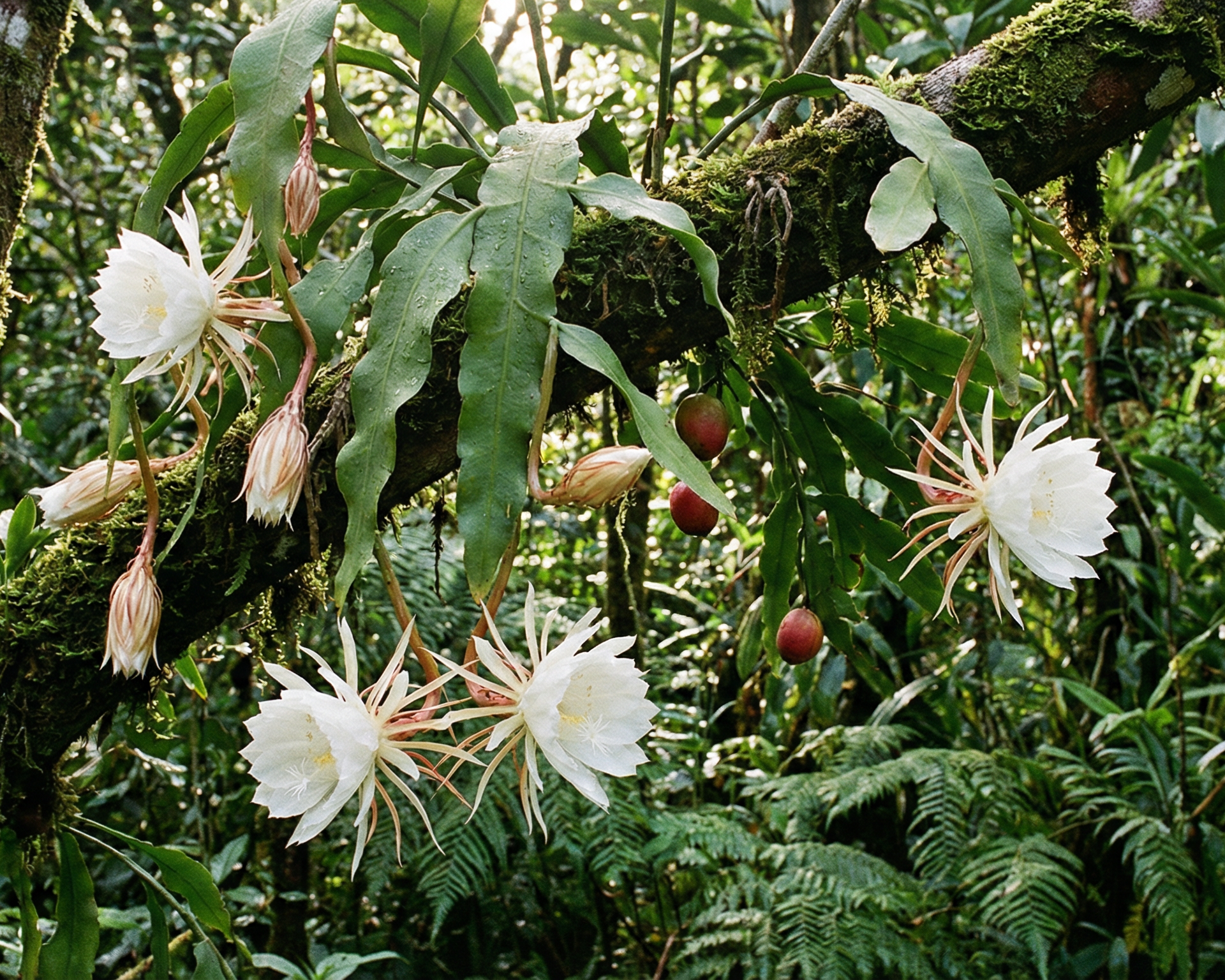
Epiphyllum, commonly known as Orchid Cactus, is a genus of epiphytic cacti native to Central and South America. The name Epiphyllum means "upon the leaf" in Greek, which refers to the fact that the flowers bloom from what appear to be leaves, but are actually flattened stems. These plants are not parasitic but instead use other plants for support, absorbing moisture and nutrients from the air and rain. They are highly prized for their stunning, often fragrant, and typically nocturnal flowers, which can be quite large and come in a variety of colors. The key characteristics of Orchid Cacti are their flattened, leaf-like stems, which are photosynthetic and function as leaves. These stems are often scalloped or lobed along the edges and can be either trailing or climbing, making them suitable for hanging baskets or training on a trellis. Unlike their desert-dwelling relatives, Epiphyllum species are native to tropical forests and therefore thrive in conditions of higher humidity and indirect light. Their flowers are the main attraction, with some species, like Epiphyllum oxypetalum (Queen of the Night), blooming for only a single night. Orchid Cacti are primarily grown as ornamental houseplants and are popular among collectors for their spectacular floral displays. Beyond their ornamental value, some species have been used in traditional medicine. For instance, Epiphyllum oxypetalum has been used to treat respiratory ailments and as a remedy for painful menstruation. The flowers of some species are also reportedly edible and can be used in soups. Cultivating Orchid Cacti requires mimicking their native tropical environment. They prefer bright, indirect light and should be protected from direct, harsh sunlight which can scorch their stems. A well-draining potting mix is essential to prevent root rot, and a mix formulated for cacti and succulents with added organic matter is ideal. They should be watered regularly during the growing season (spring and summer), allowing the soil to dry out slightly between waterings. During the fall and winter, watering should be reduced.
Plant facts
- Sun
- Partial Sun, Partial Shade
- Water
- Regular
- USDA zones
- 10-12
- Lifecycle
- Perennial