Pandan (Screwpine)
Pandanus spp.
3 nurseries nationwide
Compare nurseries
Nurseries with recorded shipping, across all locations. Confirm delivery to your address and availability on the nursery website.
1 nursery · 2 matching options
1 location on the map. Select a marker or a nursery to compare.
Preparing the map…
Your location isn’t saved. Confirm availability and delivery area with the nursery.
About Pandan (Screwpine)
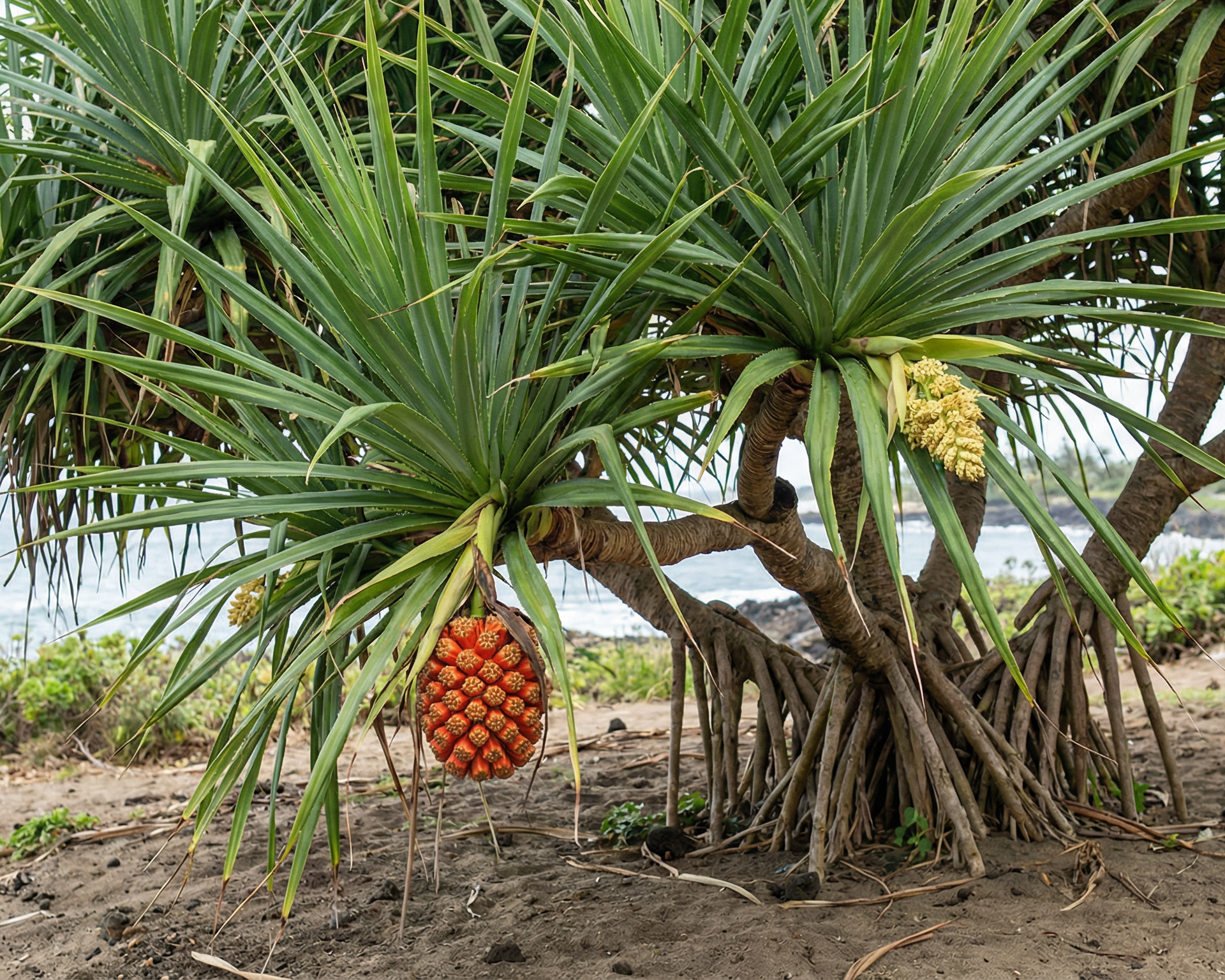
Pandanus is a genus of monocots with about 600 species of palm-like trees and shrubs, native to the tropics and subtropics of the Old World, from Africa and Madagascar east through Southeast Asia to the Pacific Islands [1][2]. Commonly known as screw pines, this name comes from the distinctive spiral arrangement of their long, narrow, spiny leaves around the stem. Many species develop prominent stilt-like prop roots that grow down from the trunk to anchor the plant, giving them a unique and recognizable silhouette [2]. The key characteristics of the Pandanus genus include its unique foliage and root structure. The leaves are tough, strap-shaped, and can range from a meter to several meters in length, with spiny margins and a folded, M-shaped cross-section. The plants are dioecious, meaning male and female flowers are produced on separate individuals. The fruit, known as a drupe, can vary significantly between species. In some, like Pandanus tectorius (Hala), numerous drupes are packed together into a large, woody, pineapple-like fruit that can be dispersed by water [5]. Pandanus holds immense cultural and economic significance, particularly for its culinary and material uses. The leaves of Pandanus amaryllifolius are widely used in Southeast Asian cuisine to impart a sweet, fragrant aroma to rice dishes, desserts, and drinks. Other species provide edible fruits, such as the Hala fruit, which can be eaten raw or cooked. Beyond the kitchen, the tough, fibrous leaves are a vital resource for weaving. They are traditionally crafted into mats, baskets, sails, and roofing thatch across the Pacific Islands, playing a central role in daily life and cultural practices [3][4].
Plant facts
- Sun
- Full Sun, Partial Sun, Partial Shade
- Water
- Regular, Drought Tolerant
- USDA zones
- 10-12
- Lifecycle
- Perennial