Fruit & Nut Trees
Papaya
Carica papaya
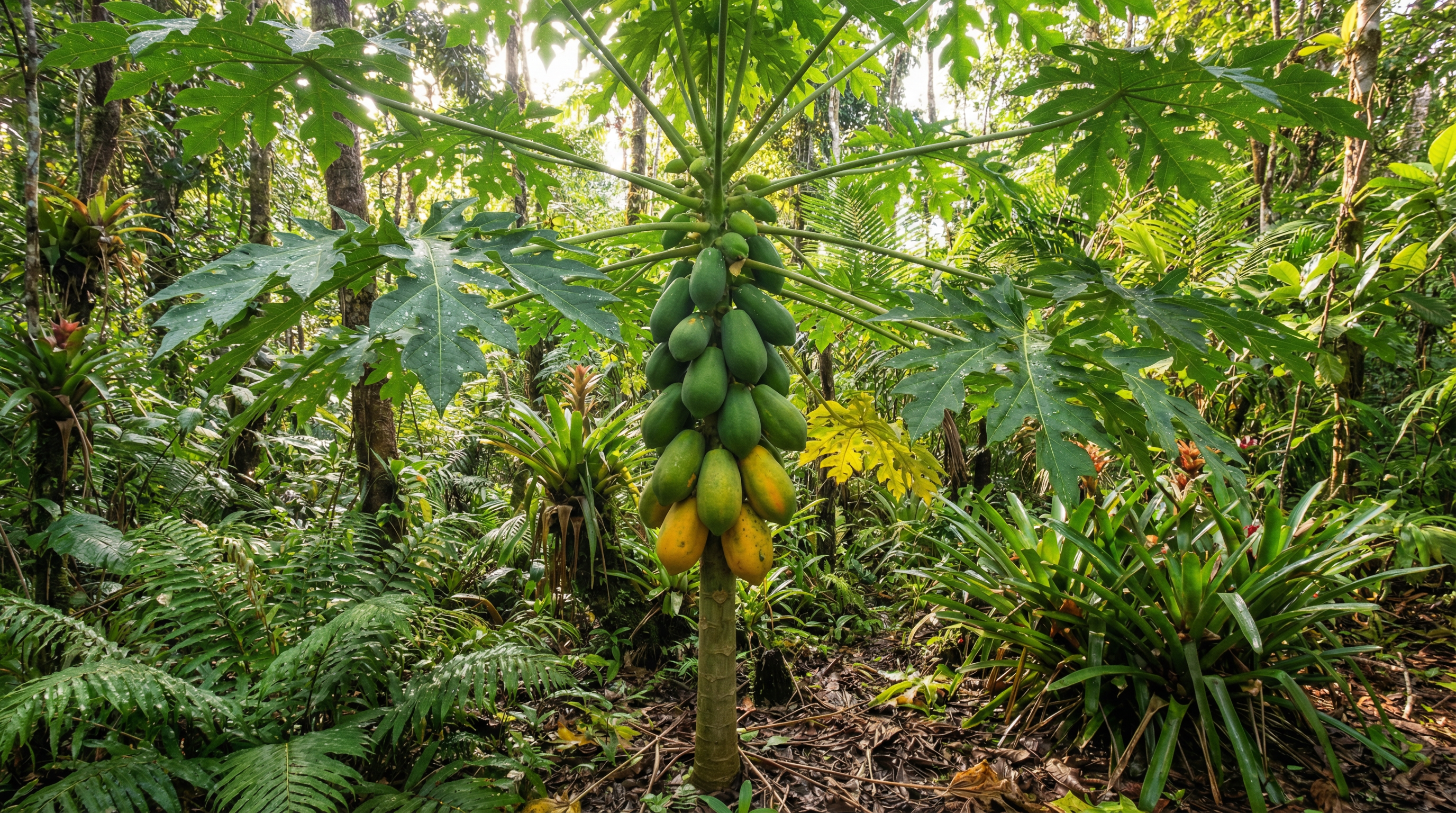
The papaya (_Carica papaya_) is a tropical fruit-bearing plant native to the Americas, and is the most well-known species in the genus Carica. While the genus formerly contained over 20 species, recent genetic studies have led to the reclassification of most of them into other genera, leaving Carica papaya as the primary representative. The plant is technically a large herb, growing up to 20-30 feet tall with a single, hollow, and unbranched trunk. It is characterized by its large, palmately-lobed leaves that form an umbrella-like canopy at the top of the trunk. The papaya plant is prized for its fruit, which is a large, melon-like berry that can range in size from 6-8 inches and weigh up to a pound or more. The fruit has a smooth, thin skin that turns from green to a vibrant yellow-orange as it ripens. The flesh is a rich orange or pinkish-orange with a sweet, musky flavor and a buttery texture. The central cavity of the fruit is filled with numerous small, black, edible seeds that have a peppery taste. The plant is fast-growing, typically producing fruit within its first year of life. Beyond its culinary uses, the papaya holds significant medicinal and industrial value. The unripe fruit and other parts of the plant contain papain, a proteolytic enzyme that aids in the digestion of proteins. This has led to its use in digestive remedies and as a primary ingredient in meat tenderizers. The fruit is also a rich source of vitamins A, C, and E, as well as antioxidants and other beneficial phytochemicals. In permaculture and traditional farming systems, the papaya is a valuable plant due to its rapid growth, high yield, and multiple uses, making it a staple in tropical and subtropical regions around the world.Read more
3 of 3 nurseries carry this plant
- Top TropicalsShips
Fort Myers, FL918 mi away
- 3 galIn stock$29.99
- Excalibur Fruit Trees
Lake Worth, FL939 mi away
- 3 galIn stock$26.99
- Pine Island Nursery
Miami, FL1005 mi away
- 3 galIn stock$24.99
Distances are approximate, based on your network location.
Plant facts
- Sun
- Full Sun
- Water
- HighRegular
- USDA zones
- 9-11
- Lifecycle
- Perennial