Fruit & Nut Trees
Pear
Pyrus communis
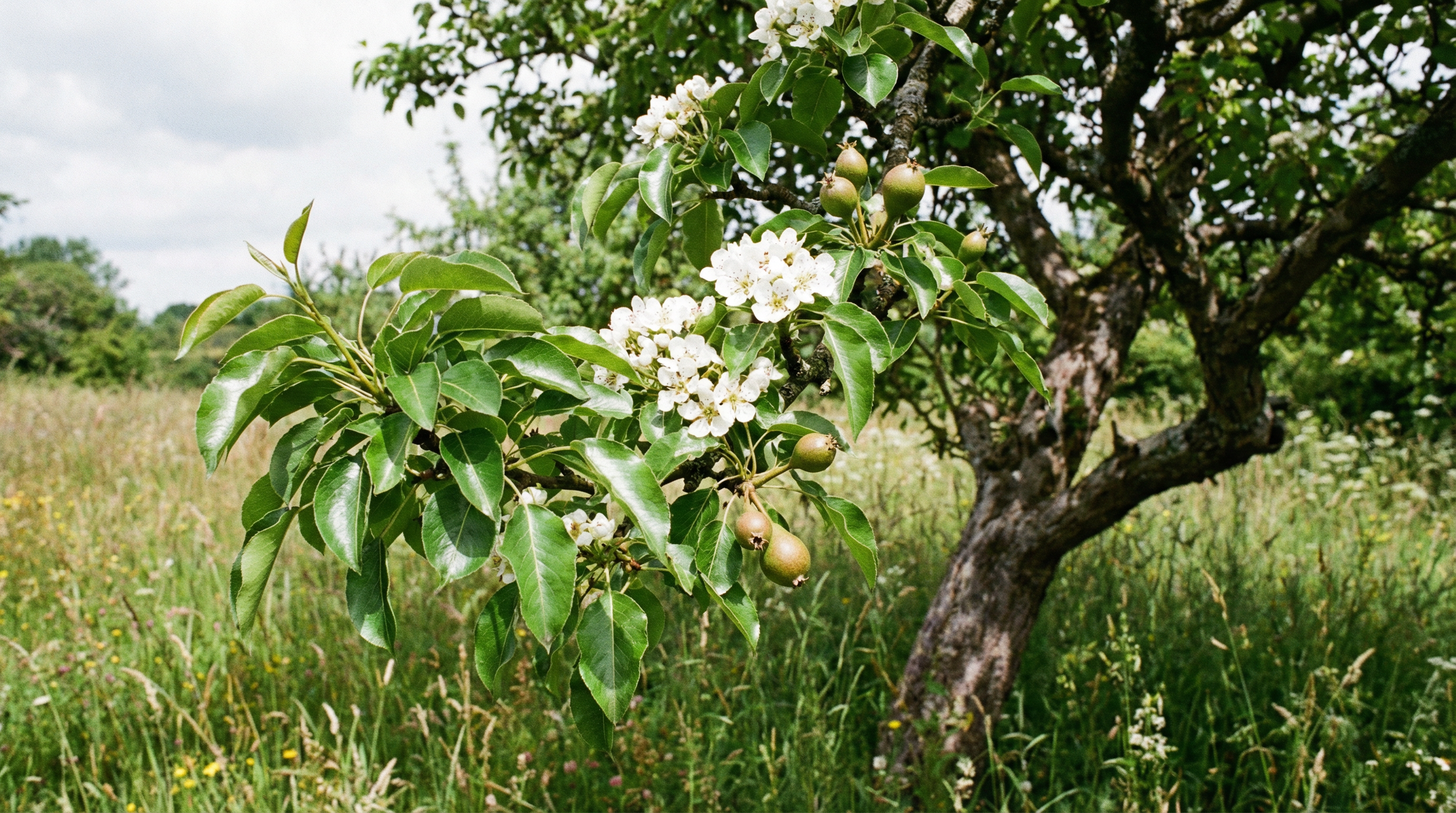
# Pyrus: The Pear Genus Pyrus, commonly known as the pear genus, is a group of deciduous trees and shrubs belonging to the rose family (Rosaceae). Native to coastal and temperate regions of the Old World, from Western Europe and North Africa east across Asia, the genus comprises at least 26 primary species. The most famous member of this genus is the common pear, Pyrus communis, cultivated for its delicious fruit. The tree itself is medium-sized, reaching 10–17 meters (33–56 ft) tall, often with a tall, narrow crown; a few species are shrubby. The key characteristics of the Pyrus genus include simple, alternate leaves that are 2–12 cm long, glossy green on some species, and densely silvery-hairy in others. The flowers are white, rarely tinted yellow or pink, 2–4 cm in diameter, and have five petals. They are produced on spurs or in corymbs and are insect-pollinated. The fruit, the pear, is a pome, which in most wild species is 1–4 cm in diameter, but in cultivated forms is up to 18 cm long and 8 cm broad; the shape varies from globose to classic pyriform '''pear-shape'''. The significance of the Pyrus genus is primarily centered around its fruit, which is a staple in diets worldwide. Pears are consumed fresh, canned, as juice, and dried. The wood of the pear tree is also valued for its fine grain and is used in the manufacture of high-quality woodwind instruments and furniture. In traditional medicine, various parts of the pear plant have been used to treat a range of ailments, from constipation to alcohol hangovers. The Callery pear (Pyrus calleryana), though producing inedible fruit, is widely used as a rootstock for other pear cultivars and is also a popular ornamental tree, though it has become invasive in some regions.Read more
1 of 1 nursery carries this plant
- Food Forest NurseryShips
West Fork, AR669 mi away
- 3 galIn stock$39.95
Distances are approximate, based on your network location.
Plant facts
- Sun
- Full SunPartial Sun
- Water
- RegularDrought Tolerant
- USDA zones
- 4-9
- Lifecycle
- Perennial