Pecan
Carya illinoinensis
32 nurseries nationwide · 17 named varieties
Compare nurseries
Nurseries with recorded shipping, across all locations. Confirm delivery to your address and availability on the nursery website.
1 nursery · 1 matching option
1 location on the map. Select a marker or a nursery to compare.
Preparing the map…
Your location isn’t saved. Confirm availability and delivery area with the nursery.
About Pecan
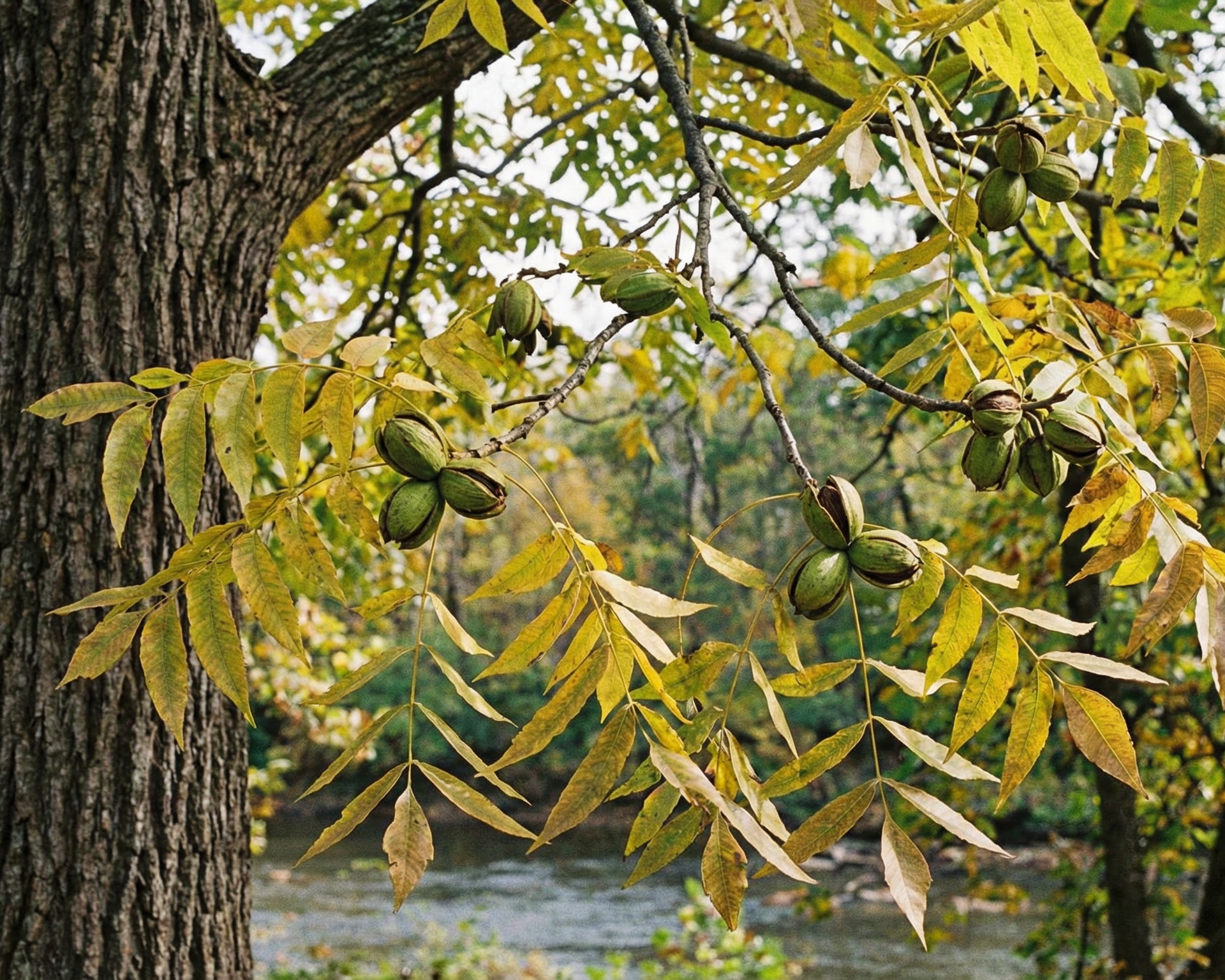
Pecan Pecan (Carya illinoinensis) is a large deciduous tree native to North America, belonging to the hickory genus, Carya, and the walnut family, Juglandaceae. It is the largest of the hickories and is renowned for its sweet, edible nuts. The name "pecan" is derived from an Algonquin word that refers to pecans, walnuts, and hickory nuts. While several species of hickory exist, the pecan is the most commercially important and widely recognized, especially in the United States, where it holds the title of state tree in Texas and state nut in several states including Alabama, Arkansas, California, and Louisiana. Reaching heights of 70 to 100 feet, with some specimens growing as tall as 150 feet, the pecan tree has a massive trunk and a symmetrical, broadly oval crown. Its leaves are alternate and pinnately compound, with 9 to 17 pointed leaflets. The tree produces monoecious flowers in the spring, with male flowers in drooping catkins and female flowers in short spikes. The fruit is technically a drupe, not a true nut, with a single stone or pit encased in a thin husk that splits open at maturity to release the familiar pecan nut. Pecans are highly valued for their rich, buttery flavor and are used in a variety of culinary applications, most famously in pecan pie, a traditional dessert of the southern United States. They are also a popular snack food and an ingredient in candies like pralines, as well as in cookies, cakes, and ice creams. Beyond its culinary uses, pecan wood is utilized in furniture making and as a flavorful wood for smoking meats. The tree itself is a popular shade tree for large landscapes, parks, and recreational areas. Hardy in USDA zones 5 through 9, the pecan tree thrives in full sun and prefers rich, moist, well-drained soils. It is tolerant of a range of soil types, including clay, sand, and loam, and has a good tolerance for drought once established. Due to a deep taproot, it can be difficult to transplant. For nut production, it is recommended to plant at least two different cultivars to ensure proper cross-pollination. While generally low-maintenance, pecan trees can be susceptible to various pests and diseases, such as pecan scab, which can be managed with resistant cultivars and proper care.
Plant facts
- Sun
- Full Sun
- Water
- Regular
- USDA zones
- 6-9
- Lifecycle
- Perennial
Variety guides
Explore the complete plant collection, including varieties with no nursery listings yet. Counts reflect your location and shopping filters.
- Amling1 nursery listed
- Caddo1 nursery listed
- Cape Fear1 nursery listed
- Desirable1 nursery listed
- Elliot1 nursery listed
- Gafford1 nursery listed
- Lakota1 nursery listed
- McMillan1 nursery listed
- Oconee1 nursery listed
- Sumner1 nursery listed
- Byrd0 nurseries listed
- Carter0 nurseries listed
- Creek0 nurseries listed
- Excel0 nurseries listed
- Forkert0 nurseries listed
- Gloria Grande0 nurseries listed
- Kanza0 nurseries listed
- Kiowa0 nurseries listed
- Mandan0 nurseries listed
- Pawnee0 nurseries listed