Peruvian Pepper Tree
Schinus molle
1 nursery nationwide
Compare nurseries
Nurseries with recorded shipping, across all locations. Confirm delivery to your address and availability on the nursery website.
No nursery options match these filters
Try another size or variety, or broaden your location. Options with unconfirmed variety names are included when All varieties is selected.
About Peruvian Pepper Tree
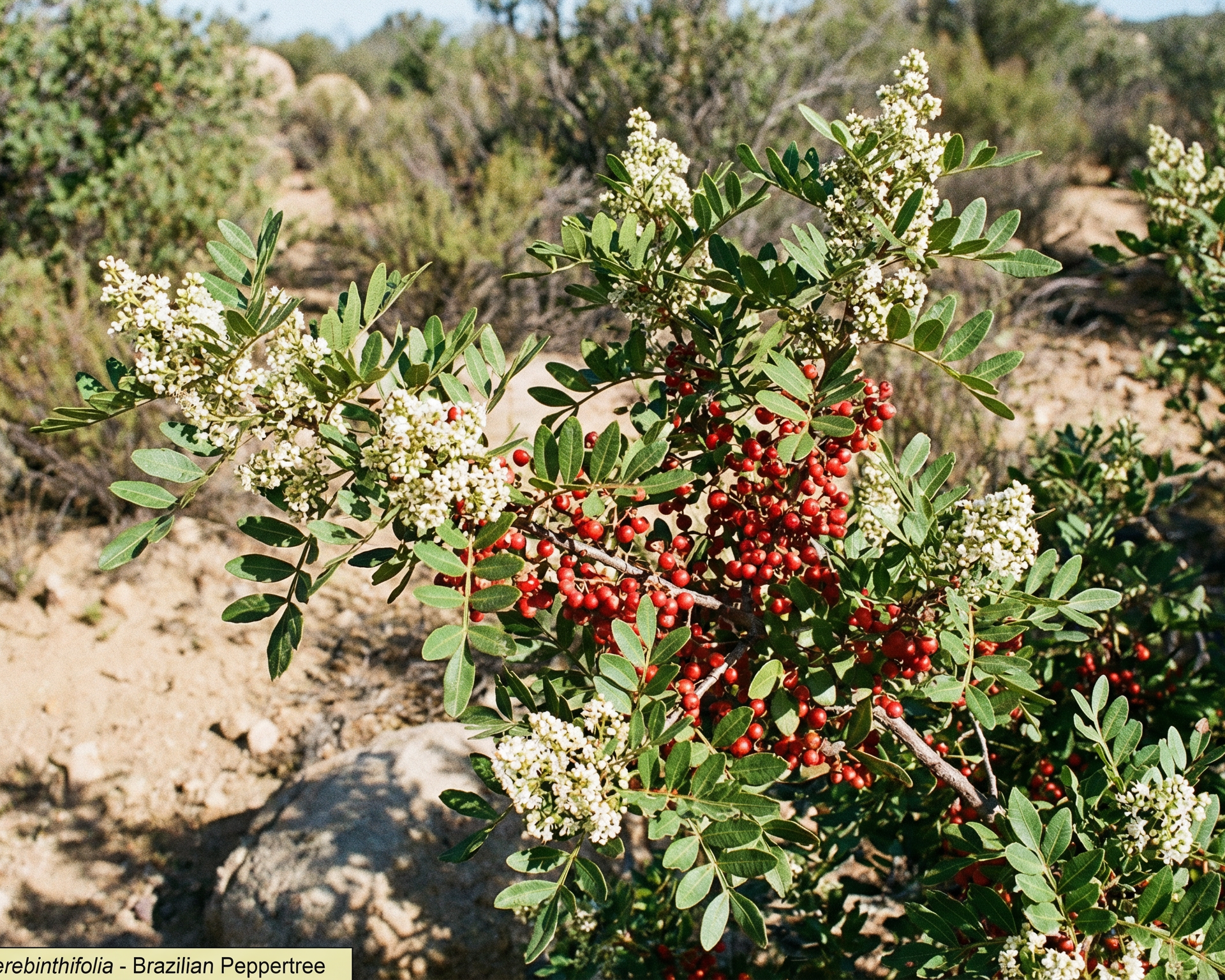
Pepper Tree (Schinus) Overview and Introduction The genus Schinus, commonly known as pepper trees, comprises a group of flowering trees and tall shrubs belonging to the sumac family, Anacardiaceae. Native to South America, these plants are characterized by their resinous sap and aromatic leaves. The most well-known species are the Peruvian pepper tree (Schinus molle) and the Brazilian pepper tree (Schinus terebinthifolia). While not related to true pepper (genus Piper), the bright pink or red berries of some Schinus species are sold as pink peppercorns, adding a peppery flavor and a decorative touch to culinary dishes. Key Characteristics Pepper trees are typically evergreen and can range in size from large shrubs to trees reaching up to 15 meters in height. They have a graceful, often weeping, growth habit with pinnately compound leaves that are finely cut. The leaves release a distinct peppery or turpentine-like aroma when crushed. The flowers are small and inconspicuous, arranged in clusters, and are followed by small, spherical fruits (drupes) that hang in grape-like bunches. These fruits ripen to a vibrant pink or red color, creating a visually striking display against the green foliage. Uses and Significance Beyond their ornamental value, pepper trees have a long history of use in traditional medicine and culinary applications. The berries, known as pink peppercorns, are used as a spice to impart a mild, sweet, and peppery flavor to a variety of dishes. In folk medicine, various parts of the tree, including the leaves, bark, and berries, have been used for their antiseptic, anti-inflammatory, and astringent properties. The trees are also valued in permaculture for their hardiness and ability to thrive in a range of conditions, and they are sometimes planted as windbreaks or for erosion control. However, it is important to note that some species, particularly the Brazilian pepper tree, have become invasive in certain regions, outcompeting native vegetation. Growing Conditions and Care Pepper trees are well-suited to warm, semi-arid climates and are known for their drought tolerance once established. They prefer full sun and well-drained soil but can adapt to a variety of soil types. These trees are relatively low-maintenance and require minimal pruning, primarily to remove dead or crossing branches and to shape the tree. While generally hardy, they can be susceptible to root rot in poorly drained soils. Due to the invasive potential of some species, it is crucial to select non-invasive varieties and to manage their spread, especially in regions where they are not native.
Plant facts
- Sun
- Full Sun, Partial Sun
- Water
- Drought Tolerant
- USDA zones
- 9-11
- Lifecycle
- Perennial