Fruit & Nut Trees
Persimmon
Diospyros virginiana
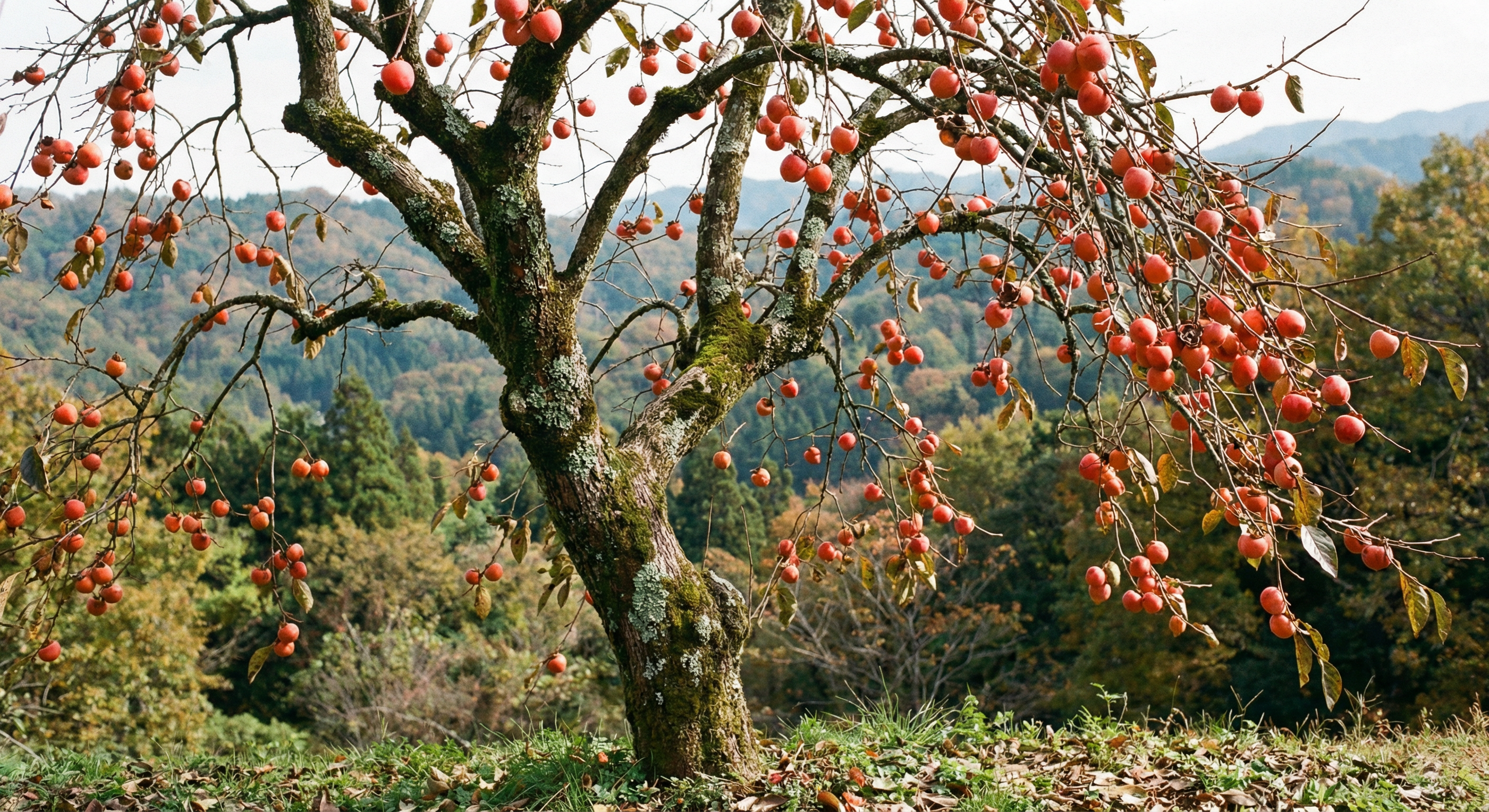
Persimmon is the common name for a group of fruit-bearing trees in the genus Diospyros, which belongs to the ebony family (Ebenaceae). The name Diospyros is derived from Greek and means "divine fruit," a testament to the sweet and luscious nature of the fruit. While the genus also includes trees that are logged for their dark, heavy wood known as ebony, it is the persimmon fruit that is most widely known and cultivated. The majority of the more than 700 species in the genus are native to tropical regions, but some, like the American persimmon, are found in temperate climates. Persimmon trees are typically small to medium in size, with some species capable of reaching heights of up to 80 feet. They have a rounded crown and are either deciduous or evergreen. The leaves are simple, alternate, and untoothed. A notable characteristic of persimmon trees is that they are generally dioecious, meaning that male and female flowers are produced on separate trees, and both are required for fruit production. The flowers are small, bell-shaped, and fragrant, and they bloom in the spring. The fruit is a large, globular berry that can be yellow, orange, or dark red when ripe. The flesh is soft and juicy, and the fruit may contain several large, flattened seeds. The bark of mature trees is often dark and distinctively blocky. The primary significance of the persimmon lies in its edible fruit. The two most important species for fruit production are the American persimmon (Diospyros virginiana) and the Japanese persimmon (Diospyros kaki). The fruit is consumed fresh, dried, or cooked and is used in a variety of culinary applications, including puddings, jams, and baked goods. In addition to their use as a food source, persimmon trees have a place in traditional medicine and are ecologically important as a food source for wildlife. The dense, hard wood of some species, particularly ebony, is highly prized for its use in fine furniture, musical instruments, and other specialty items.Read more
6 of 6 nurseries carry this plant
- Peaceful Heritage NurseryShips
Stanford, KY190 mi away
- 3 galIn stock$32.95
- Trees of JoyShips
Bethlehem, PA405 mi away
- 3 galIn stock$42.00
- Food Forest NurseryShips
West Fork, AR669 mi away
- 3 galIn stock$44.95
- Just Fruits and ExoticsShips
Crawfordville, FL681 mi away
- 3 galIn stock$44.99
- Chestnut Hill NurseryShips
Alachua, FL703 mi away
- 3 galIn stock$46.95
- Top TropicalsShips
Fort Myers, FL918 mi away
- 3 galIn stock$44.99
Distances are approximate, based on your network location.
Plant facts
- Sun
- Full Sun
- Water
- RegularDrought Tolerant
- USDA zones
- 7-10
- Lifecycle
- Perennial