Pindo Palm
4 nurseries nationwide
Compare nurseries
Nurseries with recorded shipping, across all locations. Confirm delivery to your address and availability on the nursery website.
1 nursery · 2 matching options
1 location on the map. Select a marker or a nursery to compare.
Preparing the map…
Your location isn’t saved. Confirm availability and delivery area with the nursery.
About Pindo Palm
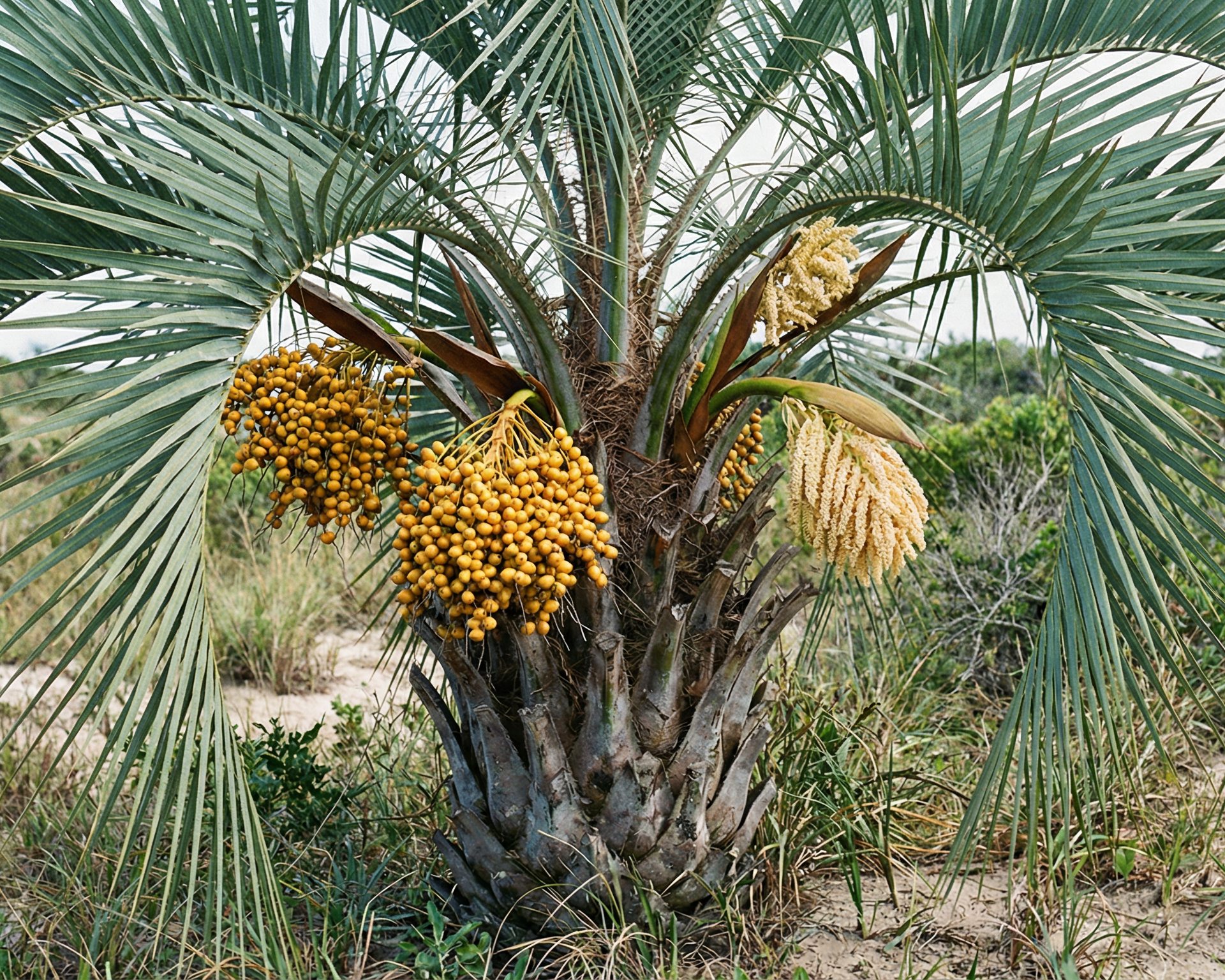
The genus Butia, commonly known as the Pindo Palm or Jelly Palm, is a group of feather palms native to South America, particularly Brazil, Paraguay, Uruguay, and Argentina. These palms are highly valued for their ornamental qualities and their unusual cold hardiness for a palm species, making them popular in temperate and subtropical climates worldwide. The most well-known species in this genus is Butia odorata, which is widely cultivated and often what is referred to when using the common names Pindo or Jelly Palm. Pindo Palms are characterized by their stout, solitary trunks, which are often covered with the bases of old leaves, giving them a distinctive, textured appearance. They have a crown of long, pinnate (feather-like) leaves that are typically blue-green or gray-green and arch gracefully towards the trunk. The size of these palms can vary significantly between species, ranging from nearly stemless dwarf varieties to trees that can reach up to 20 feet in height. In the summer, they produce large inflorescences of small, creamy-yellow, and fragrant flowers, which are followed by clusters of edible, orange-yellow fruits. The fruits of the Pindo Palm are a notable feature, known for their sweet and tart flavor, often compared to a mix of pineapple, apricot, and banana. These fruits are rich in vitamin C and can be eaten fresh or used to make jellies, jams, and wine, which is why the palm is also called the "Jelly Palm" or "Wine Palm". Beyond their culinary uses, Pindo Palms are widely used in landscaping as specimen trees, in group plantings, or in containers, adding a tropical feel to gardens and patios. Their tolerance for various conditions makes them a versatile choice for many different garden styles. Pindo Palms are relatively easy to grow and are adaptable to a wide range of conditions. They thrive in full sun to partial shade and prefer well-drained soils. Once established, they are quite drought-tolerant and can also withstand a moderate amount of salt spray, making them suitable for coastal regions. Their most significant attribute is their cold hardiness, with some species, like Butia odorata, able to tolerate temperatures as low as 10°F (-12°C). For optimal growth, it is recommended to use a palm-specific fertilizer, especially in soils that are low in nutrients.