Poplar
Populus spp.
18 nurseries listed
Compare nurseries
Nurseries with recorded shipping, across all locations. Confirm delivery to your address and availability on the nursery website.
No nursery options match these filters
Try another size or variety, or broaden your location. Options with unconfirmed variety names are included when All varieties is selected.
About Poplar
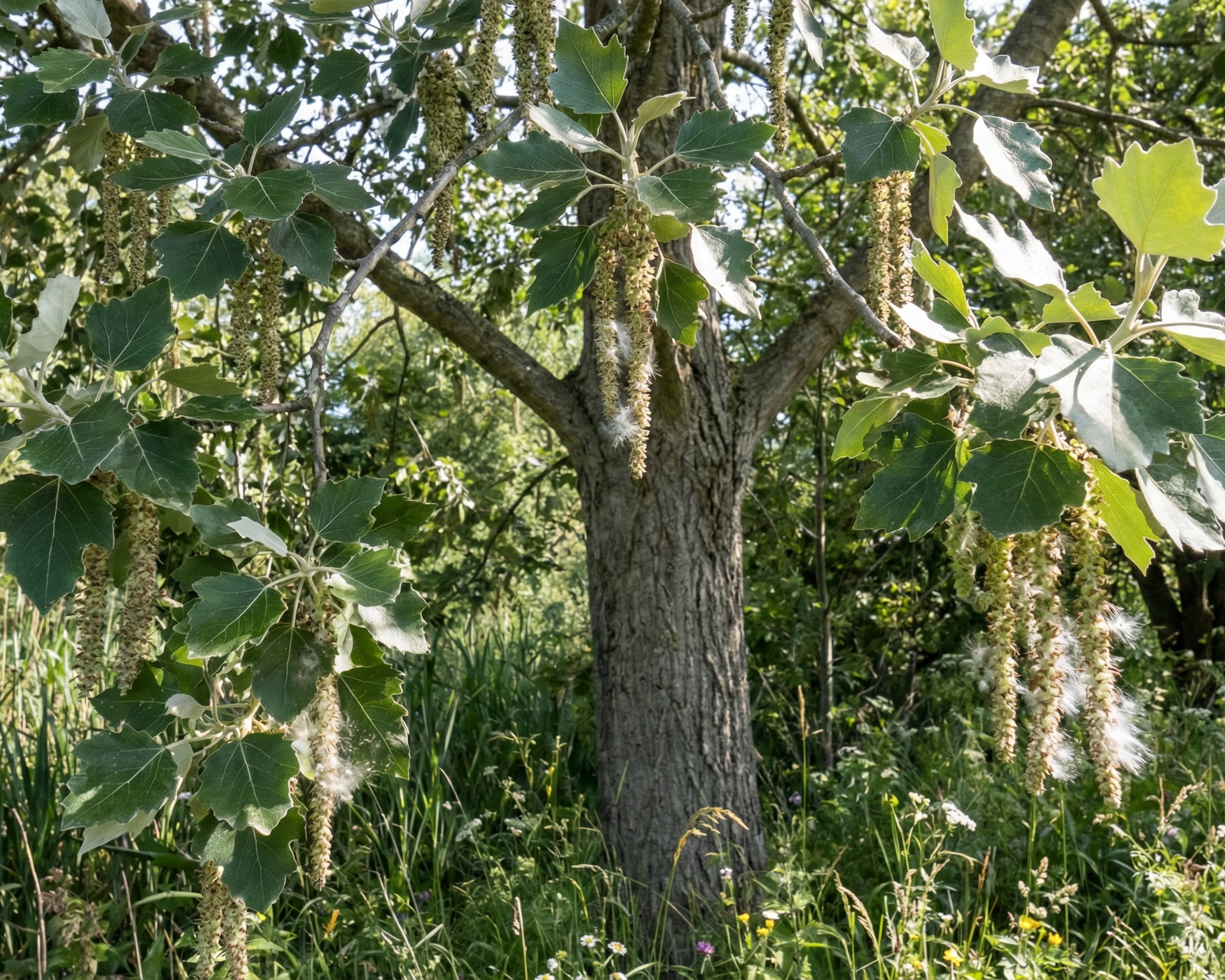
Poplar Poplar, the common name for trees of the genus Populus, encompasses a diverse group of approximately 35 species, including aspens and cottonwoods. These fast-growing, deciduous trees are native to the Northern Hemisphere and are characterized by their often smooth, pale bark and leaves that tremble in the slightest breeze. The genus name Populus originates from the Roman practice of planting these trees in public spaces. Poplars are significant for their rapid growth and adaptability, making them valuable for timber, paper production, and environmental applications. The physical characteristics of poplars vary among species, but they share several key features. They can reach heights of 15 to 50 meters, with some species, like the black cottonwood (Populus trichocarpa), growing to be one of the largest deciduous trees in North America. The leaves are typically heart-shaped or oval, with flattened petioles that cause them to flutter, creating a distinctive shimmering effect. In autumn, their foliage turns a brilliant yellow or gold. The trees are dioecious, with male and female flowers (catkins) on separate individuals. The fruit is a capsule containing numerous tiny seeds covered in cottony hairs, which aid in wind dispersal. Poplars have a wide range of uses and cultural significance. The wood, being lightweight and soft, is primarily used for pulp, paper, cardboard, and crates. Due to their fast growth, they are also cultivated for biomass energy and as a source of biofuel. Certain species, like the white poplar (Populus alba), are planted as ornamental trees and for windbreaks, especially in coastal areas, due to their tolerance of salt spray. Historically, various parts of the poplar tree have been used in traditional medicine for their anti-inflammatory and antiseptic properties. In Greek mythology, the white poplar was associated with Hercules, and its branches were used to create crowns for victors. Growing conditions for poplars are generally not demanding. They thrive in full sun and moist, well-drained soil, often found near water sources. Their hardiness and ability to grow in a variety of conditions have made them a popular choice for reforestation projects and for phytoremediation, the use of plants to remove pollutants from the environment. While they are relatively short-lived trees, their rapid growth and extensive root systems make them effective for soil stabilization and erosion control. However, they can be susceptible to a number of fungal diseases, such as cankers and leaf rusts.
Plant facts
- Sun
- Full Sun
- Water
- Regular, High, Likes Wet Feet
- USDA zones
- 2-9
- Lifecycle
- Perennial