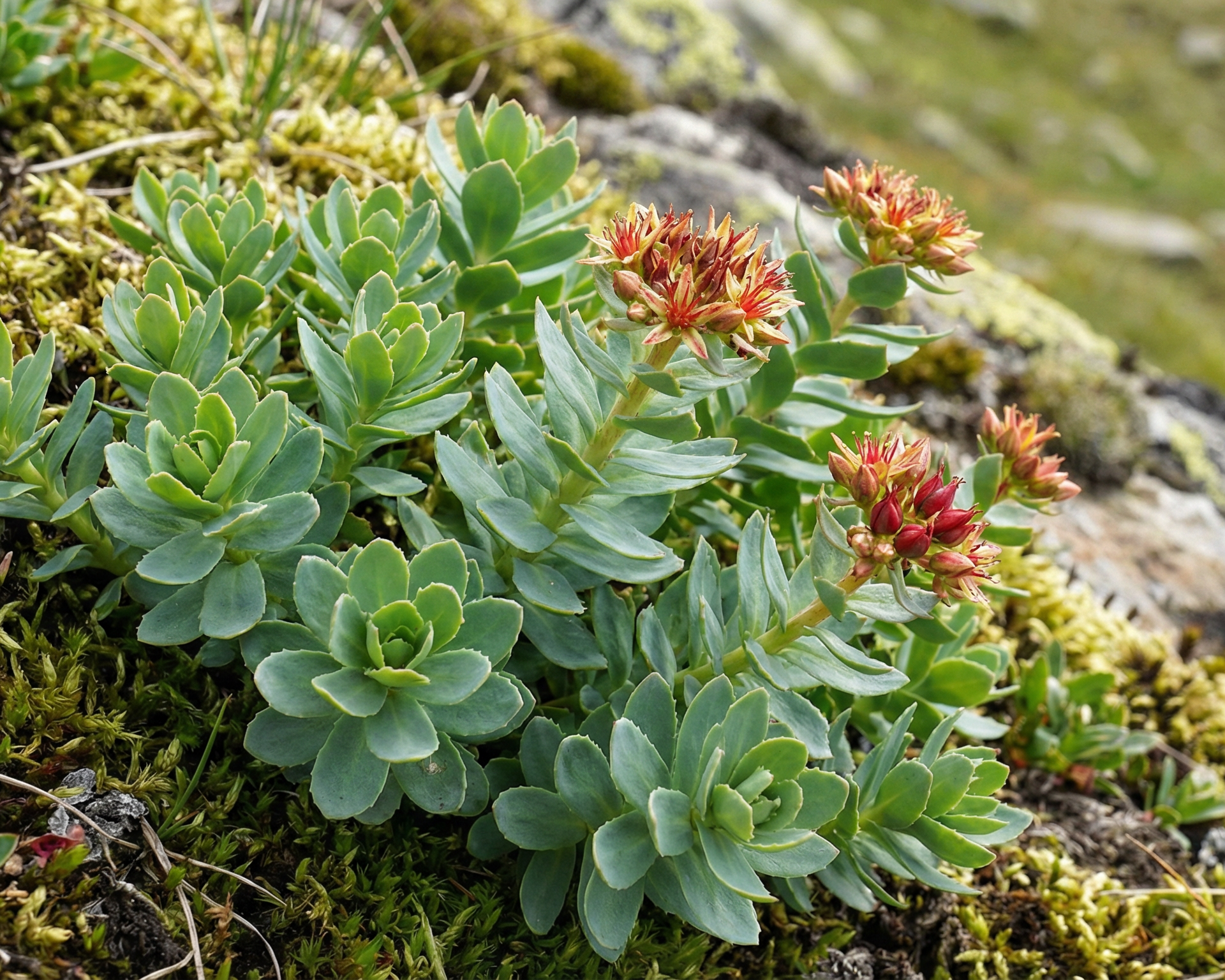
Roseroot (golden root)
Rhodiola rosea
1 nursery nationwide
Compare nurseries
Nurseries with recorded shipping, across all locations. Confirm delivery to your address and availability on the nursery website.
No nursery options match these filters
Try another size or variety, or broaden your location. Options with unconfirmed variety names are included when All varieties is selected.
About Roseroot (golden root)
Roseroot Rhodiola is a genus of perennial plants in the stonecrop family, Crassulaceae. The genus, which includes about 90 species, is most commonly known as Roseroot or Golden Root, with Rhodiola rosea being the most well-known and researched species. These plants are native to cold regions of the world, including the Arctic, the mountains of Central Asia, and the mountainous parts of Europe and North America. The name "Roseroot" is derived from the rose-like fragrance of the roots of some species, particularly R. rosea. Key Characteristics Roseroot plants are succulent perennials with thick, fleshy leaves and stout rhizomes. They typically grow in rocky, high-altitude environments. The plants produce flowering stems that rise from a basal rosette of leaves. A distinguishing feature of the genus is that its flowers have two series of stamens, totaling twice the number of petals. Rhodiola is also unique within the Crassulaceae family for having species with unisexual flowers, meaning that male and female flowers are on separate plants (dioecious). Uses and Significance The roots of Rhodiola species, especially R. rosea, have a long history of use in traditional medicine, particularly in Russia, Scandinavia, and China. They are considered adaptogens, which are natural substances that are believed to help the body adapt to and resist physical, chemical, and environmental stress. Traditional uses include treating fatigue, anxiety, and depression. Modern research has explored these and other potential health benefits, including improving brain function, enhancing exercise performance, and managing diabetes. The active compounds believed to be responsible for these effects are rosavin and salidroside. Growing Conditions and Care While some Rhodiola species are grown as ornamentals, they can be challenging to cultivate outside of their native subarctic and alpine climates. They require well-drained soil and are adapted to cold temperatures and high altitudes. Their specific growing requirements make them less common in typical garden settings.
Plant facts
- Sun
- Full Sun, Partial Shade
- Water
- Regular, Drought Tolerant
- USDA zones
- 2-7
- Lifecycle
- Perennial