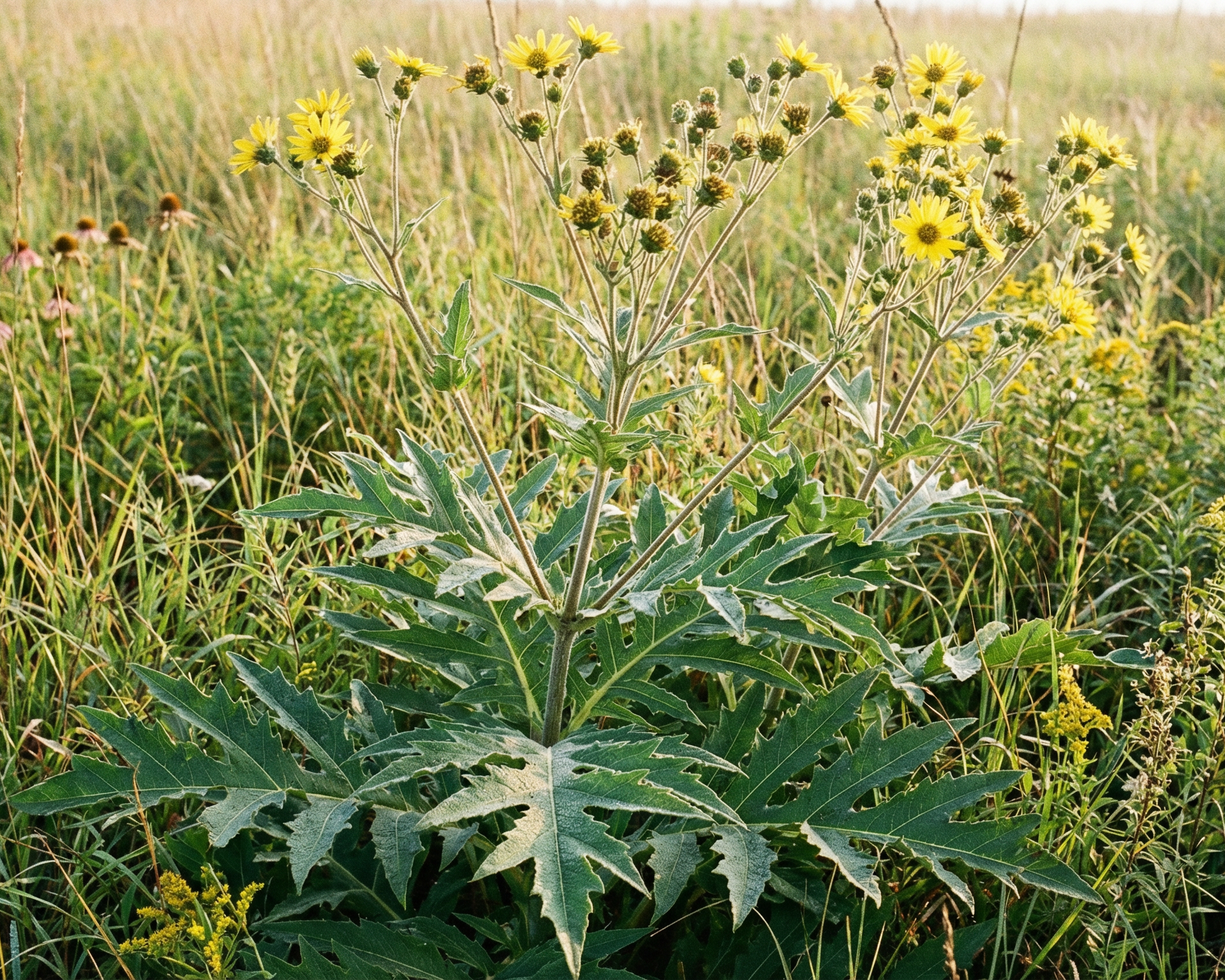
Rosinweed
Silphium spp.
13 nurseries listed
Compare nurseries
13 nurseries · 32 matching options
12 locations on the map; 1 without mapped coordinates below. Select a marker or a nursery to compare.
Preparing the map…
Your location isn’t saved. Confirm availability and visiting hours with the nursery.
1 nursery without a mapped location
Green Isle Gardens
Groveland, FL
2 matching options
Call for pricing
View matching optionsCatalog checked Oct 2, 2026. Confirm the plant and visiting hours with the nursery.
About Rosinweed
Rosinweed Silphium is a genus of about 23 species of tall, perennial flowering plants in the aster family (Asteraceae), all of which are native to North America. Commonly known as rosinweeds, these plants are characteristic of the tallgrass prairie ecosystem and are also found in open woods, and along roadsides. The name "rosinweed" comes from the sticky, resinous sap that exudes from the stems and leaves when they are bruised or broken. This resin was used by Native Americans and early settlers as a chewing gum. Key Characteristics Rosinweeds are known for their impressive height, with some species reaching up to 12 feet tall. They have rough, sandpapery leaves that can be arranged in various ways: opposite, alternate, or in whorls around the stem. The flowers are typically yellow and resemble small sunflowers, blooming in the summer and attracting a wide range of pollinators, including bees, butterflies, and birds. The root systems of rosinweeds are deep and extensive, which helps them to be very drought-tolerant and resilient plants. Uses and Significance Beyond their use as a chewing gum, rosinweeds have a long history of use in traditional medicine. Various parts of the plants were used to treat a range of ailments, from fevers and coughs to snakebites and rheumatism. In the garden, rosinweeds are valued for their striking architectural presence and their ability to attract wildlife. They are excellent choices for prairie restorations, native plant gardens, and pollinator gardens. Some of the most well-known species include cup plant (Silphium perfoliatum), which has leaves that form a cup around the stem that collects water; compass plant (Silphium laciniatum), whose leaves tend to orient themselves in a north-south direction; and prairie dock (Silphium terebinthinaceum), which has enormous, spade-shaped basal leaves. Growing Conditions and Care Rosinweeds are generally easy to grow and require little maintenance once established. They prefer full sun and can tolerate a wide range of soil types, from sandy to clay, as long as the soil is well-drained. They are drought-tolerant but will also do well in moist conditions. Rosinweeds can be propagated from seed, although the seeds of some species require a period of cold, moist stratification to germinate. Once established, they are long-lived and will provide a beautiful and ecologically valuable addition to the landscape for many years.
Plant facts
- Sun
- Full Sun
- Water
- Low, Drought Tolerant
- USDA zones
- 3-9
- Lifecycle
- Perennial