Saguaro
Carnegiea gigantea
1 nursery nationwide
Compare nurseries
Nurseries with recorded shipping, across all locations. Confirm delivery to your address and availability on the nursery website.
No nursery options match these filters
Try another size or variety, or broaden your location. Options with unconfirmed variety names are included when All varieties is selected.
About Saguaro
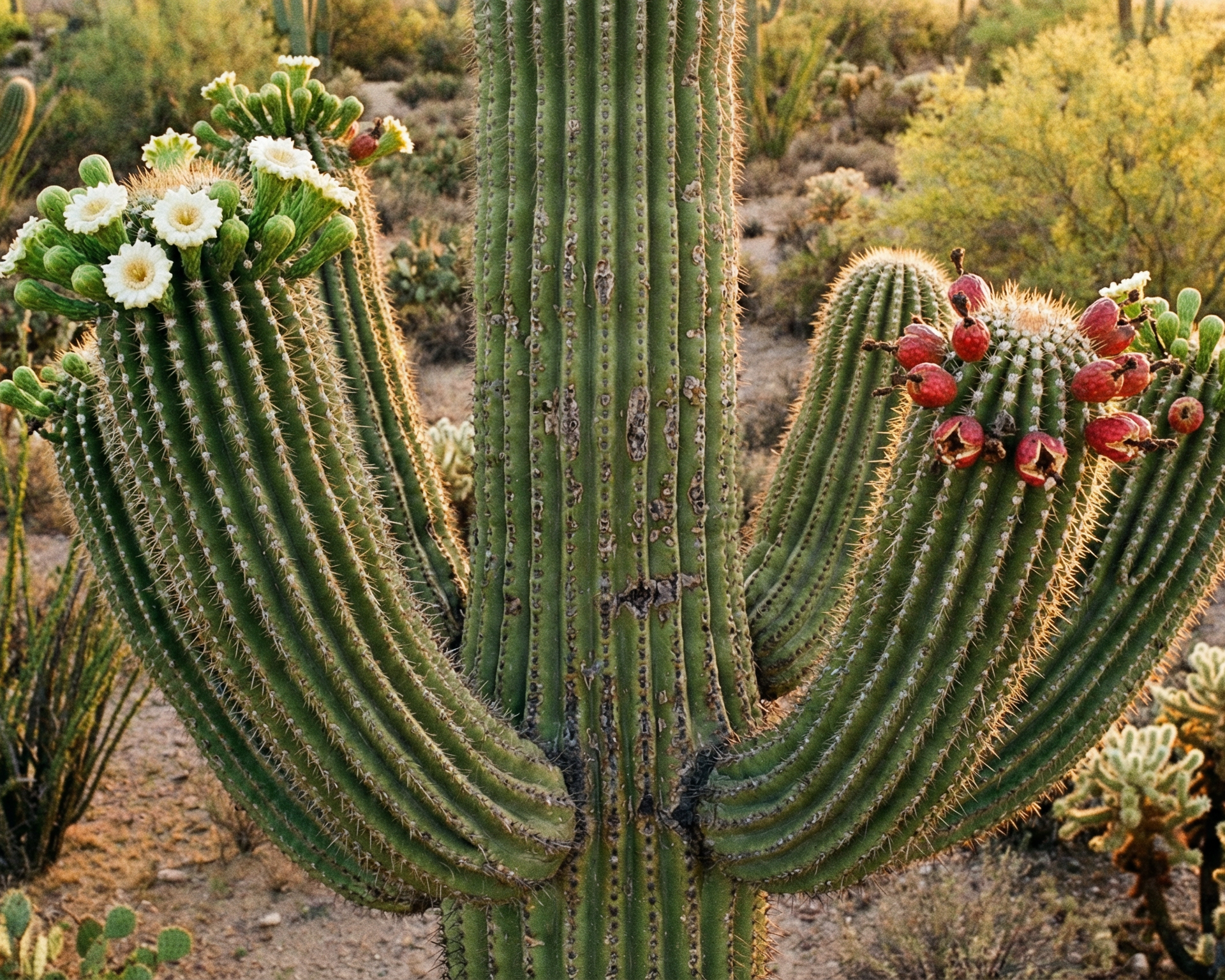
Saguaro The Saguaro (Carnegiea gigantea) is a majestic, tree-like cactus and the sole species within the monotypic genus Carnegiea. A quintessential symbol of the American Southwest, this iconic plant is native to the Sonoran Desert, thriving in Arizona, the Mexican state of Sonora, and small areas of California. The Saguaro blossom holds the distinction of being the state wildflower of Arizona, and its scientific name honors the philanthropist Andrew Carnegie. Its imposing stature and unique form have made it a common and beloved image in films and cultural depictions of the desert landscape. Characterized by its columnar trunk and, typically, several large, upturned branches or "arms," the Saguaro is a slow-growing and long-lived cactus, often surviving for over 150 years. It can reach heights of over 40 feet and, when fully hydrated, can weigh several tons. The cactus's accordion-like ribs allow it to expand as it absorbs and stores vast amounts of water, a critical adaptation for surviving the arid desert climate. Its formidable spines provide protection from herbivores, while its waxy, white flowers, which bloom at night during the late spring and early summer, are a vital source of nectar for pollinators like bats, birds, and insects. Following pollination, the cactus produces fleshy, ruby-red fruits that are filled with thousands of tiny black seeds. The Saguaro plays a crucial role in its ecosystem as a keystone species, providing food and shelter for a wide variety of wildlife. Gila woodpeckers and gilded flickers excavate nest cavities in the cactus's fleshy trunk, which are later inhabited by other birds such as elf owls and cactus wrens. For thousands of years, the Saguaro has been a vital resource for the indigenous peoples of the Sonoran Desert, including the Tohono O'odham and Pima tribes. The sweet, red pulp of the fruit is eaten fresh, dried, or made into syrup, preserves, and ceremonial wine. The woody ribs of dead Saguaros are used as a building material for shelters, fences, and tools. This magnificent cactus grows in rocky foothills, canyons, and on well-drained, gravelly plains. It requires full sun and is exceptionally drought-tolerant. The germination and survival of young Saguaros are often dependent on the shelter of a "nurse plant," such as a palo verde or mesquite tree, which provides protection from the harsh sun and extreme temperatures. Due to its slow growth and cultural significance, the Saguaro is protected by law in Arizona, and its harvesting or transport is regulated. Its resilience and central role in the desert ecosystem make the Saguaro a true monument of the natural world.
Plant facts
- Sun
- Full Sun
- Water
- Drought Tolerant, Low
- USDA zones
- 9-11
- Lifecycle
- Perennial