Snow's Landscape & Nursery
Newburgh, IN
1 option
Catalog checked Oct 1, 2026. Confirm availability before visiting.
Picea Glauca Globosa Low Standard 5G
Variety not confirmed
Ask about sizes$121.99
Picea spp.
30 nurseries nationwide
Choose a city or ZIP to find nearby growers. Showing nationwide listings until you choose an area.
30 nurseries · 578 matching options
Newburgh, IN
1 option
Catalog checked Oct 1, 2026. Confirm availability before visiting.
Picea Glauca Globosa Low Standard 5G
Variety not confirmed
$121.99
Elkton, KY
4 options
From $68.99
Catalog checked Oct 1, 2026. Confirm availability before visiting.
Logan, UT
7 options
Call for pricing
Catalog checked Oct 1, 2026. Confirm availability before visiting.
Great Barrington, MA
11 options
From $49.99
Catalog checked Oct 1, 2026. Confirm availability before visiting.
Prescott, AZ
1 option
Catalog checked Oct 4, 2026. Confirm availability before visiting.
Dwarf Alberta Spruce (PICEA GLAUCA CONICA) - 3 gallon 24"
Variety not confirmed
Call for pricing
Sigel, IL
2 options
From $50.00
Catalog checked Oct 1, 2026. Confirm availability before visiting.
Showing 25–30 of 30 nurseries
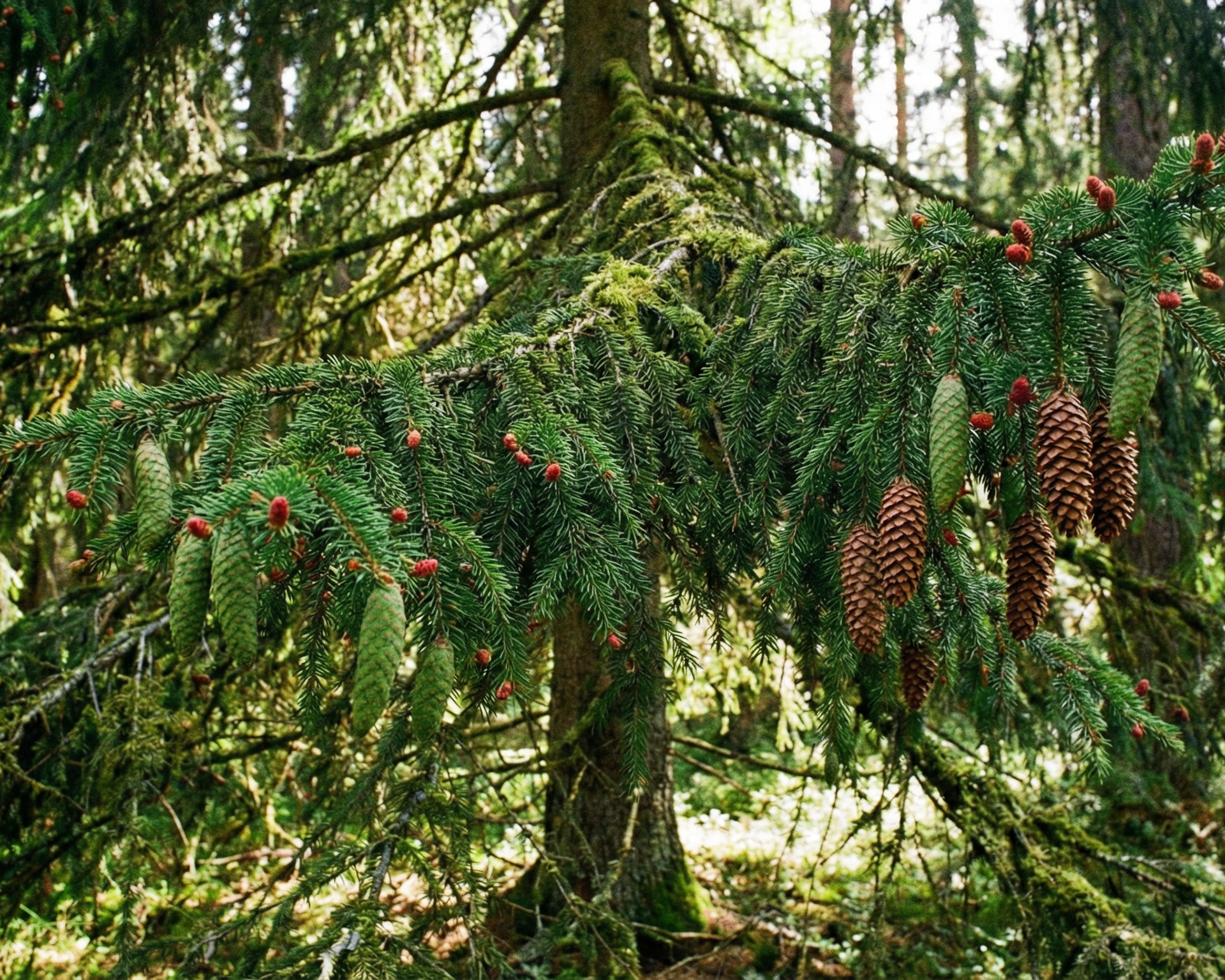
Spruce, of the genus Picea, are a group of about 35-40 species of coniferous evergreen trees belonging to the pine family (Pinaceae). They are native to the northern temperate and boreal regions of the Northern Hemisphere, forming a significant part of the world's forests. The common name "spruce" is well-established and consistently used across the various species within the genus, making "Spruce" the most appropriate common name for this group. Key Characteristics Spruce trees are characterized by their pyramidal shape, with whorled branches and a straight trunk. They can grow to be large trees, typically reaching heights of 20-60 meters (65-200 feet). A distinctive feature of spruces is their needles, which are four-sided and individually attached to small, peg-like structures on the twigs called pulvini. When the needles are shed, these pegs remain, leaving the twigs with a rough texture. The cones of spruce trees are cylindrical and hang downwards, a key difference from firs, whose cones grow upright. Uses and Significance Spruces are of immense economic and ecological importance. The wood, often referred to as whitewood or SPF (spruce-pine-fir), is a primary resource for the timber and paper industries. Its long fibers produce strong paper, and the wood itself is used in everything from general construction to specialized applications like crafting musical instruments. The resonant quality of spruce wood makes it ideal for the soundboards of pianos, violins, and guitars. The Wright brothers' first airplane, the Flyer, was even constructed from spruce. Beyond its industrial uses, spruce has cultural and medicinal significance. The fresh shoots are a source of vitamin C, and historically, spruce beer was brewed to prevent scurvy. Native Americans have traditionally used the pliable roots for weaving baskets and other crafts. Several species, such as the Norway spruce (Picea abies) and the blue spruce (Picea pungens), are popular ornamental trees and are widely used as Christmas trees.