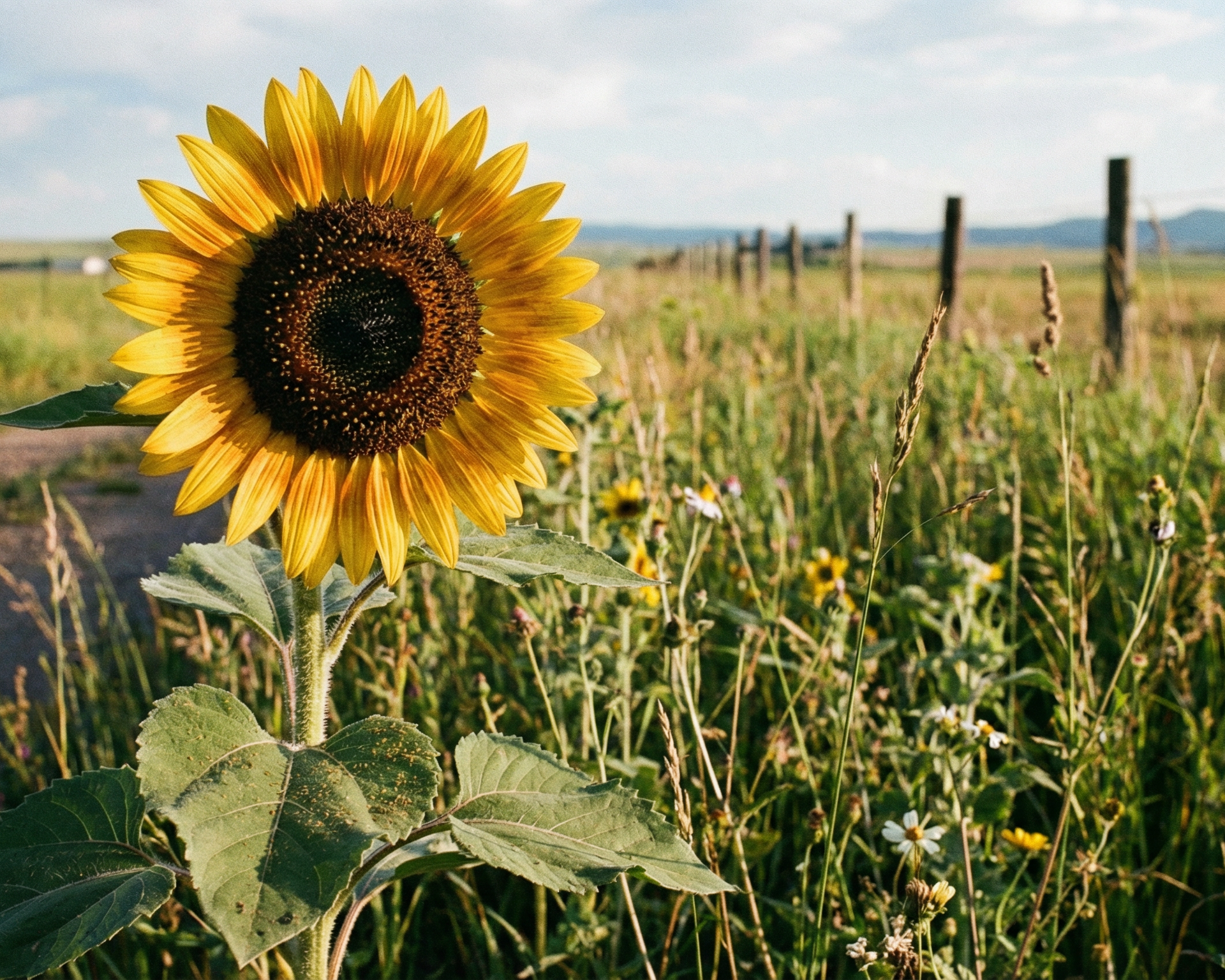
Sunflower
Helianthus spp.
29 nurseries nationwide
Compare nurseries
29 nurseries · 74 matching options
27 locations on the map; 2 without mapped coordinates below. Select a marker or a nursery to compare.
Preparing the map…
Your location isn’t saved. Confirm availability and visiting hours with the nursery.
2 nurseries without mapped locations
Green Isle Gardens
Groveland, FL
2 matching options
Call for pricing
View matching optionsCatalog checked Oct 2, 2026. Confirm the plant and visiting hours with the nursery.
Locally Flowered
Dade City, FL
4 matching options
Call for pricing
View matching optionsCatalog checked Oct 15, 2026. Confirm the plant and visiting hours with the nursery.
About Sunflower
The genus Helianthus, commonly known as sunflowers, comprises approximately 70 species of annual and perennial flowering plants belonging to the daisy family, Asteraceae. The vast majority of these species are native to North and Central America. The most iconic and widely recognized member of this genus is the common sunflower, Helianthus annuus. The name Helianthus is derived from the Greek words 'helios' (sun) and 'anthos' (flower), a fitting name for a plant famous for its sun-like appearance and heliotropic behavior, where young flower heads track the sun's movement across the sky. Sunflowers are characterized by their tall, erect stems, which in some species can exceed 3 meters in height. The flower heads, or capitula, are actually composite flowers made up of numerous small individual flowers called florets. These heads consist of bright yellow ray florets on the periphery and a central disk of yellow, brown, or purple disc florets. The leaves are typically large, coarse, and hairy, with a sandpapery texture. A remarkable characteristic of young sunflowers is their heliotropism, where the flower buds and young heads follow the sun from east to west during the day, returning to face east at night. Sunflowers hold significant economic and ecological importance. The common sunflower (H. annuus) is cultivated globally for its edible seeds, which are consumed as a snack food and processed to produce a versatile cooking oil. Another notable species, the Jerusalem artichoke (H. tuberosus), is grown for its starchy, edible tubers. Beyond their culinary uses, sunflowers are prized as ornamental plants in gardens and are vital for pollinators, providing abundant nectar for bees. The seeds are also a valuable food source for birds, and the plants serve as larval hosts for various butterfly species. The common sunflower is also the national flower of Ukraine, symbolizing peace and national identity.
Plant facts
- Sun
- Full Sun
- Water
- Regular, Drought Tolerant
- USDA zones
- 2-11
- Lifecycle
- Annual
Variety guides
Explore the complete plant collection, including varieties with no nursery listings yet.
- Lemon Queen0 nurseries listed
- Mammoth Grey Stripe0 nurseries listed
- Mammoth Russian0 nurseries listed
- Mongolian Giant0 nurseries listed
- Music Box0 nurseries listed
- Paintbox Bouquet Organic0 nurseries listed
- Procut Gold Lite0 nurseries listed
- Procut Orange Excel0 nurseries listed
- Procut Peach0 nurseries listed
- Procut Plum0 nurseries listed
- Procut White Lite0 nurseries listed
- Procut White Nite0 nurseries listed
- Rarámuri White0 nurseries listed
- Red Sun0 nurseries listed
- Ring of Fire0 nurseries listed
- Royal Flush0 nurseries listed
- Ruby Eclipse0 nurseries listed
- Slava Ukraini0 nurseries listed
- Smooth Garnet0 nurseries listed
- Snack Seed0 nurseries listed
- Sonja0 nurseries listed
- Soraya0 nurseries listed
- Starburst Panache0 nurseries listed
- Sun Bear0 nurseries listed