Surinam Cherry (Pitanga)
Eugenia uniflora
10 nurseries listed · 1 named varieties
Compare nurseries
10 nurseries · 31 matching options
10 locations on the map. Select a marker or a nursery to compare.
Preparing the map…
Your location isn’t saved. Confirm availability and visiting hours with the nursery.
About Surinam Cherry (Pitanga)
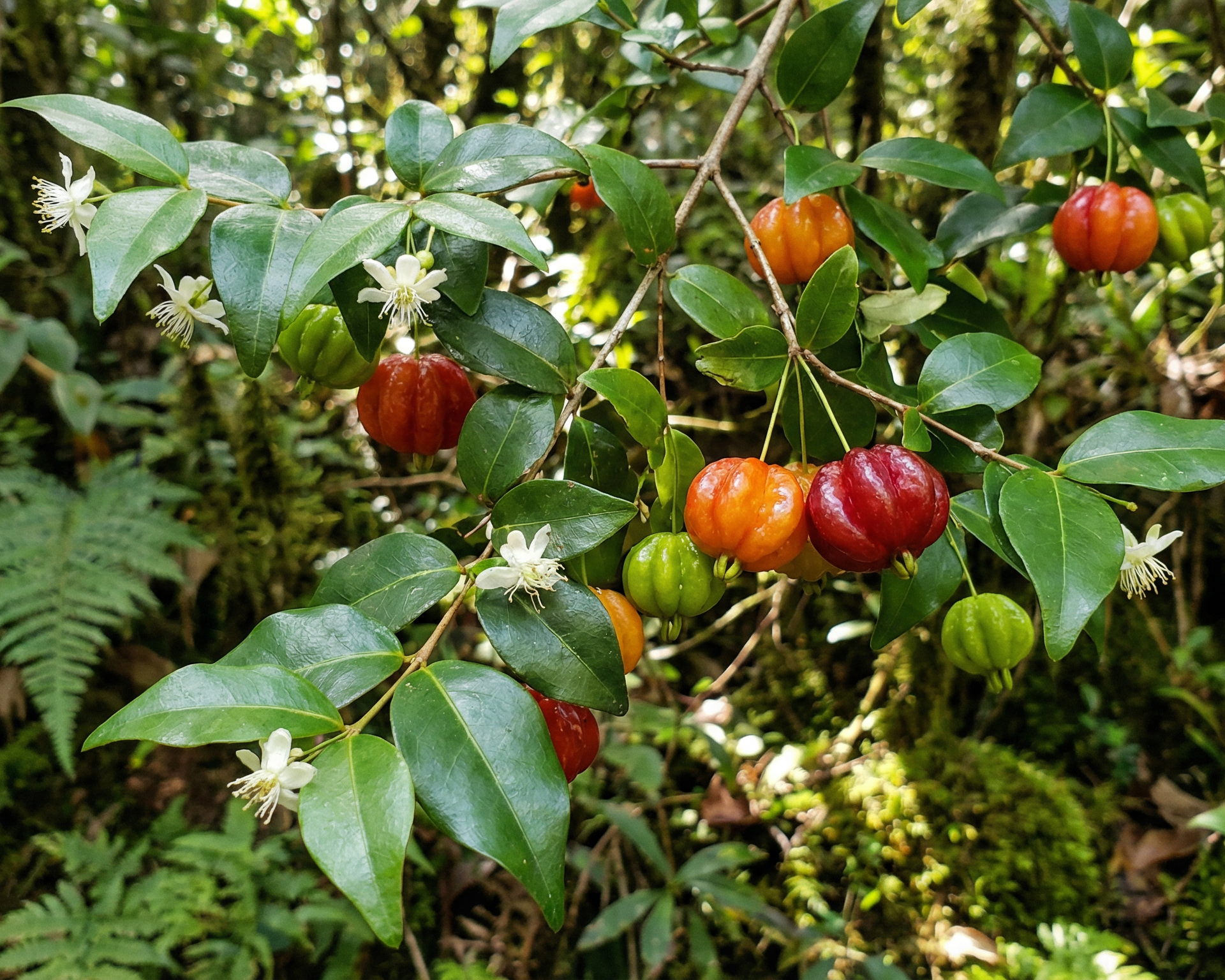
The Surinam Cherry (Eugenia uniflora), also known as the Brazilian Cherry or Pitanga, is a flowering plant in the myrtle family, Myrtaceae. Native to tropical South America's east coast, it is a large shrub or small tree that can grow up to 8 meters tall. The plant is widely cultivated in tropical and subtropical regions for its edible fruit and as an ornamental plant. Its leaves are glossy, green, and ovate, and they release a spicy resinous fragrance when crushed. New leaves have a bronze or copper color, adding to the plant's ornamental appeal. The Surinam Cherry is well-known for its distinctive ribbed fruit, which transitions from green to orange, scarlet, and finally to a deep maroon as it ripens. The flavor of the fruit varies from sweet to sour, depending on the cultivar and level of ripeness. The plant produces small, white, fragrant flowers that grow in clusters. It thrives in full sun and well-drained soil and is relatively drought-tolerant once established. The bark is smooth and peeling, revealing a lighter-colored layer beneath, which adds to its visual interest. Beyond its ornamental use as a hedge or small tree, the Surinam Cherry is primarily valued for its fruit. The cherries are rich in Vitamin C and antioxidants. They can be eaten fresh, although their resinous flavor can be an acquired taste. They are more commonly used to make jams, jellies, pies, and juices. In some regions, the fruit is fermented to produce wine or vinegar. In traditional medicine, the leaves are used to make a tea that is believed to have astringent and antiseptic properties. Cultivation of the Surinam Cherry is relatively easy in warm climates. It can be propagated from seeds, which germinate within a few weeks. The plant is adaptable to various soil types but performs best in slightly acidic, well-draining soil. It requires regular watering, especially during the fruiting season, to produce high-quality fruit. While it can tolerate short periods of drought, consistent moisture will result in better growth and fruit production. Pruning can help maintain its shape, especially when grown as a hedge.
Plant facts
- Sun
- Full Sun, Partial Sun, Partial Shade
- Water
- Regular, Drought Tolerant
- USDA zones
- 9-11
- Lifecycle
- Perennial
Variety guides
Explore the complete plant collection, including varieties with no nursery listings yet.