From $8.00
Catalog checked Oct 1, 2026. Confirm availability before visiting.
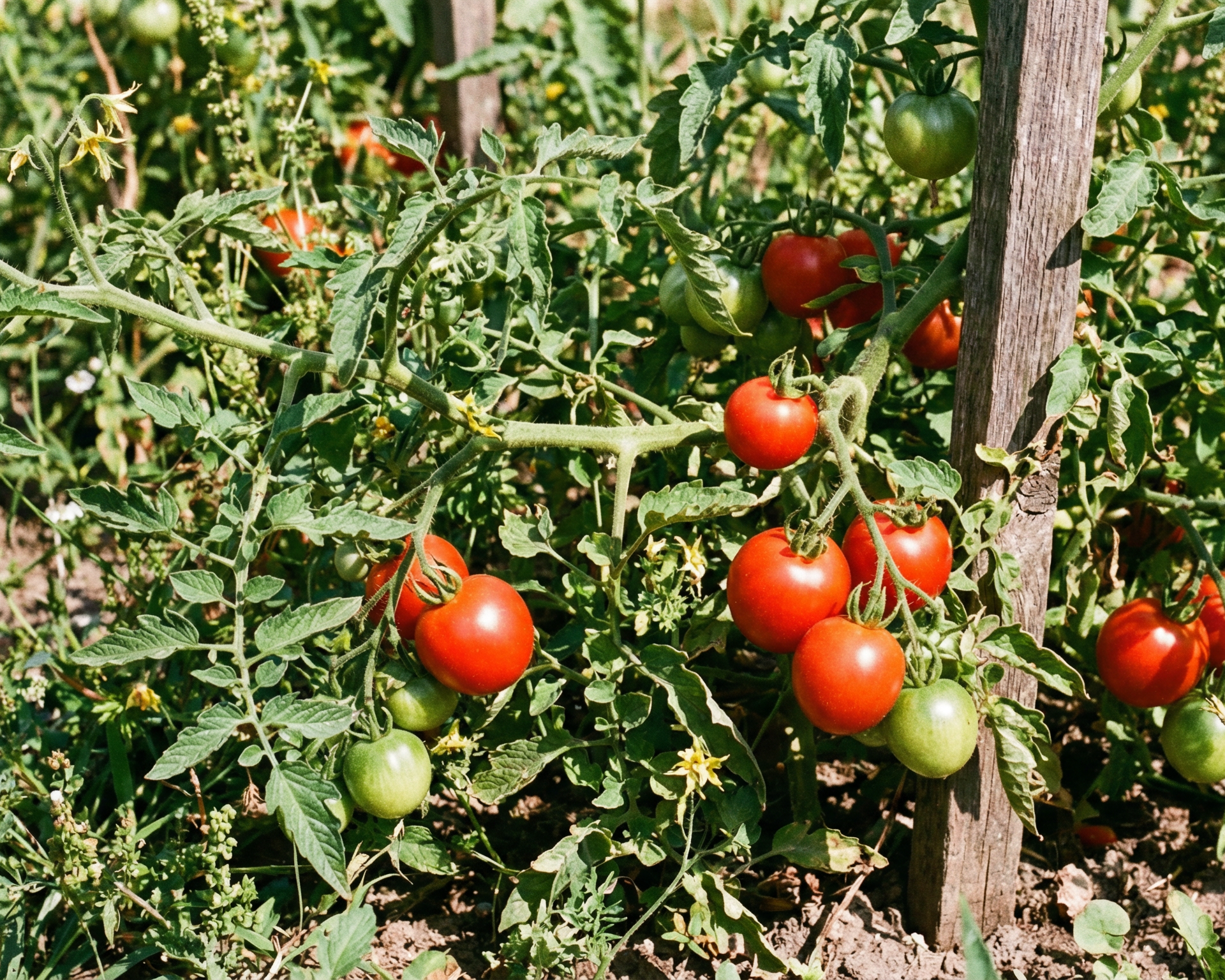
Solanum lycopersicum
9 nurseries nationwide · 2 named varieties
Choose a city or ZIP to find nearby growers. Showing nationwide listings until you choose an area.
1 nursery · 2 matching options
From $8.00
Catalog checked Oct 1, 2026. Confirm availability before visiting.
Showing 1–1 of 1 nurseries
The tomato (Solanum lycopersicum), a member of the nightshade family (Solanaceae), is one of the world's most popular and widely cultivated vegetables. Though botanically a fruit (a berry), it is typically treated as a vegetable in culinary contexts. Native to western South America, the tomato was domesticated in pre-Columbian Mexico. The name "tomato" derives from the Nahuatl word tomatl. The plant was formerly classified under the genus Lycopersicon, a name still sometimes seen in horticultural use, which translates to "wolf peach"—a reference to old European folklore that associated nightshade plants with werewolves and witchcraft. Tomato plants are typically tender, sprawling vines or bushes. Their stems are covered in coarse hairs, and their leaves are compound and aromatic. The plants produce clusters of small, yellow, star-shaped flowers. The resulting fruits vary immensely in size, shape, and color, with varieties that are red, yellow, orange, purple, and even striped. Tomato plants are classified as either determinate (bush-like, producing their crop all at once) or indeterminate (vine-like, continuing to grow and produce fruit until killed by frost). They thrive in full sun and well-drained, fertile soil. The tomato's journey from the Andes to global culinary staple is a rich one. Introduced to Europe by the Spanish in the 16th century, it was initially met with suspicion, as many of its relatives in the nightshade family are poisonous. However, it was embraced in Italy and Spain and eventually spread worldwide. Today, tomatoes are a cornerstone of many cuisines, eaten raw in salads, cooked into sauces, and processed into products like ketchup, juice, and sun-dried tomatoes. They are a good source of vitamin C and the antioxidant lycopene.
Explore the complete plant collection, including varieties with no nursery listings yet.