Voodoo Lily
Amorphophallus spp.
2 nurseries nationwide
Compare nurseries
2 nurseries · 3 matching options
2 locations on the map. Select a marker or a nursery to compare.
Preparing the map…
Your location isn’t saved. Confirm availability and visiting hours with the nursery.
About Voodoo Lily
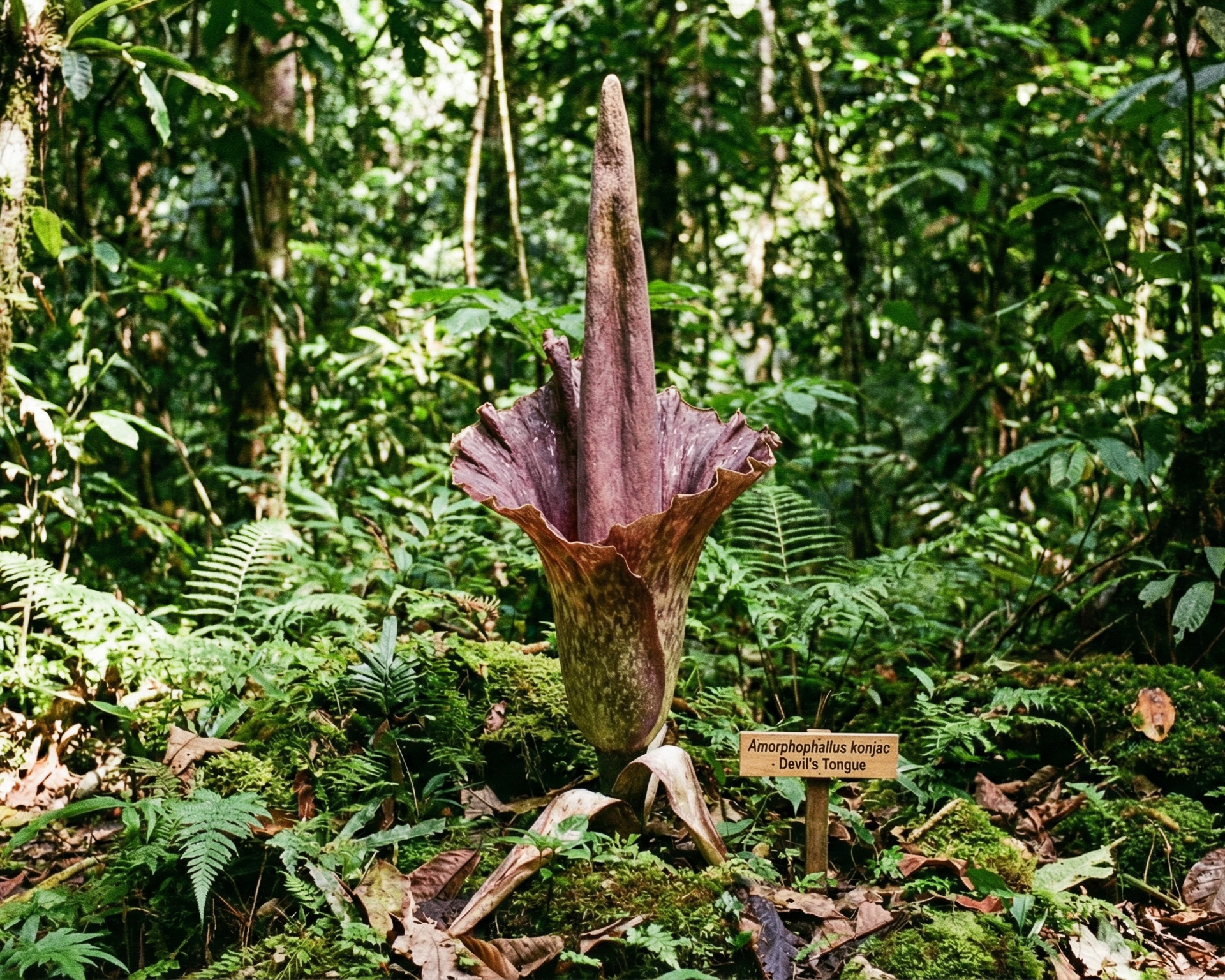
The genus Amorphophallus, commonly known as the Voodoo Lily, comprises over 200 species of tropical and subtropical tuberous herbaceous plants. The name Amorphophallus is derived from the Ancient Greek words amorphos, meaning "without form" or "misshapen," and phallos, meaning "penis," a reference to the distinctive shape of the flower's spadix. These plants are native to a wide region spanning from West Africa to the Pacific Islands, with the highest diversity found in Southeast Asia. They are renowned for their remarkable and often bizarre inflorescences, which can be some of the largest and most malodorous in the plant kingdom. A key characteristic of Voodoo Lilies is their life cycle, which is divided into a vegetative (leaf) stage and a reproductive (flower) stage. The plant grows from a large underground tuber, which can reach considerable sizes. In a given year, the tuber will either produce a single, large, intricately divided leaf that can resemble a small tree, or a striking inflorescence. This inflorescence consists of a spathe (a large, often colorful bract) and a spadix (the fleshy flower spike). To attract pollinators, which are typically carrion beetles and flies, the flowers of many species emit a pungent odor resembling rotting flesh, earning some the nickname "Corpse Flower." Several species of Amorphophallus hold significant economic and cultural importance. The tuber of Amorphophallus konjac is processed to create konjac flour, a key ingredient in Japanese shirataki noodles and a popular gelatin substitute known as konjac jelly. Similarly, the tubers of the Elephant Foot Yam (Amorphophallus paeoniifolius) are a staple food crop in many parts of tropical Asia. Beyond their culinary uses, some species are cultivated as ornamentals for their dramatic foliage and fascinating, albeit smelly, flowers. Their unique reproductive biology and striking appearance make them a subject of fascination for botanists and plant enthusiasts alike.
Plant facts
- Sun
- Partial Shade, Full Shade
- Water
- Regular, Drought Tolerant
- USDA zones
- 6-10
- Lifecycle
- Perennial