Natives
Wax Myrtle
Myrica cerifera
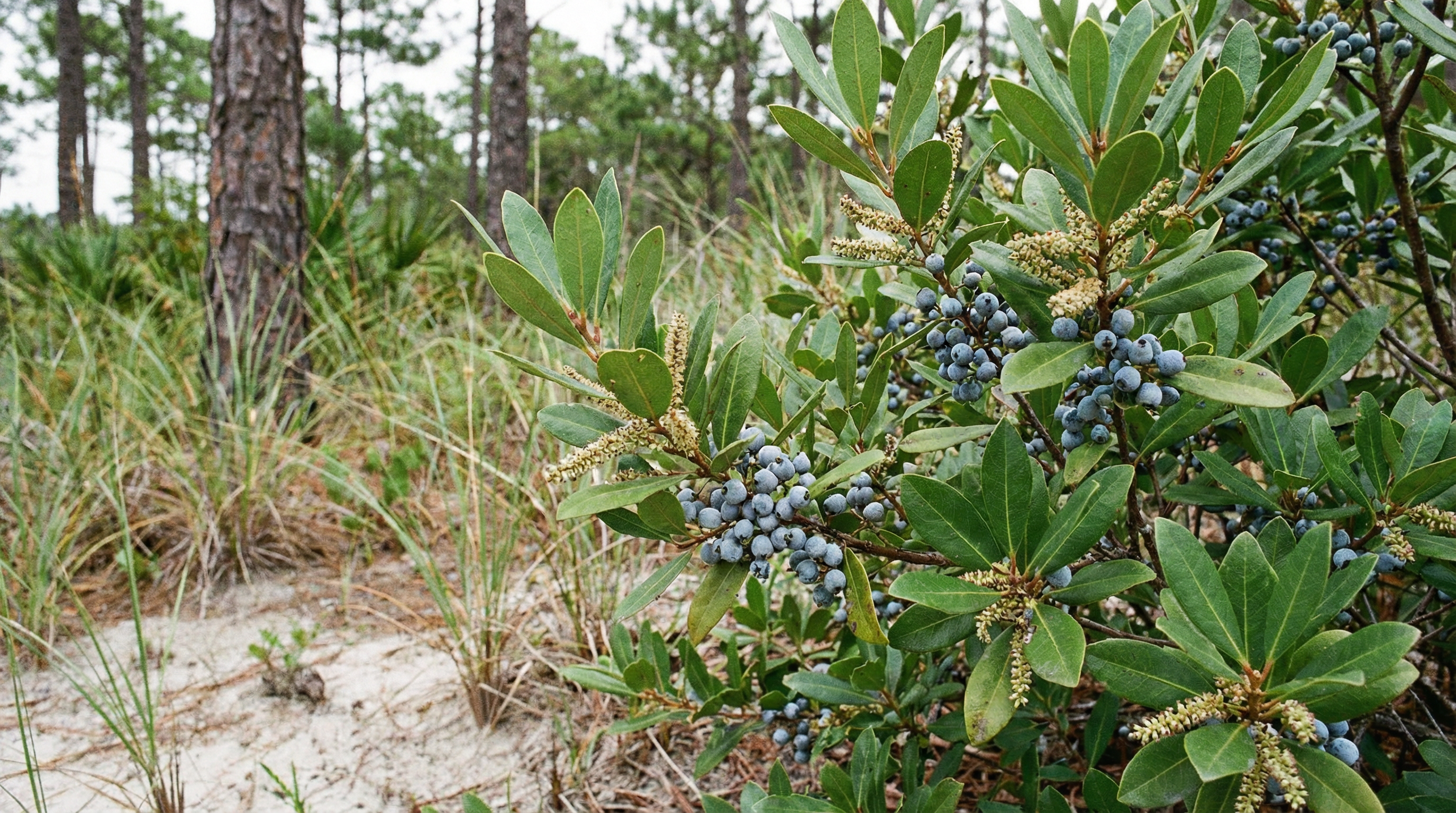
Morella, commonly known as Wax Myrtle or Bayberry, is a genus of about 50 species of shrubs and small trees in the family Myricaceae. Until recently, most of these species were classified under the genus Myrica. The reclassification is based on several key differences, including the fact that Morella species are typically evergreen with fleshy, waxy fruits that are dispersed by birds, whereas the remaining Myrica species are deciduous with dry fruits dispersed by water. Wax Myrtles are found in a wide range of habitats across North America, Europe, Africa, and Asia. Wax Myrtles are characterized by their simple, leathery, and often aromatic leaves. The plants are typically dioecious, meaning male and female flowers are borne on separate individuals. The most distinctive feature of the genus is the waxy coating on the small, globular fruits. This wax has been historically significant for human use. These plants are highly adaptable, tolerating a variety of soil types and conditions, from wetlands to dry, sandy areas. Many species also have a symbiotic relationship with nitrogen-fixing bacteria in their roots, allowing them to thrive in poor soils. The most well-known use of Wax Myrtle is in the production of bayberry candles, which are made from the wax extracted from the fruit. This wax has a distinctive, pleasant aroma. In addition to candles, the wax has also been used to make soap. The leaves and berries of some species can be used as a seasoning in cooking. Historically, various parts of the plant, particularly the root bark, have been used in herbal medicine to treat a range of ailments, including fevers, diarrhea, and skin conditions. The plants are also popular in horticulture as ornamental shrubs and for creating hedges and privacy screens due to their dense, evergreen foliage and fast growth rate. Wax Myrtles are generally easy to cultivate and are valued for their hardiness and low maintenance requirements. They can be grown in a variety of conditions, from full sun to partial shade, and are tolerant of both drought and coastal conditions. Their nitrogen-fixing ability makes them a good choice for improving soil quality in a garden. While generally pest-resistant, they can be susceptible to leaf spot in some conditions. Pruning is often necessary to maintain a desired shape and size, especially when grown as a hedge. ## Sources - https://landscapeplants.oregonstate.edu/morella - https://en.wikipedia.org/wiki/Myrica_cerifera - https://tropical.theferns.info/viewtropical.php?id=Morella+ceriferaRead more
1 of 1 nursery carries this plant
- Sandhill Growers
Apopka, FL783 mi away
- 3 galIn stock$16.99
- 7 galIn stock$34.99
Distances are approximate, based on your network location.
Plant facts
- Sun
- Full SunPartial SunPartial Shade
- Water
- RegularDrought TolerantLikes Wet Feet
- USDA zones
- 7-10
- Lifecycle
- Perennial