Açaí palm
Euterpe oleracea
1 nursery listed
Compare nurseries
Nurseries with recorded shipping, across all locations. Confirm delivery to your address and availability on the nursery website.
No nursery options match these filters
Try another size or variety, or broaden your location. Options with unconfirmed variety names are included when All varieties is selected.
About Açaí palm
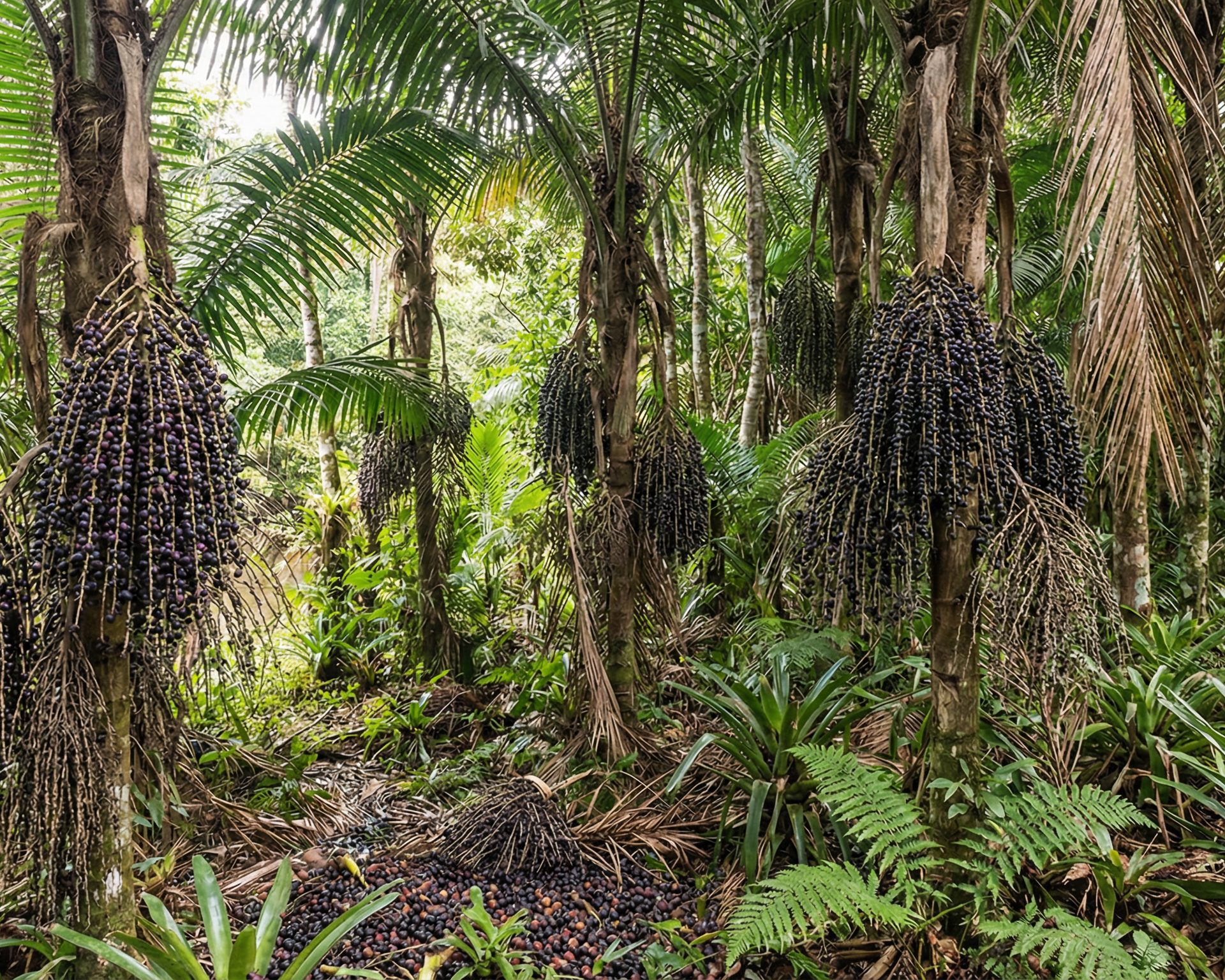
The genus Euterpe, commonly known as Açaí or Juçara Palm, encompasses a group of graceful, slender palm trees native to the tropical regions of Central and South America. Thriving in swamps and floodplains, these palms are a characteristic feature of the Amazon River basin. The name Euterpe is derived from the Greek muse of music, a fitting name for such an elegant and important plant group. While the genus includes several species, the most famous is Euterpe oleracea, which is widely cultivated for its fruit, the açaí berry. Açaí palms are characterized by their tall, slim trunks that can reach heights of 15 to 30 meters, topped with a crown of large, pinnate leaves. The trees produce small, deep purple fruits in dense, hanging clusters. Each fruit contains a single large seed with a thin layer of pulp. This pulp is the source of the world-renowned açaí berry, which has gained global popularity as a superfood due to its high antioxidant content and nutritional benefits. The economic and cultural significance of the Açaí Palm is immense, particularly in Brazil. The fruit is a dietary staple for many communities in the Amazon, where it is consumed as a thick, purple puree, often served with granola, bananas, and other fruits. Beyond the fruit, the palm provides hearts of palm, a vegetable harvested from the inner core of the tree. The leaves are used for thatching and weaving, and the wood is utilized in construction. The widespread use and increasing global demand for açaí products have made the Açaí Palm a vital component of the regional economy, supporting the livelihoods of thousands of small-scale farmers and harvesters.
Plant facts
- Sun
- Full Sun, Partial Shade
- Water
- Likes Wet Feet, High
- USDA zones
- 10-11
- Lifecycle
- Perennial